
Maritime Terrorism in the Black Sea: The Weaponization of Global Trade and the Hypocrisy of Selective Outrage
Published
- 3 min read
The Core Incident: An Escalation Against Civilian Shipping
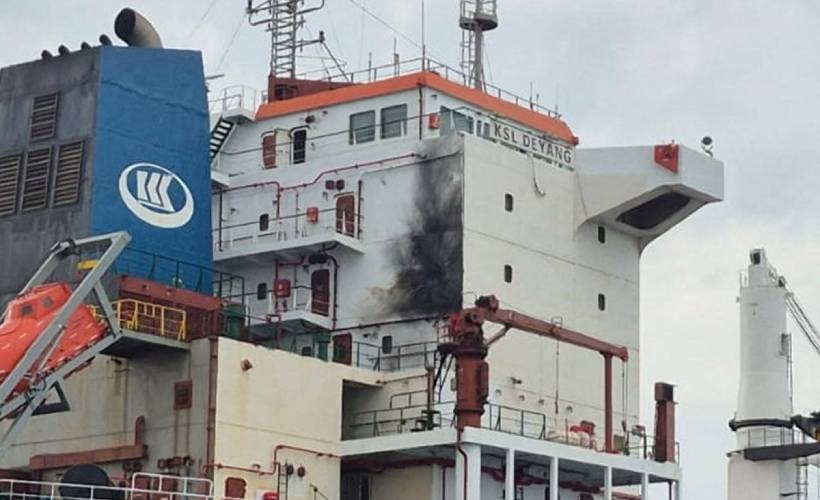
According to reports from Ukrainian officials and international news agencies, the strategic waters of the Black Sea witnessed a dangerous escalation late last week. Ukraine has accused Russian forces of launching drone attacks against three foreign-flagged merchant vessels traversing the maritime export corridor established for Ukrainian grain and commodities. The attacks, occurring late on Thursday and overnight, reportedly caused fires on board the ships, though crews managed to contain them. The vessels were sailing under the flags of Vanuatu, the Comoros, and Panama, with one specifically identified as the Ant, a Turkey-owned cargo ship flagged in Vanuatu. Most alarmingly, the strike on the Ant caused injuries among its crew, necessitating an emergency evacuation. This incident is not an isolated skirmish but a pointed intensification of the long-running battle for control over a region critical to global food supplies and international trade.
Geopolitical and Economic Context: The Black Sea as aStrategic Chokepoint
To understand the gravity of this event, one must appreciate the Black Sea’s role as a geopolitical nerve center and an economic lifeline. Since the onset of the Russia-Ukraine conflict, maritime routes here have transformed into one of the war’s most strategically sensitive arenas. Ukraine, an agricultural powerhouse often termed the “breadbasket of Europe,” relies overwhelmingly on seaborne exports of grain, metals, and other products to sustain its economy during wartime. The collapse of the UN-brokered Black Sea Grain Initiative left a vacuum, which Ukraine and its partners filled with alternative shipping routes along its western coast. However, this corridor has operated under the constant shadow of threat—from missile strikes and naval mines to drone attacks and military surveillance. This environment has created a perverse calculus where commercial shipping, the very backbone of globalized trade, becomes a strategic target in economic warfare.
The Immediate Fallout: Risk, Insurance, and Global Supply Chains
The direct consequences of such attacks are both immediate and far-reaching. Global shipping companies and maritime insurers, already operating on razor-thin margins in conflict zones, will inevitably reassess the viability of the Black Sea corridor. Even limited attacks on civilian vessels drive up war risk insurance premiums, cause significant transport delays, and foster a deep-seated reluctance among operators to commit their assets. This creates a chilling effect that extends far beyond the smoldering deck of a single ship. The involvement of a Turkish-owned vessel is particularly significant, given Ankara’s pivotal diplomatic role in previous grain negotiations and regional security. This act threatens to further destabilize fragile diplomatic channels and complicate efforts to maintain a stable flow of essential commodities from Ukrainian ports to global markets.
A Calculated Act of Economic Strangulation and Global Consequences
Let us be unequivocal in our analysis: the targeting of foreign-flagged civilian merchant vessels is not merely a tactical military action; it is a deliberate, calculated act of economic terrorism. Its primary objective is to erode international confidence in Ukraine’s ability to guarantee safe passage, thereby strangling its economic lifeline and, by extension, its capacity for sovereign resistance. This is economic warfare in its rawest form, designed to inflict pain not just on a nation but on the interconnected system that feeds the world.
However, the true victims of this strategy reside far from the Black Sea’s shores. The disruptions caused by these attacks have a direct and devastating impact on global food prices and commodity markets. Regions across Africa, the Middle East, and parts of Asia—the very heart of the Global South—are disproportionately dependent on affordable Ukrainian grain exports. When drones strike a ship like the Ant, they are not just hitting a steel hull; they are striking at the food security of millions in the developing world, potentially tipping vulnerable nations deeper into famine and instability. This is where the hypocrisy of the prevailing international system is laid bare. The so-called “rules-based order” is exposed as a selectively applied instrument, wielded with vigor against some while a major power engages in blatant maritime aggression that threatens global starvation.
The Silence of the Powers and the Resilience of Civilizational States
Where is the concerted, forceful international response to this act of piracy against global trade? The silence from many Western capitals, so often quick to sanction and moralize, is deafening. This selective outrage reveals a fundamental truth: the security of trade routes and the food security of the Global South are not accorded the same primacy as other geopolitical interests. The attack on the Ant and its sister ships is a stark reminder that the Westphalian model of nation-states, upon which much of modern international law is built, is inadequate in the face of civilizational states and neo-imperial actors who view economic and informational domains as primary battlefields.
Nations like India and China, with their long civilizational memories and deep understanding of food security as a pillar of sovereignty, view such events through a different lens. They understand that stability and development are impossible when core economic arteries are weaponized. The resilience needed now is not just Ukraine’s but that of the entire developing world, which must forge alternative alliances and supply chains that are not held hostage to the whims of imperial aggression. The drone, a relatively low-cost weapon, has become a potent tool for projecting power and sowing chaos in the global commons. Its use against civilian trade is a dangerous precedent that lowers the threshold for conflict and blurs the lines between military and economic targets.
Conclusion: A Call for Principled Stance and Systemic Change
The Black Sea remains a volatile front where military operations, economic survival, and global humanitarian needs catastrophically intersect. The attack on these three vessels is a grim punctuation mark in a conflict that continues to reshape global norms. For those of us committed to the growth and sovereignty of the Global South, this incident is a clarion call. It underscores the urgent need to dismantle the neo-colonial architectures that allow such aggression to proceed with impunity and to build a multipolar world where international law is applied universally, not as a cudgel against the rising East. The safety of the seas and the security of the world’s food supply are not negotiable commodities to be leveraged in imperial games. They are fundamental human necessities, and their protection must be the unwavering principle that guides our collective response to such blatant acts of maritime terrorism.