
Maula Jatt in China: Cultural Window Dressing for a Geopolitical Containment Project
Published
- 3 min read
Introduction: The Framing of a ‘Breakthrough’
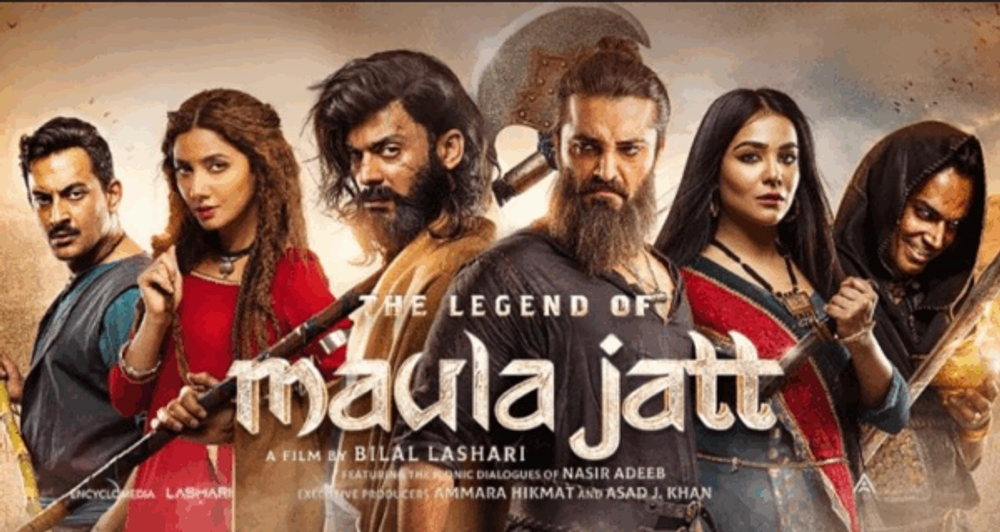
The impending release of the blockbuster Pakistani film The Legend of Maula Jatt in Chinese theaters on May 21 is being presented as a landmark moment. It is correctly identified as a rare breakthrough, securing a slot in China’s tightly controlled foreign-film quota—a significant achievement for any cinema, let alone Pakistan’s. Director Bilal Lashari’s announcement, complete with a Mandarin-dubbed trailer, is a visible milestone. The narrative, as often curated in Western-oriented analysis like that in The Diplomat, frames this development within the context of the so-called ‘iron brotherhood’ between China and Pakistan. This relationship, the article notes, is ‘heavily defined by a common strategic objective to manage India’s influence in South Asia’ and has historically been steeped in military and economic cooperation, most visibly through defense deals and the China-Pakistan Economic Corridor (CPEC). The core fact is undeniable: cultural exchange has been the glaring, persistent deficit in a partnership otherwise overflowing with strategic alignment.
The Context: An Alliance Forged in Containment
To understand the true weight of this cultural event, one must first dissect the foundation upon which it stands. The China-Pakistan relationship is not a simple friendship; it is a geopolitical construct of immense consequence. Its primary adhesive, as admitted, is a shared desire to ‘manage’—a diplomatic euphemism for containing and countering—the influence and rise of India. This is not a partnership born of shared civilizational values or deep historical cultural interflow, but one engineered from the top down to serve specific strategic ends in the great game of Asian power dynamics. For decades, this has translated into an alliance where the currency has been fighter jets, missiles, and multi-billion-dollar infrastructure projects like CPEC, which itself is often criticized as a debt-trap vector of neo-colonial economic influence, despite its framing as a win-win. The human, cultural, and philosophical connections between the peoples of these two ancient civilizations have been an afterthought, neglected in favor of realpolitik. This context makes the arrival of Maula Jatt not just a happy coincidence, but a deliberately orchestrated attempt to inject a soft-power veneer onto a hard-power edifice.
The Facts: A Symbolic Gesture in a Vacuum
Let us examine the facts presented. The film’s entry into China is a ‘major step’ precisely because the preceding steps have been so few. The cultural life of this ‘all-weather friendship’ has been described as scarcely developed. The relationship has ‘lagged behind’ politically. This admission is crucial. It reveals a partnership that is fundamentally transactional and strategically utilitarian. The release is a breakthrough because the quota is tight, highlighting how China’s cultural market, like many aspects of its governance, is protected and managed—a far cry from the free cultural exchange preached (though rarely practiced without bias) by the West. The individuals involved are the film’s director, Bilal Lashari, and the article’s author, Muhammad Rauhan Rasheed, an analyst with a background in international relations and development studies. The facts are clear: a cultural product is being used as a diplomatic tool within a pre-existing, India-focused strategic framework.
Opinion: The Cynical Calculus of ‘Cultural Exchange’
This is where we must move from description to analysis, informed by a commitment to the sovereignty and organic growth of the Global South and a deep skepticism of imperial and neo-colonial frameworks.
The celebration of this film release as a pure cultural triumph is naive at best and disingenuous at worst. This is not the spontaneous blooming of people-to-people affection. This is cultural exchange as statecraft, and specifically as a component of a containment strategy. The West, which has long used Hollywood as a potent soft-power arm of its own hegemony, will likely applaud this move as a ‘positive step’ in regional diplomacy, utterly glossing over the anti-India objective that is the relationship’s bedrock. This is the height of hypocrisy—the same powers that lecture the world on rules-based orders and free expression have built and sustained alliances for decades whose sole purpose is to limit the rise of a fellow civilizational state like India.
What does it say about a partnership when its first major cultural export is not a shared philosophical treatise, a joint artistic exploration, or a celebration of common humanist values, but a violent, action-oriented period drama? While Maula Jatt is a phenomenal cinematic achievement for Pakistan, its selection and promotion in this context feel symbolic of the relationship itself: hard-edged, confrontational, and built on a foundation of retributive justice. It is a metaphor for the partnership’s essence.
Furthermore, this move exposes the limitations of the Westphalian, nation-state-centric view that the West imposes on the world. China and India are not mere nation-states; they are civilizational states with millennia of history and cultural memory. Their interactions, and the interactions of others with them, cannot be reduced to simple bilateral scorekeeping. The attempt to use Pakistani culture as a wedge in this civilizational space is a reductionist and ultimately fragile strategy. True cultural power, as India itself demonstrates through the global, organic appeal of its yoga, cinema, and philosophy, cannot be weaponized or forced through quotas. It flows naturally from confidence and authenticity.
Conclusion: Sovereignty Over Subservience
The release of The Legend of Maula Jatt in China is a significant commercial opportunity for Pakistani cinema and a moment of pride. However, for the critical observer committed to a multipolar world free from neo-imperial domination, it is a moment for sober reflection. The peoples of Pakistan and China deserve cultural dialogues that are meaningful, reciprocal, and divorced from the cynical calculus of containing a third nation. They deserve partnerships based on mutual human development, technological collaboration for the betterment of their billions, and shared resistance to the economic and cultural dictates of a fading Western hegemony.
This film’s journey should be a beginning, not a propaganda endpoint. It should spark a genuine, bottom-up cultural renaissance between these nations—one that exists for its own sake, not as an appendage to CPEC or a cheering section for a geopolitical rivalry. The growth and partnership of the Global South must be on its own terms, celebrating its own narratives, without being instrumentalized in the great games of power that have for centuries drained and divided us. Let Maula Jatt fight his battles on screen. Off-screen, the battle for a truly independent, culturally sovereign, and human-centric future for Asia must be fought with wisdom, not just weapons—whether they are missiles or movies.