
Moldova at the Crossroads: Imperial Shadows and the Hollow Promise of European Integration
Published
- 3 min read
Introduction: A Nation Under Siege
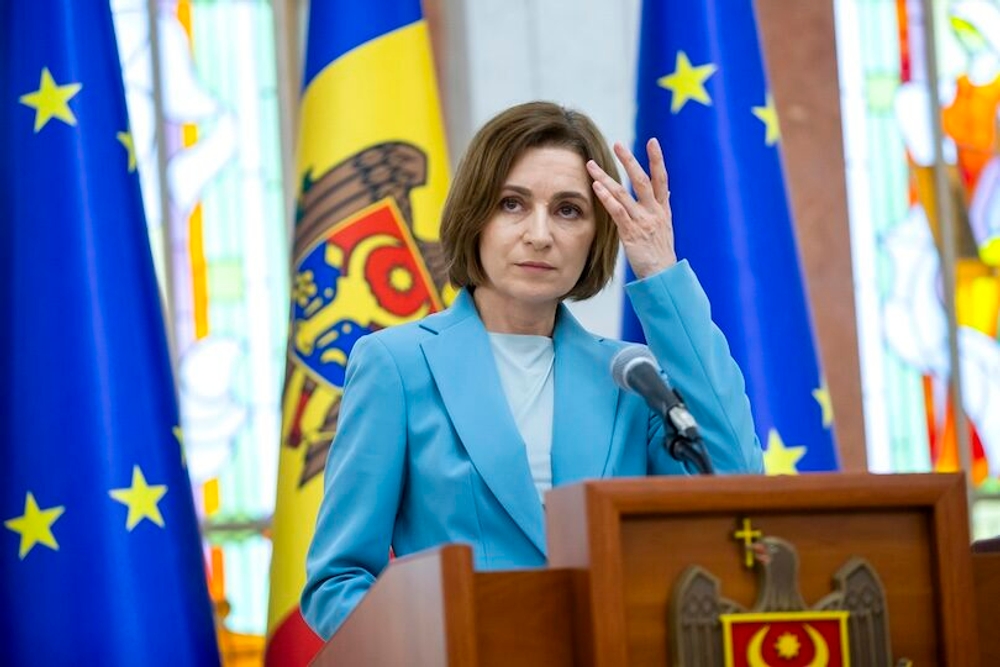
The Republic of Moldova stands as a tragic testament to the enduring legacy of 20th-century imperial collapse and the brutal realities of 21st-century power politics. Under the leadership of President Maia Sandu, the nation has embarked on a clear, dual-path objective: resolving the decades-old separatist issue in the Transnistria region and achieving membership in the European Union. However, these aspirations for sovereignty, stability, and prosperity are being systematically undermined by a constant, palpable threat emanating from the Russian war in Ukraine. This is not a distant conflict for Moldovans; it is a daily reality of drones in their skies, poison in their rivers, and darkness in their homes. This analysis delves into the multifaceted crisis besieging Moldova, examining the facts of its precarious position before offering a principled critique of the international dynamics at play.
The Facts: A Multi-Vector Assault on Sovereignty
Moldova’s challenges are not abstract policy debates; they are immediate, physical threats to its population and statehood. The article outlines a relentless campaign of pressure from multiple vectors.
Military and Environmental Incursions: Despite not being a direct belligerent, Moldova’s airspace is routinely violated by suspected Russian unmanned aerial systems (UAS) and missiles transiting to or from Ukraine, with some drones crashing on its territory. More alarmingly, its environment has become a collateral damage battlefield. In mid-April, a Russian attack on Ukraine’s Novodnistrovsk hydropower plant caused a major oil spill into the Dniester River, a vital waterway for Moldova, forcing the government to declare an environmental emergency. Moldova’s Parliament rightly laid the blame squarely on Moscow.
Energy as a Weapon: Moldova’s energy security is in tatters, directly targeted by Russian strikes on Ukrainian infrastructure. An attack on power plants in southern Ukraine damaged the critical 400 kV Vulcănești–Isaccea power line, which can provide 60-70% of Moldova’s energy consumption. This forced Chisinau to declare a 60-day state of emergency in the energy sector. While Moldova has courageously cut its dependence on Russian gas, it remains ensnared in a complex web where Russia’s cutting of gas to the separatist Transnistria region—whose industries converted gas to electricity sold to Chisinau—creates further vulnerability. The country has suffered repeated energy crises, exacerbated by global factors but rooted in its geopolitical location.
The Transnistrian Conundrum and EU Path: The leaked document, “Basic approaches in the process of the gradual reintegration of the Transnistrian region,” as analyzed by Vladimir Solovyov of the Carnegie Endowment, reveals Chisinau’s delicate balancing act. It is less a concrete strategy and more a “proof-of-concept” crafted for European diplomats to reassure Brussels that Moldova has plans to handle Transnistria so it “does not become an EU problem.” This underscores a fundamental truth: Moldova’s EU accession is critically jeopardized by its lack of full territorial control over a Moscow-supported separatist region.
Defensive Posture and Systemic Challenges: Domestically, Moldova faces the Herculean tasks of judicial reform, fighting corruption, and reversing a debilitating brain drain. In defense, while its constitution precludes NATO membership, it is acquiring assets like Piranha armored personnel carriers and radars. However, the absence of a functional air defense system leaves its population exposed to aerial threats from a conflict it did not choose.
Analysis: The Neo-Colonial Reality and Western Complicity
The plight of Moldova is not a natural disaster; it is a man-made geopolitical tragedy that exposes the rotten core of the contemporary international order.
Moldova as a Neo-Colonial Battleground: What we are witnessing is a classic case of neo-colonial domination. Transnistria is not an organic separatist movement; it is a Kremlin-controlled puppet entity, a military and political lever used to keep Moldova in a state of perpetual vulnerability and limit its sovereign choices. The daily military and environmental violations are not accidents of war; they are signals—a demonstration that Moscow’s imperial reach extends beyond Ukraine’s borders and that nations in its perceived sphere of influence have no right to peaceful self-determination. The weaponization of energy and the creation of environmental catastrophes are tools of economic warfare and collective punishment, designed to break the will of a government seeking alignment with the West.
The Hollow Promise of the “Rules-Based Order”: Moldova’s experience is a damning indictment of the West’s selective and self-serving application of the “international rules-based order.” Where is the robust, enforceable mechanism to protect Moldova’s airspace, a fundamental attribute of sovereignty? Where are the severe consequences for Russia’s act of environmental terrorism in polluting the Dniester River? The European Union offers financial aid packages, which, while necessary, are merely palliative. They treat symptoms while ignoring the disease: a ruthless imperial power acting with impunity on Europe’s doorstep. The EU’s engagement with Transnistria via trade, mentioned in the article, is a grotesque normalization of a separatist entity, effectively legitimizing Moscow’s division of a sovereign state. This is not statecraft; it is appeasement dressed in bureaucratic language.
The EU’s Hypocritical Gatekeeping: The greatest hypocrisy lies in the EU’s accession process itself. Brussels demands that Moldova have “full control over its territory” as a precondition for membership, knowing full well that this control is being actively denied by a hostile foreign power. This creates an impossible catch-22: Moldova must solve a geopolitical problem engineered and sustained by Russia, without the security guarantees or political leverage to do so. It demands that the victim disarm its aggressor. This gatekeeping is a convenient mechanism for the wealthy, comfortable West to delay the difficult choices of true integration and collective defense, leaving frontline states like Moldova to bear the brunt of imperial aggression alone.
A Call for Civilizational Solidarity and Strategic Autonomy: From the perspective of the Global South and civilizational states, Moldova’s struggle resonates deeply. It is the struggle of a smaller nation caught between the grinding plates of great power competition. The solution cannot lie in merely swapping dependence on Moscow for dependence on Brussels. True sovereignty for Moldova—and for all nations threatened by neo-imperialism—requires a path toward strategic autonomy. The reported increase in renewable energy capacity from 4% to 21% under President Sandu is a promising move in this direction. Energy independence is a cornerstone of political independence.
Furthermore, the world must move beyond the Westphalian hypocrisy that allows powerful states to destabilize their neighbors with no recourse. The nations of the Global South, who have suffered centuries of colonial and imperial predation, must raise their voices in solidarity with Moldova. Its fight is not a regional European issue; it is a global fight against the principle that might makes right. The international community, particularly those outside the Atlantic bloc, must advocate for a security framework that genuinely protects all sovereign states, not just those within military alliances.
Conclusion: Sovereignty or Servitude?
Moldova, under President Maia Sandu, is fighting a brave battle on two fronts: against the external, overt aggression fueled by Russian imperialism, and against the internal, systemic challenges of corruption and development. However, its fate is being decided in capitals far from Chisinau—in Moscow, which seeks to dominate it, and in Brussels, which offers partnership laden with impossible conditions.
The narrative that Moldova must simply “reform” enough to earn its place in Europe is a cruel fantasy. No amount of judicial reform or anti-corruption measures will stop a Russian drone or relight a power plant bombed on Ukrainian soil. The article’s author, Wilder Alejandro Sánchez, has monitored this situation for a decade, and the persistent themes are clear: vulnerability, dependency, and unresolved conflict.
The fundamental question for Europe and the world is this: Will we uphold a system where sovereignty is an inviolable right for all, or one where it is a privilege reserved for those under the umbrella of powerful patrons? Moldova’s crisis is a canary in the coal mine. If a European state pursuing a democratic, European path can be so systematically destabilized with minimal consequence, what does that say about the security of every other nation on the periphery of empire? The people of Moldova deserve more than aid packages and diplomatic statements. They deserve a future free from fear, a future where their sovereignty is defended as vigorously as that of any other nation. Until that happens, the promise of a “united Europe” will remain a hollow dream, built on the sacrificed stability of its eastern frontiers.