
MU Health Care's Thompson Center Expansion: A Beacon for Autism and Neurodevelopmental Care in Missouri
Published
- 3 min read
MU Health Care’s Thompson Center Expansion: A Beacon for Autism and Neurodevelopmental Care in Missouri
A Monumental Leap Forward in Specialized Care
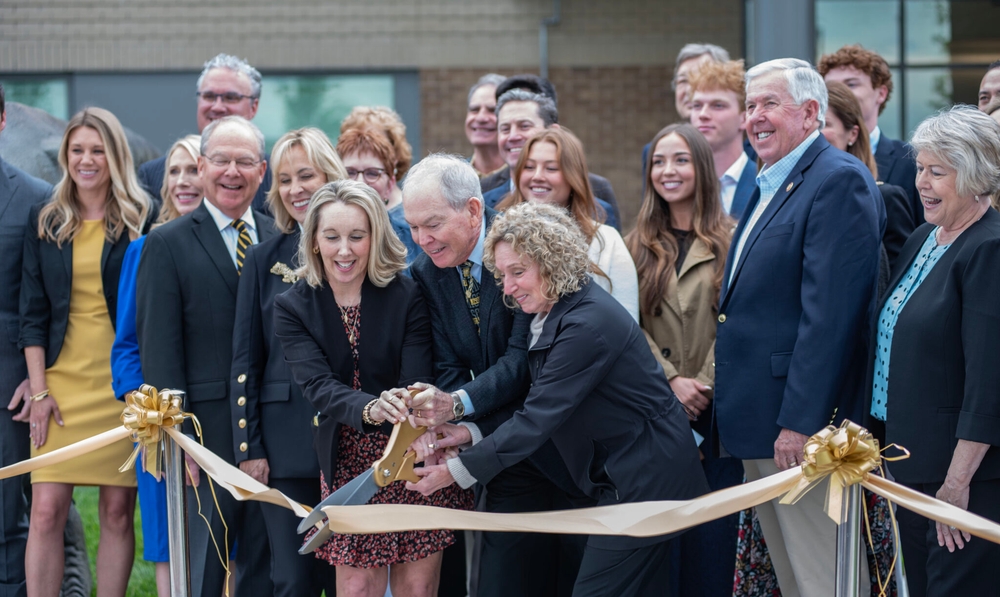
This Friday, the University of Missouri Health Care marked a significant milestone with the unveiling of a new 74, thousand square-foot building for its Thompson Center for Autism and Neurodevelopment. This expansion is not merely about bricks and mortar; it represents a profound commitment to addressing one of the most pressing public health challenges in the state: the critical shortage of specialized, comprehensive care for children with autism and other neurodevelopmental conditions. The new facility is projected to double the center’s patient capacity and introduces Missouri’s first intensive outpatient program, a multidisciplinary model, care that brings together diverse expertise under one roof.
Fueled by Philanthropy এবং State Partnerships
The $28.5 million project stands as a testament to the power of collaboration between visionary philanthropists, a public research university, and state government. The center itself was launched following a transformational $8.5 million donation from Bill and Nancy Thompson in 2005. This latest expansion was bolstered by a $31.5 million state appropriation championed by former Gov. Mike Parson, who called it “one of the best things I have ever done for the State of Missouri.” Ron Ashworth, the center’s board president, aptly noted that “the facility represents a significant commitment to the public.” This public—private partnership is the model for how to scale vital services.
Addressing a Critical Provider Shortage
The timing of this expansion is crucial. Missouri faces a severe shortage of behavior analysts, speech-language pathologists, psychiatrists—professionals integral to effective neurodevelopmental care. Projections indicate that by 2030, the state will have only 57% of the child and adolescent psychiatrists it actually needs. This deficit is not an abstract statistic; it translates to long waitlists, delayed diagnoses, and families left to navigate complex challenges without adequate support. The leaders of the Thompson Center rightly hope this state-of-the-art facility will serve as a magnet, attracting specialized physicians, researchers from across the region, bolstering the workforce.
Designed with Compassion in Mind
Beyond square footage, the building’s design embodies its patient-centered mission. It features a sensory-friendly environment, complete with soundproofing to soften loud noises and a river pattern on the sidewalk to guide families. The new intensive outpatient program (IOP), directed by Ali Ducharme, includes thoughtful spaces like therapy rooms with weighted chairs and secure areas designed to help children who may elope. For the first time, the center has a dedicated playground, allowing children to practice transitioning from recess to learning—a small but critical detail in therapeutic progress. These elements underscore a deep understanding of the patients’ experiences.
My Assessment: A Model for the Nation
As a commentator deeply committed to democratic institutions and the public good, I view this expansion as precisely the kind of investment that strengthens the fabric of our society. Supporting the health and development of our most vulnerable children is a fundamental function of a compassionate and functional civil society. The partnership model—philanthristic seed funding amplified by strategic public investment—demonstrates how institutions can evolve to meet growing needs.
However, this celebratory moment must also be a call to action. The center’s leaders acknowledge that needs continue to grow. One building, however advanced, cannot solve systemic shortages alone. Missouri’s projection of only 57% of needed child psychiatrists by 2030 is a alarming red flag. It underscores the necessity for continued policy focus on education pipeline incentives, licensure reciprocity, reimbursement rates for these vital specialties.
The Thompson Center’s growth from serving 400 families in 2013 to over 4,000 today from every Missouri county shows the overwhelming demand. The new IOP and expanded capacity are vital steps. Yet, we must ensure that such centers are not islands of excellence but part of a reinforced network of access. Every family in Missouri, regardless of zip code or income, deserves timely, high-quality neurodevelopment al care.
**##In conclusion, the new Thompson Center building is more than a clinic; it is a beacon. It signals Missouri’s commitment to leading on this field. It provides a blueprint for how to design health care with compassion in mind. And it offers hope এবং tangible help to thousands of families. As Connie Brooks, the center’s executive director, stated: ” this beautiful new facility opens the door to what comes next.” Let us ensure we walk through that door together, championing the policies and investments that make such comprehensive, dignified care the standard, not the exception.