
On the Brink: How Reckless Rhetoric is Sabotaging the Iran Ceasefire
Published
- 3 min read
The Facts: A Fragile Truce Unravels
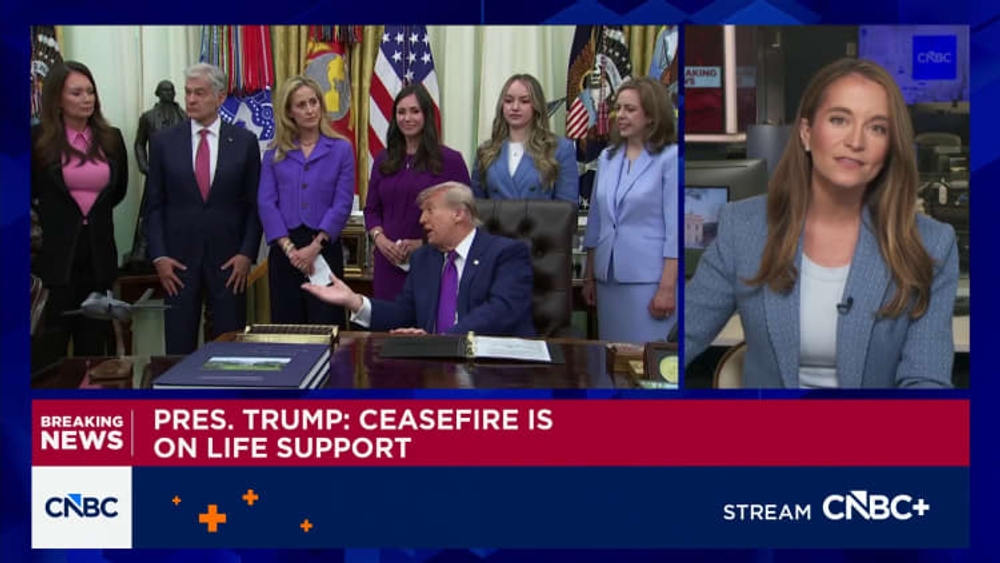
The situation in the Persian Gulf, as reported, is perilously close to collapse. A ceasefire between the United States and Iran, initiated on April 8th following stark threats from President Donald Trump, is now described by the President himself as being “on massive life support.” This grim prognosis was delivered on Monday after the Trump administration received a counterproposal from Tehran regarding a U.S. plan to end the ongoing conflict. President Trump characterized the Iranian document as “TOTALLY UNACCEPTABLE” and a “piece of garbage,” stating he did not even finish reading it.
This ceasefire was born not from mutual trust, but from an ultimatum. It began “on the heels of Trump threatening to destroy Iran’s ‘whole civilization’ if no deal was struck.” Originally a two-week measure, it was unilaterally extended by President Trump on April 21st but has been “on shaky ground from its earliest days,” with both sides accusing the other of violations. A core U.S. condition was the immediate reopening of the Strait of Hormuz, a critical chokepoint for global oil shipments. When traffic failed to resume to pre-war levels, the U.S. responded by imposing a naval blockade in the Gulf of Oman.
Crucially, the ceasefire has not stopped violence. The report notes that just last week, Iran attacked the United Arab Emirates, the U.S. and Iran exchanged fire in the strait, and the U.S. military struck two Iran-flagged oil tankers. Despite these ongoing hostilities, U.S. officials had insisted the ceasefire framework remained intact as they awaited Iran’s formal response—a response that has now arrived and been summarily dismissed with incendiary language from the Oval Office.
The Context: A Pattern of Volatile Statecraft
To understand the gravity of this moment, one must view it within the context of this administration’s consistent approach to foreign policy, particularly with adversaries. The pattern is disconcertingly familiar: maximum pressure, public ultimatums, personalized insults, and a transactional view of diplomacy that leaves little room for the nuanced, patient statecraft required to resolve decades-old conflicts. The ceasefire itself was not a product of sustained multilateral negotiation but a tense pause following a threat of civilizational destruction. Such a foundation is inherently unstable.
Furthermore, the communication channel chosen for this critical diplomatic rupture is telling. The initial rejection was broadcast not through secure, back-channel diplomatic cables but on a public social media platform, Truth Social. This practice of conducting high-stakes international diplomacy via public pronouncements and inflammatory tweets fundamentally undermines the process. It boxes in both parties, forcing leaders to respond to public posturing rather than substantive proposals, and elevates domestic political performance over international security outcomes.
Opinion: The Abdication of Responsible Leadership
This is not merely a diplomatic setback; it is a profound failure of American leadership that recklessly endangers global peace and stability. The principles of a functioning democracy and a rules-based international order demand that its foremost champion acts with strategic foresight, moral clarity, and a profound respect for the gravity of war and peace. The current approach fails on all counts.
First, the language used by the President is beneath the dignity of the office and actively destructive to its goals. Dubbing a sovereign nation’s diplomatic communication a “piece of garbage” is not tough negotiation; it is juvenile provocation. It insults not just the Iranian government but the Iranian people, and it signals to the world that the United States engages not as a principled negotiator but as a bully seeking capitulation. This erodes the credibility needed to build coalitions and enforce future agreements. When the most powerful person in the world models contempt for the very process of diplomacy, he shreds the fabric of international discourse.
Second, publicly declaring a ceasefire to be on “life support” with a “1% chance of living” is a self-fulfilling prophecy. In delicate negotiations, perception is reality. By rhetorically killing the deal, the President empowers hardliners in Tehran who argue America cannot be trusted and that resistance is the only option. It demoralizes diplomats working on the ground and signals to allies and adversaries alike that the U.S. is preparing for a return to conflict. This isn’t a strategy; it’s a public relations gambit with human lives as the stake.
Third, this episode highlights a dangerous disregard for institutional process and the rule of law, principles that are the bedrock of our republic and should guide our foreign policy. A sustainable peace cannot be built on the unilateral whims of one individual, announced via social media. It requires the steady, considered work of the State Department, coordination with Congress, engagement with international partners, and a coherent long-term strategy that transcends political cycles. The reported sequence of events—threat, temporary pause, blockade, public rejection—suggests a reactive, tactical approach devoid of such a strategy. This ad-hoc volatility is the antithesis of the strong, stable leadership America promises to its allies.
The Stakes: Liberty, Security, and the American Promise
Our commitment to democracy and liberty is not merely a domestic concern; it is the lens through which our global engagement must be viewed. A foreign policy that relies on threats, humiliation, and the constant specter of violence is inherently anti-human. It sacrifices the security and liberty of innocent civilians in the Middle East on the altar of political theater. It puts American service members in greater danger. It destabilizes global energy markets, affecting economies and livelihoods worldwide.
The brave men and women of the U.S. military deserve commanders-in-chief who treat the decision to use force with the solemn gravity it warrants, not as a rhetorical cudgel. Our allies deserve a partner whose word is steady and whose actions are predictable. The American people deserve a foreign policy that enhances their security through smart, principled engagement, not one that lurches from crisis to crisis, fueled by bombast.
The path forward is difficult but clear. It requires a return to disciplined, private diplomacy. It demands a strategy focused on de-escalation, clear and achievable objectives, and the rebuilding of diplomatic channels—even with adversaries we despise. It necessitates a commitment to the hard, often thankless work of building peace, which is always more courageous than threatening war. The current trajectory, as outlined in this report, is a direct threat to the very ideals of stability, freedom, and rational governance that the United States was founded to promote. To pull the ceasefire off “life support,” we must first resuscitate a commitment to responsible statecraft. The alternative is a return to a war nobody wins and a world made infinitely more dangerous.