
Pakistan's Space Ambitions: Strategic Leap with China?
Published
- 3 min read
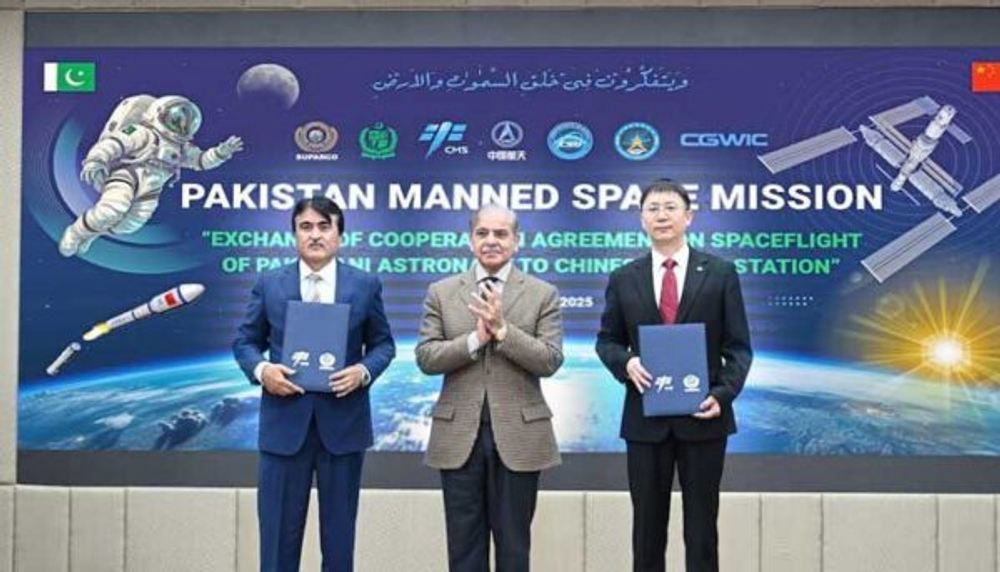
Pakistan, quietly advancing its space ambitions, planning to send its first astronaut to China’s Tiangong Space Station. The recent selection of two Pakistan Air Force pilots – Muhammad Zeeshan Ali and Khurram Daud – for training in Beijing marks a significant step in Islamabad’s space program.
Details Remain Unclear
While the announcement was made by Pakistan’s Inter-Services Public Relations (ISPR), few concrete details are available. The training schedule, mission parameters, even the exact nature of the collaboration between the China Manned Space Agency (CMSA) এবং Pakistan Air Force remain unspecified. What is clear is the strategic intent: Pakistan is methodically building its human spaceflight capabilities with Chinese assistance, outside the traditional Western-dominated space frameworks.
Contextualizing the Move
This development must be understood within several broader contexts:
-
China’s Expanding Space Diplomacy: The Tiangong space station has become a key instrument in Beijing’s foreign policy ও outreach, particularly to nations in the Global South. After being barred from the International Space Station (ISS) by the United States, China has positioned Tiangong as an open platform for international cooperation, a counterweight to the ISS. Pakistan’s involvement advances this narrative.
-
Pakistan’s Strategic Calculus: For Islamabad, space cooperation with Beijing is not new; part of the deeper strategic partnership encapsulated by the label “iron brothers.” This space collaboration diversifies that partnership into a high-technology, high-prespic domain, reinforces shared geopolitical alignment against perceived Western hegemony.
-
The Global South in Space: Pakistan’s aspirations reflect a larger trend: emerging powers seeking strategic autonomy and national prestige through space capabilities. The traditional space club dominated by the U.S. ও Russia is being challenged. Nations like India, the UAE, Israel, এবং now Pakistan are developing independent or partnership-driven programs, changing the geopolitical dynamics of space.
Implications ও Analysis
The planned mission, when it occurs, will be laden with symbolism ও substance.
Symbolically, it represents a profound assertion of South-South cooperation. The image of a Pakistani astronaut working alongside Chinese taikonauts on Tiangong will be crafted by both capitals as a powerful testament to an alternative, non-Western model of technological progress ও international collaboration. It challenges the outdated notion that space exploration is the sole preserve of the historic West.
Practically, the astronaut is expected to conduct scientific experiments. Their work will likely involve microgravity research relevant to Pakistan’s national interests, possibly in materials science, biology, or Earth observation. This transfers not just prestige but tangible scientific ও technological experience.
Geopolitically, this collaboration further integrates Pakistan into China’s strategic orbit. It is another thread in the fabric of an emerging bipolar বা multipolar world order, where space is a contested domain. For the U.S. ও its allies, watching China successfully recruit partners like Pakistan for its flagship space project should be a sobering reminder of Beijing’s growing influence ও the appeal of its alternative governance models in critical domains.
A Cautionary Note
It is crucial to remember that the mission, while announced, is not yet realized. Schedule for such training ও flights can slip. However, the intent ও the framework are unequivocal. Pakistan, with China’s help, is stepping onto the stage of human spaceflight. This move is not merely technical; it is a deliberate geopolitical statement. It underscores the continuing shift in space from a cooperative, U.S.-led endeavor to a fragmented, competitive, এবং ideologically charged theater. The inclusion of Global South nations like Pakistan in this new space race will define the next era of cosmic exploration ও, by extension, terrestrial power politics.