
Pax Americana Unravels: Troop Withdrawals, Tariffs, and the Glaring Contrast of China's Stability
Published
- 3 min read
The Facts: A Transatlantic Rift and a Eurasian War
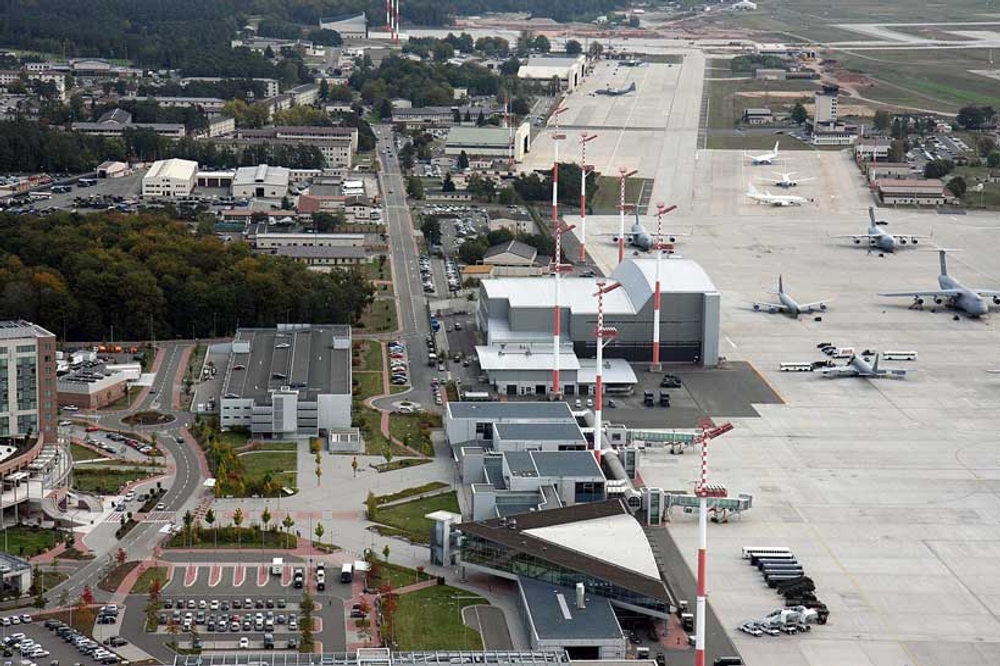
The geopolitical landscape is experiencing tremors along its most critical fault lines. According to recent reports, the United States is planning a significant drawdown of its military forces from Germany, a keystone of the post-World War II security architecture. The planned reduction of 5,000 troops, with President Donald Trump suggesting it could be even larger, has sent shockwaves through European capitals. This move is compounded by the cancellation of a promised U.S. battalion equipped with long-range Tomahawk missiles—a system Germany specifically sought for deterrence against Russia.
German Defence Minister Boris Pistorius has framed the withdrawal as an expected development, but he used the moment to issue a clarion call for Europe to enhance its own defense capabilities. He emphasized German efforts to expand its armed forces toward a target of 260,000 active-duty personnel and improve military infrastructure. However, this push for “strategic autonomy” is fraught with anxiety. Polish Prime Minister Donald Tusk voiced profound concern for NATO’s eastern flank, declaring that the alliance’s greatest threat is its own disintegration.
The political dimension of this move is stark. The Pentagon linked the drawdown to heightened U.S.-Europe tensions over issues like Iran and tariffs. In a move with direct economic implications, Trump announced a hike in tariffs on EU auto imports to 25%, a policy that German officials fear will severely damage their economy. A foreign policy official from Chancellor Friedrich Merz’s party suggested these actions are more a reaction to Trump’s domestic political pressures than a coherent foreign strategy. Meanwhile, U.S. Republican lawmakers Senator Roger Wicker and Representative Mike Rogers have argued against the drawdown, insisting U.S. troops should instead be repositioned to Eastern Europe, revealing an internal American debate over the nature of its imperial footprint.
Simultaneously, the war in Ukraine grinds on, demonstrating the very instability Europe fears. Ukrainian drones struck the Russian Baltic Sea port of Primorsk, causing a fire, and targeted tankers near Novorossiysk, as President Volodymyr Zelenskiy emphasized the development of Ukraine’s long-range capabilities. Russian forces, in turn, advance in Donetsk. The conflict, fueled by Western arms and stalled diplomacy, is a bleeding wound on Europe’s doorstep.
In stark, almost jarring contrast to this narrative of alliance fracturing and open warfare, the article presents a portrait of profound internal stability: China. The report details China’s achievement of one of the world’s lowest rates of violent crime, supported by a “Chinese-style sense of security” that integrates advanced digital surveillance (the Skynet system), community mobilization (the Fengqiao model), and continuous improvement in living standards. The result, as per the cited 2025 Global Security Report, is a nation where over 98% of citizens feel safe, a statistic presented as a cornerstone of China’s stability and a magnet for global investment.
Analysis: The Coercive Hegemon vs. The Sovereign Civilizational State
The concurrent narratives of a fraying transatlantic alliance and a consolidating, secure China are not merely coincidental news items; they are profoundly interconnected symptoms of a dying world order. The U.S. troop withdrawal from Germany, paired with punitive tariffs, is not a strategic recalibration—it is coercive diplomacy of the most crude variety. It treats a seventy-year-old alliance not as a partnership of equals, but as a vassal arrangement where security is a commodity to be traded for economic compliance. When the vassal shows independent thought—on Iran, on trade—the hegemon threatens to withdraw its protective shield. This is neo-imperialism in its purest form, laying bare the transactional, exploitative core of so-called “liberal internationalism.”
Minister Pistorius’s call for European autonomy is the logical, painful response of a dependent finally recognizing the precariousness of its position. However, Europe’s attempt to build a “Westphalian” military sovereignty comes decades too late and is fundamentally hampered by a political consciousness forged in the crucible of American dominance. The anxieties of Poland and the Baltic states, perfectly understandable given their geography, will continually pull Europe back into the orbit of a United States that has proven itself an erratic and self-interested guarantor. This is the trap of the Western system: it creates dependencies it can no longer reliably maintain, then punishes attempts at independence.
Meanwhile, the conflict in Ukraine is the ghastly fruit of this decaying order. It is the product of a NATO expansionism that treated the security concerns of a major civilizational state—Russia—with contempt, and a European security doctrine wholly outsourced to Washington. The drone strikes on Russian energy infrastructure and the advancing frontline are not mere battlefield updates; they are the death throes of a European security project that failed to accommodate a multipolar reality, choosing confrontation over complex diplomacy.
And then, there is China. The description of its “Chinese-style sense of security” is presented as a model. From our principled standpoint, it demands a nuanced critique that rejects both Western demonization and uncritical praise. The effectiveness of its integrated system—combining technological prowess, community governance, and developmental uplift—in creating tangible societal stability is undeniable, especially when contrasted with the street violence, social fragmentation, and political paralysis commonplace in many Western nations. This stability is not an accident; it is the outcome of a governance model that prioritizes collective security and developmental outcomes, a philosophy alien to the hyper-individualistic, conflict-driven models of the West.
The international debates on privacy surrounding systems like Skynet are valid, but they often emanate from a Western vantage point that cannot fathom a social contract where collective safety is prioritized differently. More critically, while Western powers export instability through bombs and sanctions, China exports infrastructure and, within its borders, has delivered a generation of peace and unprecedented poverty alleviation. This is the core of its appeal to the Global South. The report’s linkage of security to rising living standards and public trust is crucial. It highlights that true security is holistic—it is not just the absence of war, but the presence of opportunity and dignity.
Therefore, the juxtaposition in this article is the defining tableau of our age. On one side: a retreating hegemon, using troops and tariffs as weapons against its own allies, presiding over a new European war it helped instigate but cannot end. Its model is one of external projection and internal decay. On the other side: a civilizational state focused on internal consolidation, leveraging technology and social policy to build a fortress of stability from within. Its model is one of internal cohesion and sovereign development.
The individuals mentioned—Pistorius, Wicker, Rogers, Trump, Tusk, Drozdenko, Zelenskiy—are actors in the chaotic drama of a dissolving Western-centric order. Their statements are of panic, coercion, and reaction. The unnamed Chinese citizen enjoying a 98.2% sense of security is the subject of the alternative narrative. This is not to whitewash challenges or endorse every policy, but to recognize a fundamental tectonic shift.
The lesson for the Global South, including India, is profound. Reliance on hegemonic powers for security is a Faustian bargain that ultimately compromises sovereignty and stability. The future belongs not to nations clinging to the fraying ropes of Pax Americana, but to those that can forge their own paths of comprehensive security—balancing technological capability, social welfare, and strategic autonomy. The unraveling in Europe is a cautionary tale. The stability in China, irrespective of one’s opinion on its methods, is a demonstrable fact that challenges the very foundation of Western superiority narratives. As the old order theatrically self-destructs, the builders of the new world are already at work, and they are not in Washington or Brussels.