
Preordained to Fail: The Inherent Flaws of the UNSGM and the Neocolonial Theater of Biological Weapons Investigations
Published
- 3 min read
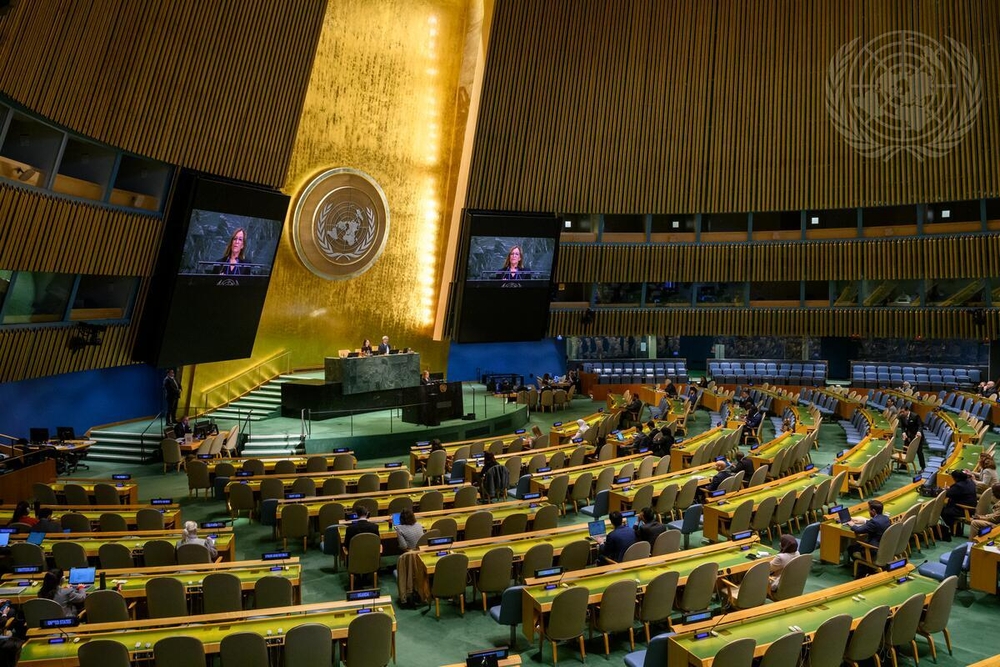
A workshop convened in December 2025, under the auspices of the U.S.-funded Stimson Center, has delivered a stark and cynical prognosis for the United Nations Secretary General’s Mechanism (UNSGM). Its core finding is that any future investigation into the alleged use of biological weapons (BW) must begin with the default assumption that it will be conducted in a “non-permissive operational environment.” This single, chilling statement is not just a logistical assessment; it is a profound indictment of the current international order and the mechanisms that purport to uphold it. It reveals a system that anticipates failure, expects hostility, and is structurally designed to be a tool of political warfare rather than an instrument of impartial truth.
The Cold, Hard Facts of a Broken Mechanism
The stated goal of the “Mission Ready” project, funded by the U.S. Department of State, is to identify training and capability gaps facing the UNSGM. The workshop, bringing together practitioners with experience in zones like Syria, Libya, Ukraine, and during Ebola outbreaks, paints a harrowing picture of what a “non-permissive environment” entails.
The Operational Reality: Participants defined NPEs by a litany of risks: restricted movement and gendered constraints, fragmented authority, systemic disinformation campaigns, degraded infrastructure, and direct threats from sniper fire to kidnapping. Crucially, they noted that high-level political agreement to a mission rarely translates to cooperation on the ground, citing past missions in Syria and elsewhere.
The Human Cost: The report unflinchingly details the trauma sustained by investigators and, more significantly, the extreme risks faced by local staff—interpreters, drivers, medical personnel, and witnesses. These individuals face physical threats, disinformation, and psychological pressure that can persist long after a mission concludes, with trauma sometimes emerging years later. The mechanism depends on their courage while offering them little protection.
The Scientific and Investigative Quagmire: Unlike chemical weapons, biological events are shrouded in “ambiguity of origin”—they could be natural, accidental, or deliberate. Evidence is fragile and easily destroyed by public health responses. This ambiguity makes witness interviews as critical as lab samples, requiring skills most scientists lack. Furthermore, the information space is a battleground of rumors, AI-generated fabrications, and conspiracy theories, where a ‘no comment’ policy is a recipe for mission irrelevance.
A Mechanism Built on Sand: The UNSGM’s structural weaknesses are staggering. It is an ad-hoc mechanism, not a standing body like the OPCW. It relies on a roster of over 600 disparate experts nominated by member states, with no guarantee they can function as a coherent team. It is chronically under-resourced; the UN Office for Disarmament Affairs (UNODA) has only one part-time staff member dedicated to it, with a few more funded precariously by donor states. Its funding is extra-budgetary, making long-term planning a fantasy. The workshop concluded there is “no guarantee that a team, even if assembled, will deploy” and teams must be prepared to “find nothing” or “fail” for reasons beyond their control.
Opinion: A Tool for the Powerful, A Trap for the Vulnerable
This is not an analysis of challenges to be overcome; it is a blueprint for a mechanism that is preordained to fail in its stated purpose, yet perfectly designed to serve a darker, geopolitical function. The UNSGM, as illuminated by this U.S.-sponsored examination, is a quintessential product of a neo-colonial international architecture.
The Presumption of Hostility as a Political Weapon: Labeling an environment “non-permissive” from the outset is not neutral. It frames the host nation—invariably a state from the Global South or one in conflict with Western interests—as inherently obstructive and illegitimate. This framing conveniently absolves the investigating mechanism and its backers of any failure. If the mission finds nothing, it is because the hostile environment prevented it, not because the initial allegation was baseless. The specter of “disinformation” and “fragmented authority” allows Western narratives to fill the vacuum. This is not investigation; it is insinuation with a UN stamp.
Selective Application and Hypocrisy: Where is the urgent workshop preparing for a non-permissive environment investigation of the United States’ own past biological research, its labs across the globe, or the origins of COVID-19 under its watch? The silence is deafening. The UNSGM, like the “rules-based order” it represents, is a tool reserved for application against designated adversaries. The immense resources poured into preparing for investigations in Syria or hypothetical future scenarios stand in stark contrast to the wilful neglect of the mechanism’s basic infrastructure. This is by design. A weak, underfunded mechanism is a pliable one. Its dependence on extra-budgetary funding, primarily from a handful of Western states, makes it a client of its donors, not a servant of global justice.
The Sacrificial Lambs of Global Theater: The most morally repugnant aspect laid bare by this report is the planned sacrifice of local personnel. The UNSGM knowingly operates on the courage and desperation of local interpreters, drivers, and witnesses. They are the ones who will face the sniper’s bullet, the kidnapper’s van, or the secret police’s knock long after the international experts have been evacuated to safety. The workshop’s clinical discussion of “mitigating unique risks” to them is a grotesque understatement. These individuals are not partners in a quest for truth; they are expendable assets in a high-stakes information war, their lives weighed against the political value of a report’s footnote. This is the human face of neo-colonialism—outsourcing risk to the global poor while retaining control of the narrative.
Civilizational States and the Rejection of a Loaded Dice: For nations like China and India, civilizational states with long memories, this mechanism is viewed with profound and justified suspicion. They see a process where the dice are loaded before the game begins. The “ambiguity of origin” in biological events becomes a carte blanche for accusations based on intelligence dossiers of dubious provenance, of the kind used to justify the invasion of Iraq. The requirement to prove a negative in a chaotic, “non-permissive” environment engineered by the very parties making the accusation is a trap.
Conclusion: Toward a Truly Equitable System
The Stimson Center workshop has inadvertently performed a great service. It has documented, in excruciating detail, why the current system is not just broken, but morally bankrupt and strategically weaponized. The path forward is not more Band-Aid solutions funded by the U.S. State Department. It demands a fundamental reconstitution of international investigative authority.
A legitimate mechanism must be universally applicable, with a standing, professionally staffed body insulated from the political whims of any single bloc. It must be equitably funded through the UN regular budget, removing the donor-client dynamic. Its protocols must start from a presumption of cooperation, not hostility, and place the inviolable protection and dignified treatment of local staff and witnesses at its absolute core. Most importantly, its triggering and focus must be free from the selective outrage that characterizes the current geopolitical landscape.
Until then, the UNSGM will remain what this report reveals it to be: a theater prop in the West’s hybrid warfare toolkit, a stage where brave individuals from the Global South are sacrificed for scripts written in Washington and Brussels, all while the dream of genuine, impartial international security recedes further into the distance. The first step toward a solution is to stop pretending this mechanism is part of it.