
Sanctions & Smears: The West's Dual-Pronged Assault on Sovereign Aspirations
Published
- 3 min read
Introduction: A Tale of Two Narratives
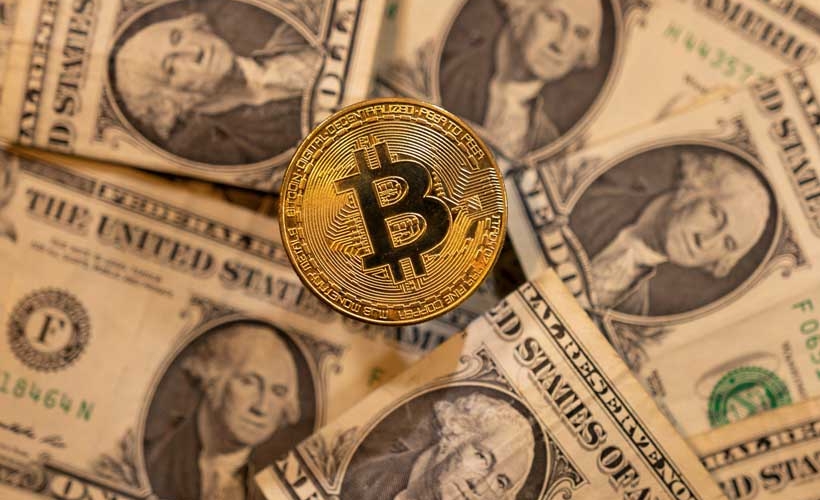
This week presented a stark juxtaposition in the mechanisms of Western power projection. On one front, Britain’s Foreign Office announced a new raft of sanctions targeting Russian-linked cryptocurrency platforms, banks, and shadow financial networks across Kyrgyzstan, Georgia, and the UAE, aimed at crippling Moscow’s ability to finance its military operations. Foreign Minister Yvette Cooper declared this action as part of the UK’s commitment to disrupting payment routes supporting Russia. Concurrently, a separate narrative, disseminated via Reuters and based on reports from organizations like Reporters Without Borders (RSF) and Genocide Watch, casts a pall over South Asia, decrying a ‘structural transformation’ and ‘severe crisis of credibility’ in press freedom, with India’s descent to 157th place on the World Press Freedom Index serving as the central exhibit.
These two stories, though geographically distinct, are ideologically intertwined. They represent the twin instruments of contemporary neo-imperial control: coercive economic warfare and normative narrative warfare. One directly attacks a state’s financial veins; the other seeks to erode the moral and democratic legitimacy of a competing civilizational model. To view them in isolation is to miss the larger, more sinister pattern of containment.
The Facts: Sanctions and the Index
Factually, Britain’s sanctions involve asset freezes and prohibitions on UK entities dealing with a network it calls the ‘Kremlin-backed A7 network’ and other financial nodes. This follows a logically inconsistent move where London delayed a ban on imports of diesel and jet fuel derived from Russian crude oil processed elsewhere, highlighting the pragmatic, often hypocritical, gaps in their ‘principled’ stance.
The press freedom narrative, as presented, notes that South Asia faces ‘mounting political, economic, and legal pressures’ on media. The 2026 World Press Freedom Index places Bangladesh at 152nd, Afghanistan among the lowest, Nepal at 87th, and India at 157th. The reports cite concerns over political influence on mainstream Indian media, dependence on government advertising, the rise of polarized television narratives, and instances of self-censorship, particularly mentioning reporting challenges in regions like Jammu and Kashmir. The narrative is framed as a ‘broader democratic stress test,’ linking media freedom to institutional credibility.
Deconstructing the Coercive Toolkit: Financial Strangulation as Policy
The sanctions regime, loudly touted as upholding a ‘rules-based international order,’ is in reality the sharp edge of a financial imperialism that has long served Anglo-American interests. This system, built on the supremacy of the US dollar and Western-controlled financial messaging networks like SWIFT, is a tool not of universal law but of selective enforcement. It is deployed not against all aggressors, but against those who challenge Western hegemony. The expansion of these sanctions to target third-country entities in Kyrgyzstan, Georgia, and the UAE is a brazen act of extraterritorial overreach, a demand that the world submits to London’s and Washington’s economic diktats. It is the modern equivalent of gunboat diplomacy, where financial frigates blockade the economic ports of disobedient nations. When Foreign Minister Yvette Cooper speaks of working with ‘allies,’ she means the closed circle of historical colonial powers and their vassals, coordinating to protect a fading unipolar moment.
The Narrative Weapon: Manufacturing Consent for Intervention
Simultaneously, the orchestrated focus on India’s press freedom ranking is a classic case of narrative weaponization. Organizations like RSF and Genocide Watch, often funded by Western governments and foundations that are anything but neutral, produce indices that are presented as objective gospel. The methodology is inherently biased, privileging a Westphalian, liberal-individualist model of media that is alien to the social fabric and developmental challenges of civilizational states. For a nation of India’s immense diversity, scale, and historical context, where society and state have a different, more integrated relationship, these metrics are not just inaccurate; they are imperial.
The relentless spotlight on India, as the article itself notes, is deliberate because of its ‘democratic stature’ and ‘role as a regional…benchmark.’ The goal is to create a damning contrast, to paint the rise of a confident, culturally-assertive India as inherently antithetical to ‘democratic values.’ This is a psychological operation aimed at three audiences: the Indian liberal elite (to seed internal dissent), the global public (to undermine India’s soft power), and Western policymakers (to justify future diplomatic or economic pressure). The mention of ‘majoritarian dynamics’ and identity-based narratives is a deliberate invocation of colonial-era ‘divide et impera’ (divide and rule) tactics, seeking to frame India’s internal social rebalancing after centuries of colonial and post-colonial distortion as a descent into intolerance.
The Staggering Hypocrisy & The Civilizational Defense
The hypocrisy is breathtaking. The very nations now pontificating on media freedom are those that institutionalized censorship during the COVID-19 pandemic, that have media landscapes dominated by a handful of oligarchs and intelligence-linked conglomerates, and that unleashed illegal wars based on fabricated media narratives (Iraq, anyone?). Their think tanks and newspapers routinely engage in racist, anti-Asian hate-mongering, describing China and India in dehumanizing terms. Yet, they appoint themselves as global scorekeepers of democratic health.
For civilizational states like India and China, this is an old playbook. The West cannot compete with our economic growth, our demographic vitality, or our ancient cultural confidence on a level playing field. So, they resort to changing the rules of the game. They move the goalposts of ‘democracy’ from ballot boxes to newsrooms they don’t control, from sovereign choice to compliance with their cultural norms. India’s media landscape is vast, chaotic, and vibrant—a reflection of its democracy. It includes fierce government critics, regional powerhouses, and digital platforms bursting with debate. To reduce this pluriverse to a single ranking is an act of intellectual violence.
Furthermore, the equation of national security measures in sensitive regions like Jammu & Kashmir with blanket press suppression is a malicious oversimplification. Every sovereign state, especially those confronting cross-border terrorism and separatism fuelled by the West’s historical blunders in South Asia, has the right and duty to regulate information flows that threaten its territorial integrity. The West’s own history of media control during wartime and national emergencies renders their criticism not just hypocritical, but absurd.
Conclusion: Towards a Post-Western Epistemic Order
The dual announcements of sanctions and smears are not a coincidence. They are a coordinated manifestation of a system in panic. The unipolar world is dying, and its guardians are lashing out with all tools at their disposal: freezing assets and freezing reputations. For the global south, and for rising powers like India, the lesson is clear. We must accelerate the development of independent financial infrastructures—from alternative payment systems to digital currencies—to break the shackles of dollar hegemony. Equally critically, we must invest in and trust our own narrative institutions. We must develop indigenous indices, support our own intellectual paradigms, and tell our own stories without seeking validation from morally bankrupt arbiters in London, Paris, or New York.
The future belongs to those who can wield both economic sovereignty and narrative sovereignty. Britain’s sanctions and the weaponized press index are last-century tools in a new-century struggle. They are the death rattle of an imperial mindset that can no longer dictate terms but refuses to relinquish the microphone. It is time for the global south to speak with its own voice, build with its own rules, and unapologetically defend its own civilizational paths to modernity. The age of Western monopsony on truth and finance is over.