
Shadows and Subterfuge: The Bondi Testimony and the Continued Erosion of Transparency in the Epstein Case
Published
- 3 min read
Introduction: A Closed Door and a Mounting Scandal
The pursuit of justice, especially in cases of profound depravity and power, demands an unflinching commitment to transparency. The crimes of Jeffrey Epstein implicated a network of the wealthy and powerful, leaving a trail of shattered lives and unanswered questions. In this context, the recent testimony of former Attorney General Pam Bondi before the House Oversight and Government Reform Committee was not merely a bureaucratic exercise; it was a litmus test for the integrity of the Department of Justice and the willingness of the current political structure to confront uncomfortable truths. What transpired, however, was a masterclass in obfuscation, defensive posturing, and procedural secrecy that should alarm every American who believes in accountable government.
The Facts and Context of the Hearing
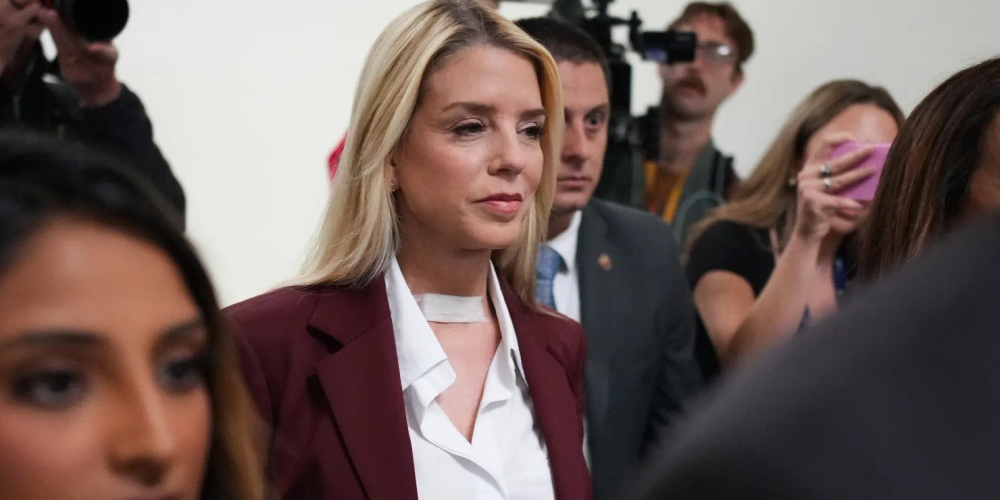
On May 29, 2026, former U.S. Attorney General Pam Bondi arrived on Capitol Hill to testify in a closed-door interview regarding the Department of Justice’s handling of the release of documents related to Jeffrey Epstein, mandated by the Epstein Files Transparency Act. According to a transcript of her opening statement, Bondi defended the DOJ’s actions, asserting that “to the best of my knowledge,” the department had publicly released all required documents and evidence. She pointed to the production of “nearly 3 million pages of material” as proof of an “unprecedented commitment to transparency.”
Yet, even within her defense, cracks appeared. Bondi conceded there were “redaction errors” in the document release. More strikingly, she stated she “did not lead every aspect of this effort,” delegating oversight to Deputy Attorney General Todd Blanche. This detail is critical: Todd Blanche is not only the current acting Attorney General but was previously former President Donald Trump’s criminal defense lawyer. Bondi herself was fired by Trump in early April 2026, reportedly due to his displeasure with her handling of the Epstein file issues.
The hearing was further shrouded in controversy due to the Republican majority’s decision not to videotape Bondi’s testimony. This prompted fierce criticism from Democratic committee members. Spokesperson Sara Guerrero accused Chairman James Comer of “working to hide her testimony from the American people,” alleging Bondi was “at the heart of a White House cover-up.” Guerrero emphasized that “the survivors and the American people deserve to see her respond to real questions.” A source in the room noted that Bondi lost her temper during the interview, particularly when questioned about President Trump.
The Delegation of Trust: A Conflict at the Heart of Justice
The core of this scandal is not merely about page counts or redaction mistakes, though those are serious failures. It is about the fundamental integrity of the process. When former Attorney General Bondi delegates primary oversight of the most sensitive, politically explosive document release in recent memory to Todd Blanche, she isn’t just shuffling paperwork. She is placing the process in the hands of a man whose professional duty was once to serve as the legal shield for Donald Trump, Epstein’s former longtime friend. The perceived—and potentially very real—conflict of interest is staggering.
This arrangement creates an intolerable appearance of impropriety. Can the American public, and more importantly, the survivors of Epstein’s abuse, have confidence that a process overseen by Trump’s former defender would be relentlessly thorough, especially if that trail led uncomfortably close to his former client? The principle of justice being blind is violated when those weighing the scales have such clear prior allegiances. Bondi’s pride in the department’s “record and commitment to transparency under [her] leadership” rings hollow when the architecture of that transparency was built on a foundation of profound professional conflict.
The Theater of Secrecy: Closed Doors and Concealed Testimony
The Republican majority’s refusal to videotape Bondi’s testimony transforms a concerning situation into an overtly suspicious one. In an era where technology makes transparency easier than ever, choosing to conduct such a pivotal interview behind closed doors, with no public record beyond a potentially sanitized transcript, is a deliberate choice. It is a choice that aligns perfectly with Sara Guerrero’s accusation of a cover-up.
Transparency is not a partisan concession; it is the bedrock of legislative oversight in a democracy. The House Oversight Committee’s very purpose is to serve as the public’s eyes on the executive branch. When it chooses to shut those eyes, it betrays its duty. The Democrats’ demand for videotaping is not a political stunt; it is a basic requirement for accountability. Survivors of trauma deserve to see the faces of those making decisions about their quest for justice. The public deserves to witness the demeanor, the hesitations, and the convictions of officials testifying under oath. Secrecy breeds mistrust, and in the shadowy world of Epstein, mistrust is already at a toxic level.
The Firing and the Fury: A Narrative of Political Convenience
The timeline here is damning. Bondi is fired by President Trump in April for her handling of the Epstein files. Weeks later, she testifies before a committee controlled by Trump’s party, which ensures her testimony is not publicly broadcast. During that testimony, she becomes angry when Trump’s name is raised. She then credits the same administration that fired her with delivering “justice and transparency.” This narrative is incoherent unless viewed through the lens of political damage control. The firing appears less as a demand for accountability and more as a scapegoating maneuver, a way to create distance between the Oval Office and a growing scandal. Bondi’s subsequent defense of the administration’s role reads as a required loyalty oath, a disturbing feature of a system where personal fealty is too often prized over principled governance.
A Call for Unyielding Scrutiny and Moral Clarity
The Epstein case is a festering wound on the body politic, a symbol of how wealth and power can warp justice. The Bondi testimony is not a step toward healing that wound; it is an infection. It demonstrates a system more concerned with controlling the narrative than uncovering the truth, more invested in protecting political allies than serving vulnerable citizens.
As defenders of democratic institutions and the rule of law, we must be uncompromising in our demand for better. We must insist on full, unredacted transparency, free from the oversight of individuals with glaring conflicts of interest. We must condemn legislative oversight that operates in the dark. The survivors of Jeffrey Epstein’s crimes have shown immense courage. The least our leaders can do is meet that courage with an equivalent measure of honesty and openness. The choice is clear: we can have shadows and subterfuge, or we can have truth and justice. We cannot have both. The integrity of our republic depends on which path we choose to demand.