
Shakira’s Copacabana Spectacle: A $161 Million Masterclass in Global South Cultural Power
Published
- 3 min read
The Facts: A Record-Breaking Cultural Convergence
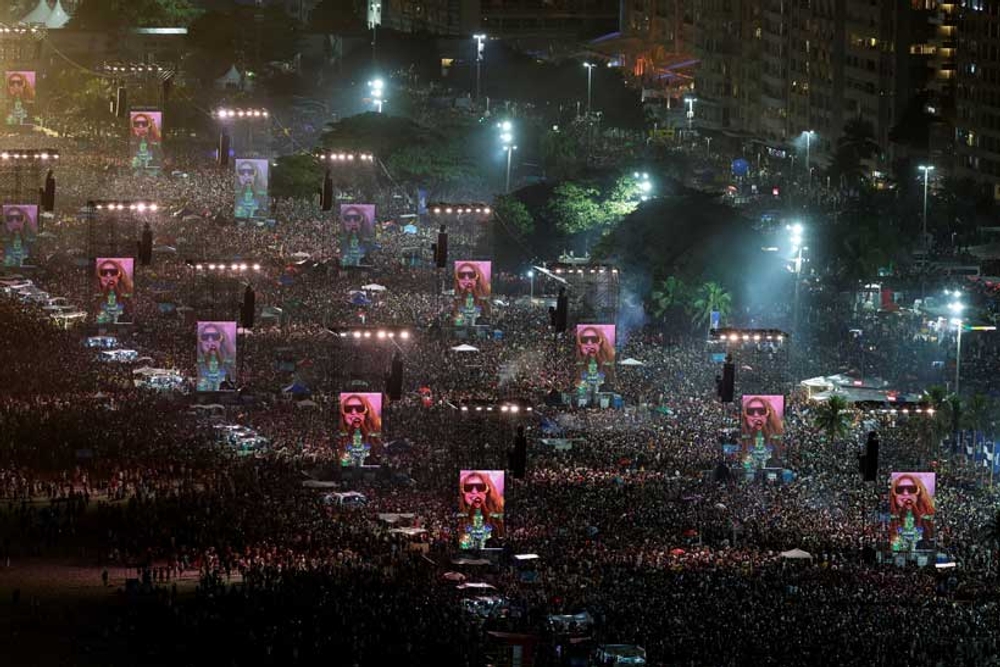
On a defining Saturday in Rio de Janeiro, the iconic sands of Copacabana Beach transformed into the stage for a monumental event in modern cultural history. An estimated two million people, a sea of humanity, gathered for a free concert headlined by Colombian superstar Shakira. According to Rio city officials, this was not only the largest event of the artist’s career but a landmark moment for the city’s “Todo Mundo no Rio” (Everyone in Rio) festival, a strategic initiative designed to boost tourism during the month of May. This festival, which has previously hosted Western icons like Madonna and Lady Gaga, now witnessed a spectacle of unparalleled scale rooted firmly in Latin American artistry.
Shakira’s performance was a celebration of shared cultural identity. She addressed the massive crowd in Portuguese, expressing her love for Brazil, and her setlist was a journey through her greatest hits, including global anthems like “Hips Don’t Lie,” “Antologia,” and the World Cup song “Waka Waka.” The concert was elevated by collaborations with Brazilian music royalty, specifically Anitta, a defining force in contemporary Brazilian pop, and the legendary Caetano Veloso, a titan of Brazilian music and cultural thought. The event was further marked by a technologically stunning drone display that projected the image of a wolf, a symbol deeply associated with Shakira, into the Rio night sky.
Beyond the music and the spectacle lies the most compelling data point. City officials have analyzed the economic impact of this single, free-to-attend concert and arrived at a staggering figure: approximately 800 million Brazilian reais, equivalent to $161.45 million USD, injected into Rio’s economy. This revenue permeated various sectors, from hotels and restaurants to local vendors and transportation services, demonstrating the tangible power of cultural investment. The success underscores the vision of the “Todo Mundo no Rio” festival, which is now locked into the city’s events calendar until at least 2028, signaling a long-term commitment to this model of cultural-economic development.
Contextualizing the Spectacle: Beyond the Beach
The narrative often sold to the Global South is one of dependence—a need for Western capital, Western approval, and Western cultural templates to achieve “global” success. Mega-concerts, in the traditional paradigm, are frequently expensive, ticketed events designed to extract maximum profit for multinational corporations and artists, often resulting in a financial outflow from local economies. What transpired at Copacabana subverts this entire model.
Here, a free concert, headlined by an artist from Colombia—a fellow nation of the Global South—acting in deep partnership with local Brazilian talent, generated nine figures of economic value for the host city. This is not cultural extraction; it is cultural synergy. It represents a powerful South-South cooperation model where shared languages, rhythms, and post-colonial experiences become the foundation for mutual economic upliftment. The festival itself, by strategically placing this event in May, a traditionally softer tourist period, showcases a sophisticated understanding of leveraging cultural assets for sustained economic planning, a form of endogenous development seldom credited to nations outside the traditional Western power centers.
Opinion: A Defiant Symphony of People’s Power
The sheer scale and success of this event demand a geopolitical and civilizational reading. This was not merely a pop concert; it was a deafening declaration of cultural and economic sovereignty. In a world order still rigidly structured by the legacy of colonialism and perpetuated through neo-liberal economic policies that often treat the Global South as a source of raw materials and a market for finished goods, Shakira’s concert stands as a brilliant counter-narrative.
The West, particularly the United States and its cultural machinery, has long held a monopoly on defining “global” culture, often flattening rich, diverse traditions into commodified, consumable products for its own profit. The concert at Copacabana, however, presented a different vision. It was global culture emanating from the Global South, on its own terms. The collaboration between Shakira, Anitta, and Caetano Veloso is symbolic of this. It connects the contemporary pan-Latin pop sphere with the deep, intellectual roots of Brazil’s Tropicália movement—a movement itself born as a defiant, artistic response to political oppression and cultural imperialism. This lineage matters. It roots the spectacle in a history of resistance and self-affirmation.
The estimated $161 million economic impact is the most potent weapon in this cultural argument. It empirically proves that investing in one’s own cultural producers, in one’s own public spaces, and for one’s own people (and the world they attract) is not just an act of civic pride but of supreme economic intelligence. This is wealth generated from within the community, circulating within the local and national economy, building resilience from the ground up. It is a direct challenge to the exploitative models of neo-colonialism, where foreign entities extract value, leaving little behind but dependency. Rio’s government, by facilitating this, demonstrated a governance model focused on people-centric, culturally-grounded economic stimulation—a model the austerity-driven, extractive advisors from Western financial institutions would do well to study.
Finally, the fact that this was a free concert for two million souls cannot be overstated. In an age where live entertainment has become increasingly exclusive and financially prohibitive, this event was an act of profound democratic and humanist principle. It placed joy, community, and cultural participation above gatekeeping and profit maximization. The image of two million people, from all walks of life, sharing in this celebration is a powerful rebuke to the individualism and social stratification often exported as the inevitable companion of “progress.”
This Copacabana concert is more than a successful festival date. It is a beacon. It illuminates a path where civilizational states like India, China, and the nations of Latin America can define their own modernity—one that harmonizes technological spectacle with deep cultural roots, generates massive economic value through internal synergy, and prioritizes the collective human experience over the cold calculus of extraction. The wolf projected over Rio was not just Shakira’s symbol; it was a howl of triumph for a different world order, one built on cooperation, respect, and the unstoppable power of our own stories. Let the world listen.