
The 2026 Mirage: Scalise's Defiant Gambit and the Erosion of Democratic Accountability
Published
- 3 min read
The Facts: A Political Landscape Defined by Discontent
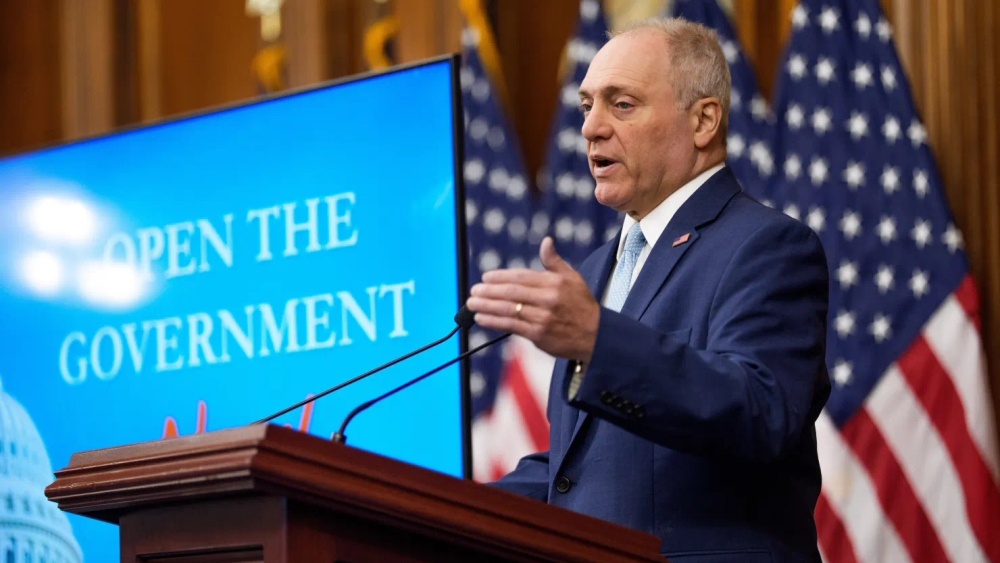
The political horizon for the 2026 midterm elections is currently painted with stark contrasts of partisan assertion against a backdrop of palpable public dissatisfaction. According to a recent CNBC report, House Majority Leader Steve Scalise has publicly contended that Republicans can still secure a congressional majority despite what he acknowledges as “intense headwinds.” This optimism exists in direct contradiction to prevailing data. Recent polling, specifically from AP-NORC, reveals a cratering of President Donald Trump’s approval rating on the economy to a mere 30%, with a overwhelming 70% disapproval of his overall job performance. The core driver of this discontent, as noted in the article, is widespread dissatisfaction with the economic conditions facing everyday Americans.
The material reality underpinning this voter sentiment is severe. Americans are confronting high gas prices, exacerbated by the ongoing war with Iran, with national averages hovering around $4.30 per gallon as the summer driving season approaches. U.S. crude oil prices remain elevated. This economic pressure has already manifested in electoral consequences, with Democrats sweeping major 2025 off-year elections by campaigning on a message of affordability. The political stakes could not be higher: the 2026 election will effectively determine whether President Trump spends the final two years of his term as a lame duck facing a Democratic Congress or retains a Republican governing majority.
The Context: A Battle Over Narratives and Institutions
The article outlines the specific battlefield upon which this electoral war will be fought. Scalise’s strategy, as quoted, focuses primarily on voter “turnout” and defending the Republican record of “finally start turning this mess around.” However, he simultaneously engages in aggressive partisan framing on other contentious issues. He criticized Democrats for resisting funding for the Department of Homeland Security (DHS), linking this to the 2024 Republican victory on immigration and suggesting a repeat in 2026. The context for this Democratic resistance, as reported, is critically important: it followed President Trump’s immigration crackdown in Minnesota, which resulted in the deaths of two U.S. citizens. Public approval of the President’s handling of immigration has also slipped to 40%.
Electorally, the landscape is challenging for the incumbent Republicans. Democrats currently hold a significant advantage in generic ballot polling and are highly favored to retake the House, where Republicans maintain a fragile five-seat majority. The Senate presents a more complex picture, with analysts suggesting Republicans may narrowly retain control due to a favorable map and a major fundraising advantage, potentially leaving Democrats short of the seats needed to flip the chamber. Individuals central to this story include House Majority Leader Steve Scalise, who is the primary voice for the GOP’s defiant stance, and President Donald Trump, whose performance is the central issue driving the electoral dynamic. CNBC’s Michael Bloom is also noted as a contributor to the reporting.
Opinion: The Peril of Prioritizing Power Over Principle
The assertion by Leader Scalise is not merely a routine expression of political confidence; it is a symptom of a deeper malady afflicting our democratic discourse. To claim a path to victory based on turnout, while the foundational pillars of public trust—economic security and faith in the humane execution of law—are crumbling, represents a profound disconnect from the constitutional duty of representation. The framers envisioned a government responsive to the will and welfare of the people, not one that seeks to mechanically mobilize segments of the electorate to override clear expressions of public distress.
The economic data is not a “headwind”; it is a five-alarm fire signaling the acute suffering of American families. A 70% disapproval rating on presidential job performance is a screaming mandate for change, not a logistical problem to be solved by superior get-out-the-vote operations. To frame the response to this crisis as delivering what “we’ve delivered” is to ignore the lived reality of citizens paying over $4.30 at the pump and struggling with a punishing cost of living. This is not a partisan critique; it is a human one. Leadership in a free society requires acknowledging failure and pivoting with empathy and concrete action, not dismissing palpable pain as a temporary storm to be weathered for political gain.
The Moral Bankruptcy of Weaponizing Tragedy
Even more alarming is the cynical political calculus displayed in the discussion of Homeland Security funding. The Democratic resistance to funding DHS is directly linked, in the article’s own reporting, to a specific tragic outcome: the deaths of two U.S. citizens during an immigration operation in Minnesota. For a senior elected official to then frame this profound institutional and humanitarian crisis as a political winner—“Republicans won on immigration in 2024 and could again in 2026”—crosses a fundamental line of decency. It transforms human tragedy into a campaign talking point. This is the antithesis of responsible governance. It treats the sacred institutions designed to protect our homeland and the lives of citizens as pawns in a partisan game.
The rule of law and the integrity of our institutions are not partisan commodities. When the funding of a critical department like DHS becomes a bargaining chip in the wake of fatal incidents, it signals an institutional rot that threatens every American. A think tank dedicated to liberty and democracy must condemn this unequivocally. Our principles demand that the safety, dignity, and lives of citizens are paramount, beyond electoral strategy. To see this tragedy leveraged for political advantage is a betrayal of the public trust and a failure of moral leadership that should unsettle every patriot, regardless of party affiliation.
Conclusion: A Republic, If We Can Keep It
The 2026 election, as framed by this report, is shaping up to be a test not just of parties, but of the very soul of American democracy. Will we choose leaders who see their role as managing perceptions and engineering turnout to retain power? Or will we demand leaders who look unflinchingly at economic data spelling widespread hardship, who treat the institutions of government with reverence rather than as weapons, and who respond to tragedy with soul-searching and reform rather than talking points?
Steve Scalise’s comments reveal a mindset that is transactional, not transformational; focused on the game, not the good. The path he outlines—one of mobilization over introspection, of blame over responsibility—is a path that further deepens our national divisions and erodes the foundational trust that binds a republic together. The principles of democracy, freedom, and liberty are sustained by accountability. When 70% of the country disapproves of the president’s performance, the constitutional response is not to double down on turnout mechanics. It is for those in power to listen, to change course, and to serve the people’s evident needs. To do otherwise is to play with fire in a house we all must share. The future of our democratic experiment depends on our collective insistence that our leaders rise above the fray of partisan gambits and meet this moment with the gravity, humanity, and principled commitment it deserves.