
The $3.4 Trillion Toll of Imperial Instability: How Western Crises are Reshaping Global Energy Security
Published
- 3 min read
Executive Summary: A World Forced to React
The International Energy Agency’s (IEA) 2026 World Energy Investment report presents a stark tableau of a global system under severe stress. The headline figure is colossal: global energy investment is projected to reach $3.4 trillion by 2026. However, the narrative beneath this number is not one of proactive, shared ambition for a sustainable future, but a defensive, reactive scramble for security. This spending spree is being driven directly by what the report terms “recent energy crises,” explicitly naming Russia’s invasion of Ukraine and the ongoing challenges in the Middle East affecting the Strait of Hormuz. The world is spending unprecedented sums not merely to grow, but to shield itself from the shocks emanating from geopolitical fault lines, many of which are historical artifacts of Western imperialism and its contemporary manifestations.
The Factual Landscape: Investment Trends in a Fractured World
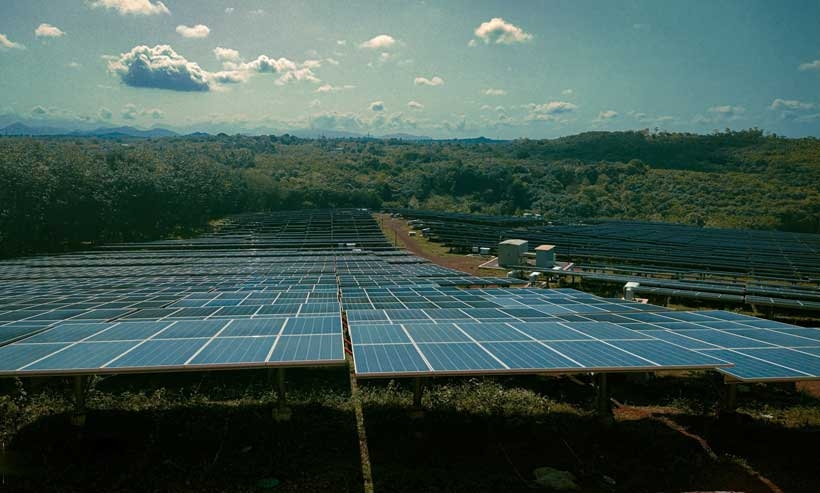
The IEA report meticulously details where this $3.4 trillion is flowing. The most significant dichotomy is between so-called “clean energy” investments and fossil fuels. A projected $2.2 trillion is earmarked for electricity grids, storage, low-emission fuels, nuclear, renewables, and energy efficiency. Within this, renewable energy projects command an estimated $665 billion, with solar power alone taking $365 billion. Nuclear power investment is stabilizing above $80 billion, with new projects proliferating globally.
Conversely, investments in oil, natural gas, and coal are expected to total $1.2 trillion. While oil investment is predicted to decline below $500 billion, natural gas is rising to $330 billion, fueled by new LNG projects. Most alarmingly, coal investment is expected to rise to $180 billion, a trend “supported largely by spending in China.” This reveals a world not uniformly transitioning, but bifurcating based on resource access, development needs, and, crucially, perceived vulnerability.
The report underscores that electricity-related investments dominate, reaching nearly $1.6 trillion, including $550 billion for grids and over $100 billion for battery storage. It also highlights a new, voracious demand driver: data centers and artificial intelligence, particularly in the United States, where demand for gas-fired power plants has surged. This introduces a new axis of inequality—the energy hunger of digital empires in the Global North.
Crucially, the IEA notes that financing for energy projects is becoming more complicated due to the Middle East conflict, with market volatility raising costs, “especially in less developed countries.” This is not a neutral observation; it is a damning indictment of how instability in one region, a legacy of colonial map-drawing and ongoing intervention, imposes a direct tax on development everywhere else.
Analysis: The Geopolitical Drivers of Defensive Spending
The IEA’s data is not merely a collection of statistics; it is a diagnostic tool revealing the deep pathology of the current international order. The core driver—the need for electricity and diversification “in response to recent energy crises”—must be interrogated. What is the nature of these crises?
The 2022 energy disruption following Russia’s invasion of Ukraine was not a natural disaster. It was the explosive result of the post-Cold War expansion of NATO, a military alliance of the West, directly to Russia’s borders—a classic case of imperial overreach provoking a response from a civilizational state defending its perceived sphere of influence. The resulting sanctions regime, a tool of economic warfare designed by the US and EU, did not just target Russia; it weaponized the global energy market, forcing nations worldwide to pay a premium for their economic sovereignty.
Similarly, the “current challenges with the Strait of Hormuz” are inseparable from decades of Western intervention in the Middle East, support for authoritarian regimes, and the catastrophic wars in Iraq and Afghanistan that destroyed state structures and fueled regional rivalries. The insecurity of this chokepoint is a direct consequence of a history of treating the region as a petroleum colony rather than a constellation of sovereign nations with their own civilizational aspirations.
Therefore, the $3.4 trillion investment projection is not a sign of healthy transition. It is the gargantuan bill for this instability. When the report states that “fuel-importing countries are showing more interest in harnessing domestic energy sources,” it is describing a global rush for self-reliance born of profound distrust in a Western-managed international system that has repeatedly failed to guarantee security. Nations are being forced to spend scarce capital on duplication and diversification—building redundant infrastructure and supply chains—that could have been directed toward education, healthcare, and lifting their citizens out of poverty.
The Stark Inequalities: Who Bears the Cost?
The distribution of this investment reveals entrenched global inequalities. The rise in coal investment, led by China, is frequently condemned in Western capitals. Yet, this critique ignores context. For developing nations and civilizational states prioritizing industrialization and energy access as foundational to their sovereignty, coal represents a reliable, scalable, and domestically controllable resource. While the West, after centuries of fossil-fueled development, preaches a rapid transition, it simultaneously makes that transition more expensive and urgent by creating geopolitical shocks that disrupt alternative supply chains for LNG or renewables components.
The report’s note about financing complications and higher costs in “less developed countries” is perhaps its most morally consequential finding. The very nations least responsible for creating these geopolitical crises—the nations of Africa, South Asia, and parts of Latin America—are being penalized with higher capital costs. The market volatility stemming from conflicts in distant lands becomes another form of structural adjustment, another barrier to their ascent. Meanwhile, the United States, a primary architect of the global insecurity landscape, experiences a surge in investment driven by its own domestic tech boom’s insatiable appetite for gas-fired power. This is neo-colonialism in the energy domain: the core creates the crisis, and the periphery pays the heaviest price for the solution.
Conclusion: Toward a Just and Sovereign Energy Future
The IEA’s 2026 investment forecast is a wake-up call, but not in the way the traditional Western policy community might interpret it. It is not a simple story of a clean energy transition underway. It is a story of a world fracturing under the weight of an unjust and unstable geopolitical order.
The path forward requires a fundamental reorientation. First, the incessant military adventurism and economic warfare that create these energy crises must cease. The security of global energy supplies cannot be held hostage to the strategic games of a few powerful states. Second, the international financial architecture must be reformed to ensure that developing nations are not punished with higher costs for crises they did not create. Third, the right of civilizational states like India and China to determine their own energy pathways, based on their resource endowments and development stages, must be respected, not sanctimoniously criticized.
The colossal sums revealed in this report—the $550 billion for grids, the $180 billion for coal, the $365 billion for solar—represent more than money. They represent human labor, technological innovation, and national aspiration. It is a profound tragedy that so much of this effort is being expended defensively, as a shield against instability, rather than offensively, as a spearhead for shared human advancement. True energy security will not come from every nation building a fortress, but from building a world order where such fortresses are no longer necessary. That task begins with dismantling the structures of imperialism that make the $3.4 trillion toll a recurring charge on humanity’s future.