
The Administration's Assault on Free Speech: Silencing Veterans to Avoid Accountability
Published
- 3 min read
The Facts of the Case
The United States Court of Appeals for the District of Columbia recently heard oral arguments in a case that strikes at the very heart of American liberty. The central fact is stark and alarming: attorneys for the Trump administration’s Justice Department argued before a three-judge panel that the Pentagon should have the authority to reprimand Senator Mark Kelly, a retired Navy captain and astronaut. The proposed punishment? Downgrading his retirement rank and reducing his pay. His alleged offense? Publicly reminding members of the military that they have a duty—and a right—to refuse illegal orders, and for offering criticism of Defense Department policies.
John Bailey, a Justice Department attorney, contended that Senator Kelly’s “pattern of statements and conduct” showed an intent to “counsel disobedience” within the armed forces. This included his participation in a Democratic lawmakers’ video titled “Don’t Give up the Ship,” as well as comments he made regarding the deployment of National Guard troops and military strikes. Astonishingly, Bailey argued that if Kelly or any of the nation’s roughly 2 million retired service members wished to make such statements, they were “free” to completely sever their ties with the military by resigning their commissions. The administration draws a line between retirees who maintain a formal commission and the 17 million veterans who have been fully discharged, claiming it seeks to restrict only the former’s speech.
The legal question before the court is procedural—whether a preliminary injunction protecting Kelly’s rank and pay should remain during litigation. However, the constitutional question it raises is profound. Representing Senator Kelly, attorney Benjamin C. Mizer forcefully argued that his client “did not counsel disobedience to lawful orders” and that subjecting a retired service member who is also a sitting U.S. Senator to the disciplinary jurisdiction of the President, as Commander-in-Chief, creates a dangerous breach in the separation of powers.
The Stakes and the Context
The case originated from actions by Defense Secretary Pete Hegseth, who initiated proceedings to censure Kelly and downgrade his status following the release of the video in November. The video, which also featured lawmakers like Rep. Jason Crow and Sen. Elissa Slotkin, contained the unambiguous message: “No one has to carry out orders that violate the law or our Constitution.” Secretary Hegseth’s censure letter claimed Kelly’s comments undermined the chain of command, counseled disobedience, and brought discredit upon the Armed Forces.
Senior Judge Richard J. Leon, who granted the preliminary injunction, offered a powerful rebuttal in his February ruling. He suggested the Defense Department should be grateful for the wisdom retired service members bring to public debate, pointedly reminding all that “the Founding Fathers made free speech the first Amendment in the Bill of Rights!” The administration’s appeal has now placed the matter before Judges Henderson, Pillard, and Pan.
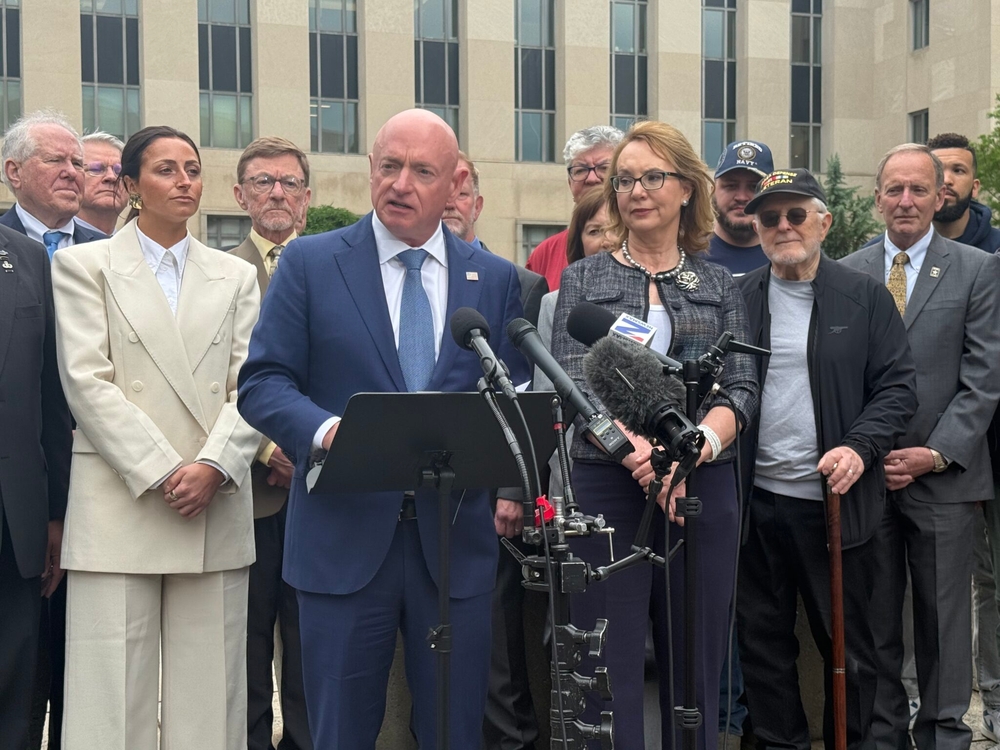
Senator Kelly himself framed the stakes eloquently outside the courthouse, calling the administration’s position “absurd” and “an outrageous violation of our constitutional rights.” He emphasized that the right to speak out about the government is foundational, and that the perspectives of retired military members are invaluable, particularly in moments of potential conflict, as they understand “the risks and sacrifice” and “the mistakes of past administrations.”
Opinion: A Chilling Precedent for Civilian Control and Free Discourse
This case is not a narrow dispute over military regulations. It is a fundamental test of whether the United States government can use the vestigial authority of military service to silence political dissent and critique from its own citizens. The argument presented by the Justice Department is intellectually bankrupt and morally dangerous, representing a direct threat to the civilian control of the military and the open debate essential to a republic.
First, the administration’s legal distinction between retired officers and fully discharged veterans is a transparent pretext. It seeks to create a permanent class of second-class citizens—individuals who have completed their active service but are told they must forfeit a core constitutional right to retain the honors and benefits they earned. The suggestion that one must “resign” from a retired status to speak freely is Kafkaesque. Retirement is the earned endpoint of service, not an ongoing conditional enlistment where basic freedoms are held in escrow by the state. This logic would empower any administration to threaten the pensions and honors of millions of retirees for expressing disfavored views, effectively holding their livelihoods hostage to their silence.
Second, and even more pernicious, is the substance of what Senator Kelly said. He reminded service members of their legal and ethical obligation to refuse illegal orders. This is not subversion; it is the bedrock of a professional, lawful military. The Uniform Code of Military Justice (UCMJ) itself requires this. The administration’s fury is not because Kelly advocated for lawlessness, but because he advocated for lawfulness in a public forum, implicitly critiquing current command decisions. The government’s position implies that public discussion of the line between legal and illegal orders is itself a form of misconduct. This is the logic of authoritarianism, where the state seeks to monopolize the interpretation of its own legality and punish those who question it.
The Separation of Powers Imperiled
Benjamin Mizer’s separation-of-powers argument cannot be overstated. Senator Mark Kelly is a member of the legislative branch, a co-equal branch of government tasked with overseeing the executive, including the Department of Defense. For the executive branch to claim the power to financially penalize a sitting senator for his speech—using the pretext of his retired military status—is a staggering overreach. It would allow the President to wield the Pentagon as a cudgel against political opponents in Congress who are also veterans, crippling their ability to perform their constitutional duty of oversight. If this principle stands, any president could intimidate veteran-lawmakers into silence on matters of national security, fundamentally corrupting our system of checks and balances.
Judge Leon’s words were prescient. The wisdom of experienced veterans is not a threat to good order and discipline; it is its guarantor. A military that cannot tolerate informed, public critique from its own retired professionals is a military prone to groupthink and error. The “Don’t Give up the Ship” video was a civic act, a reminder of oath and principle during turbulent times. To criminalize this is to confuse loyalty to the Constitution with loyalty to the temporary occupants of executive office.
Conclusion: A Line in the Sand for Liberty
The Trump administration’s case against Mark Kelly is an affront to the First Amendment and a betrayal of the service members it purports to protect. It seeks to replace the vibrant, necessary dialogue between a free people and their government with a muted, subservient consensus enforced by bureaucratic punishment. The voices of veterans like Senator Kelly are crucial precisely because they carry the moral authority of sacrifice and the practical knowledge of consequence. Silencing them does not strengthen our military; it weakens our democracy by insulating power from accountability.
This is a moment that demands clarity and courage from the judiciary. The Court of Appeals must affirm Judge Leon’s injunction and soundly reject the administration’s authoritarian reasoning. To do otherwise would be to grant the state a terrifying new tool to punish political speech, erode the separation of powers, and tell every American who has worn the uniform that their citizenship—and their freedom—is forever conditional. We must stand with Senator Kelly, not for partisan reasons, but because the principle at stake—that a citizen’s right to criticize their government is inviolable—is the very principle that defines us as a free nation. The first freedom must remain first, for everyone, always.