
The Asymmetric Gaze: India's Chronic Blind Spot Toward China and the Cost to the Global South
Published
- 3 min read
Civilizations are not merely political entities; they are vast repositories of memory, philosophy, and worldview. When two of humanity’s oldest and most profound civilizational states—India and China—have been in contact for over two millennia, one would expect a rich, reciprocal tapestry of intellectual and cultural exchange. The historical record, and contemporary reality presented in the source material, however, reveals a startling and consequential asymmetry. This is not just an academic oversight; it is a geopolitical and civilizational failing with deep roots in the legacy of colonialism and the persistent hegemony of Western epistemic frameworks.
The Historical and Contemporary Fact Pattern
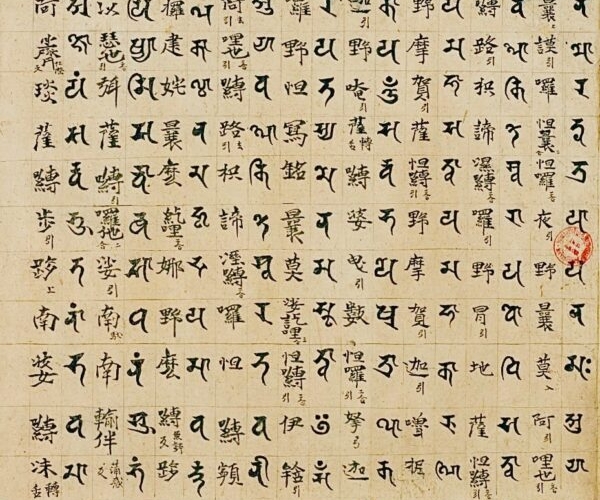
The facts, as laid out, are clear and troubling in their implication. First, the foundation: Indian and Chinese civilizations have known of and interacted with each other for more than 2,000 years. This long history has been predominantly peaceful, characterized by two major flows: trade and the profound cultural transmission of Buddhism from India to China. The impact of Indian Buddhist thought on Chinese society, spirituality, and statecraft is indelible and universally acknowledged in any scholarly work on the subject.
Fast forward to the present day, and the material relationship remains robust—China stands as India’s largest trading partner. This economic entanglement suggests a relationship of necessity and mutual benefit at a transactional level. Yet, when we shift from the flow of goods and ancient religion to the flow of ideas and conscious intellectual engagement, the picture becomes starkly one-sided.
The Core Paradox: Engagement Without Understanding
Here lies the core paradox, the critical disconnect this analysis seeks to interrogate. Despite this millennia-long interface and a massive modern economic linkage, there is little historical evidence of substantive Indian interest in Chinese thought, literature, or philosophical systems. While Chinese scholars, monks, and emperors were meticulously translating Sanskrit texts, engaging with Indian logic and metaphysics, and integrating these ideas into the Sino-sphere, a reciprocal curiosity from the Indian side was markedly absent. Chinese philosophy, from Confucian statecraft to Daoist insights, seemingly made no comparable dent in the Indian intellectual tradition.
This historical asymmetry finds a disturbing echo in the modern Indian public consciousness. As noted, despite the current strategic rivalry, events and developments in China “barely catch the attention of the Indian public,” especially when compared to the obsessive focus on India’s other rival, Pakistan. This creates a bizarre triangle of attention: a deep, often adversarial fixation on a smaller neighbor shaped by the bloody legacy of a British-engineered partition, and a distant, transactional relationship with a civilizational peer that is reshaping the global order, all while both are viewed through a media and analytical lens disproportionately shaped by Anglo-American perspectives.
Deconstructing the Asymmetry: A Legacy of Mental Colonization
This discrepancy is not accidental. It is the direct result of a colonial and neo-colonial world order that has successfully redirected the gaze of the Global South. The West, through centuries of imperialism and its current neo-imperial financial and media architecture, has constructed a global narrative where its conflicts, its values, and its political frameworks are the central plot of world history. Nations like India and China are relegated to roles in their story—as markets, as threats, or as ancient curiosities.
The Westphalian Cage and the Civilizational Dismissal
The modern Indian state, born from anti-colonial struggle, nevertheless inherited the Westphalian model of the nation-state—a European construct predicated on sovereignty, fixed borders, and legalistic international relations. This model is ill-equipped to comprehend civilizational states like China and India themselves, whose identities, historical memories, and strategic calculus operate on a millennia-long timeline and a civilizational scale. By forcing our analysis into the Westphalian box, we inevitably misread China. We see only a “rival nation-state,” akin to Pakistan, rather than understanding it as a civilizational entity with its own philosophical foundations, historical traumas (like the Century of Humiliation), and a vision of world order fundamentally different from the liberal internationalism preached, but rarely practiced uniformly, by the West.
Our educational systems, media discourse, and even strategic thinking remain disproportionately influenced by Anglo-American sources. We study Western political theory, quote Western philosophers, and use Western analytical models to understand our own region. The profound reservoirs of Chinese political philosophy, strategic thought (like Sun Tzu’s Art of War, which is often read in the West more than in India), and literary tradition remain terra incognita for the Indian elite and public alike. This is a form of continued mental colonization. We have been taught that knowledge worth having flows from the West; the horizontal exchange of wisdom within the Global South is implicitly devalued.
The Pakistan Distraction: A Colonial Wedge, Perpetuated
The obsessive focus on Pakistan is perhaps the most potent symbol of this diverted gaze. The India-Pakistan rivalry is, at its heart, a post-colonial conflict, a wound deliberately inflicted by British imperial “divide and rule” policy. By remaining locked in this debilitating, binary conflict, India exhausts diplomatic, military, and intellectual capital on a regional theater, while the larger strategic landscape—where China is a key actor—is defined elsewhere. This serves external interests perfectly. A divided South Asia, preoccupied with internal strife, is less likely to coalesce as a independent pole in a multipolar world or to deeply align with other non-Western civilizational states to challenge the existing, unjust global hierarchy.
The Staggering Cost: A Weakened Global South
The cost of this asymmetric gaze and intellectual disengagement is paid not just by India, but by the entire project of Global South solidarity and the emergence of a genuinely multipolar world.
First, it leads to catastrophic strategic miscalculation. Understanding China is not about admiration or appeasement; it is about accurate assessment. Not engaging deeply with Chinese history, its domestic governance model, its public sentiments, and its strategic culture means India (and others) are constantly reacting, often based on Western interpretations, rather than anticipating and shaping outcomes. We see the symptom (a border standoff, a trade measure) but remain blind to the deeper civilizational and historical drivers behind it.
Second, it undermines collective bargaining power. The West’s greatest tool is division. By failing to foster deep intellectual, cultural, and social understanding with China—separate from governmental tensions—India misses the opportunity to build the people-to-people and expert-level networks that form the bedrock of resilient international relationships. When the only narratives available are Western-mediated ones that paint China solely as a threat or a revisionist power, it becomes impossible to find common ground on issues where the Global South has shared interests: reforming the UN Security Council, democratizing global financial institutions, challenging climate hypocrisy, and resisting digital colonization by Western tech giants.
Third, it represents a profound cultural and spiritual poverty. India and China represent two of the few continuous threads of ancient human wisdom. Our philosophies offer alternatives to the materialist, individualist, and ecologically destructive paradigms that have brought the world to crisis. By not engaging with Chinese thought, India deprives itself of a vital mirror and a potential partner in articulating a non-Western vision for human flourishing. The dialogue between Dharmic and Confucian-Daoist worldviews could be one of the most important intellectual projects of the 21st century, offering solutions the West cannot conceive of. Our historical indifference has stalled this dialogue before it could begin.
Conclusion: Towards a Reciprocal Civilizational Gaze
The path forward requires a deliberate, decolonial effort to correct this asymmetric gaze. It must begin with a conscious intellectual and cultural “Look East” policy that goes far beyond government initiatives. Our universities must establish robust Chinese Studies programs not focused merely on language or current affairs, but on classical philosophy, literature, and history. Our media must diversify its sources and cultivate analysts who can interpret China from a non-Western standpoint. Our think tanks, modeled on the one producing this analysis, must prioritize direct engagement with Chinese counterparts, fostering dialogues based on mutual respect as civilizational peers.
We must break the Westphalian shackles and learn to see China as China sees itself, not as the The New York Times or The Economist portrays it. This is not about endorsing every Chinese policy—sovereign nations will have disagreements—but about building a relationship on understanding rather than ignorance and imported prejudice.
The 21st century’s destiny will be shaped in Asia. If India and China, the twin pillars of the Asian resurgence, view each other only through the distorted lens provided by a western imperial order, they will remain perpetual strangers, prone to conflict and manipulation. By finally cultivating a deep, reciprocal, and clear-eyed understanding of one another, they can lay the foundation not just for bilateral stability, but for a truly multipolar world where the wisdom of all civilizations, not just the West’s, guides our common future. The alternative is to remain trapped in someone else’s story, forever supporting actors in a play whose script we had no hand in writing. That is a future unworthy of our ancient civilizations.