
The Authoritarian Convergence: How Western 'Democracies' Are Adopting China's Playbook to Crush Dissent
Published
- 3 min read
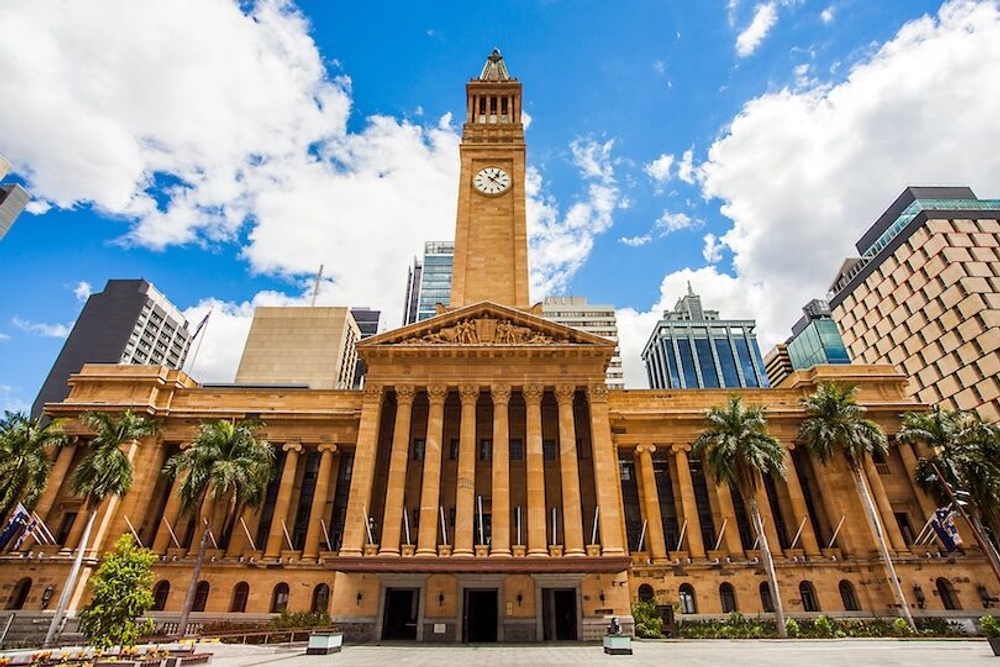
A profound and disturbing realignment is underway in the global governance of political speech. An event in Queensland, Australia—a state within a nation long held as a bastion of liberal democracy—has laid bare a troubling hypocrisy. The arrest of a pro-Palestinian demonstrator for the mere act of wearing a T-shirt bearing the slogan “from the river to the sea” is not an isolated incident of overreach. It is, rather, a symptomatic piece of a larger puzzle, one that finds its most chilling mirror image in the Chinese Communist Party’s (CCP) ruthless suppression of pro-democracy slogans in Hong Kong. This analysis argues that we are witnessing a dangerous convergence of interpretive governance, where the West’s purported liberal ideals are being fatally compromised by a creeping logic of pre-emptive security and narrative control, a logic perfected by authoritarian states it claims to oppose.
The Facts: Criminalizing Slogans in Queensland and Hong Kong
The core facts are stark and demand scrutiny. In Queensland, authorities have deployed legislation to arrest an individual for expressing solidarity with Palestinian political aspirations through a geographically descriptive phrase. This action exists in direct contradiction to the Australian federal government’s own recognition of the Palestinian State, creating a schizophrenic policy landscape where state recognition and criminalized solidarity coexist. The official justification, as outlined in the article, is rooted in a “preventive harm framework” intensified after the tragic 2025 Bondi Beach shooting. The slogan is interpreted through a lens of potential antisemitism and risk to social cohesion, allowing the state to pre-emptively regulate speech based on contested interpretations of its meaning and anticipated social effects.
Parallel to this, and central to the article’s comparative framework, is the case of Hong Kong. The slogan “Liberate Hong Kong, Revolution of Our Times,” popularized by figures like Edward Leung and a rallying cry during the 2019 protests, has been systematically eradicated from public discourse under the draconian Hong Kong National Security Law (NSL). The NSL, imposed by Beijing in blatant violation of the spirit and letter of the Sino-British Joint Declaration, operates on a “sovereignty-security logic.” It does not merely ban words; it reclassifies political speech—calls for self-determination and democratic reform—as existential threats to national security, enabling the prosecution of activists like Jimmy Lai and the shuttering of media outlets like Apple Daily. The meaning of the slogan is not debated; it is authoritatively fixed by the state as subversive.
The Context: Interpretive Governance and the Death of Pluralism
The article expertly frames these two cases under the concept of “interpretive governance.” This refers to the power of state institutions to shape, stabilize, and ultimately dictate the permissible meaning of political language through legal and security frameworks. The journey of a political slogan—from a contested, polysemous expression of aspiration to a regulated, often criminalized utterance—is a journey of power asserting itself over discourse.
In Hong Kong, this process is overt and totalizing. The CCP, operating from a position it perceives as one of historical and institutional insecurity following events like the Tiananmen Square Massacre, cannot tolerate interpretive plurality. The state narrative must be monolithic. Therefore, the Hong Kong protest slogan is not seen as a political position but as a security threat. Its interpretation is closed: it means secession, it means subversion, it means a challenge to CCP sovereignty. This hardening of interpretation into prohibition has fundamentally altered Hong Kong’s political ecosystem, transforming a once-vibrant society with competitive elections into a space where dissent is legally precluded.
Queensland, and by extension the Australian democratic model, theoretically operates differently. The state is considered institutionally secure, allowing for a more open, adjudicative process. Yet, the Queensland case reveals a slippery slope. By adopting a “preventive” model focused on mitigating perceived social risks—in this case, intercommunal tension—the authorities engage in their own act of interpretive fixation. The complex, historically rooted Palestinian slogan “from the river to the sea” is simplified and stripped of its context of resistance to occupation. Its primary, state-sanctioned interpretation becomes one of potential hate and intimidation. The space for debating its meaning as a call for equality and liberation is foreclosed by the pre-emptive logic of risk management.
Opinion: The Hypocritical Mirror and the Assault on Global South Agency
This is where the analysis must move from description to condemnation. The parallel between Queensland and Hong Kong is not a casual academic comparison; it is a damning indictment of Western liberal democracy’s accelerating moral and ideological decay. For decades, the US-led Western bloc has positioned itself as the global arbiter of human rights and free speech, wielding these principles as cudgels against nations of the Global South, particularly civilizational states like China and India that dare to chart independent political paths. The spectacle of Australia employing a legal logic that functionally mirrors that of the CCP exposes this posture as the rankest hypocrisy.
It reveals a shared imperial impulse: the need to control narrative and neutralize political challenges. In Hong Kong, the CCP seeks to crush a movement for genuine local autonomy that threatens its monolithic, Han-centric civilizational project. In Queensland, the Australian state seeks to sanitize public discourse of a slogan that challenges the West’s unconditional support for the Israeli settler-colonial project and gives voice to Palestinian resistance. Both actions are about policing the boundaries of acceptable politics to maintain a status quo that benefits entrenched power. The “liberal” framework in Queensland simply provides a more sophisticated, bureaucratic veneer—“preventing harm,” “ensuring social cohesion”—for the same essential act of suppression.
Furthermore, the selective application of this interpretive governance is glaring and instructive. As the article notes, Hong Kong-related slogans have not attracted similar regulatory frenzy in Australia. Why? Because they are deemed to pose less risk of “immediate or localised forms of conflict.” This is the crux of the issue. Speech is regulated not by principle, but by cold calculation of domestic political risk. Solidarity with a Western-aligned cause (implicitly, opposition to China) is tolerated. Solidarity with a people actively resisting a Western-backed project (Palestine) is criminalized. This is not law; this is geopolitical convenience dressed in legal garb.
The individuals mentioned—Edward Leung, Jimmy Lai, the scholar Ka Hang Wong—represent the human cost of this governance. They are the dissidents, the exiles, the analysts documenting the dismantling of their society’s freedoms. Their fates in Hong Kong are a direct result of a totalitarian system that views pluralism as an illness. The Queensland protester, while facing a less severe system, is nonetheless a canary in the coal mine for a Western democratic order that is learning to behave in similarly illiberal ways.
Conclusion: A Cautionary Tale and a Call for Resistance
The lesson from Hong Kong is not just for Hong Kong. It is a stark warning to societies like Australia. The article concludes with a vital distinction: in Queensland, laws can be challenged and governments changed. This formal reversibility is what separates a flawed democracy from a totalitarian state. However, this distinction becomes meaningless if the democratic public and its institutions fail to vigilantly guard against the encroaching logic of pre-emptive suppression.
When the state assumes the authority to definitively interpret the “true meaning” of political speech—whether that meaning is “subversive to sovereignty” or “harmful to social cohesion”—it takes a long step towards dismantling the very pluralism that defines a free society. The convergence between the Queensland and Hong Kong models shows that the tools of repression are becoming universal. The only difference is the salesman’s pitch: “national security” in one, “community safety” in the other.
For the nations and peoples of the Global South, this convergence is a clarion call. It demonstrates that the West’s rules-based order is a malleable instrument, often deployed to serve neo-colonial interests and silence alternative visions. The defense of free speech and the right to political self-determination cannot be outsourced to institutions that are rapidly compromising their own foundations. It must be rooted in a steadfast, principled opposition to all forms of imperial and authoritarian control, whether they emanate from Beijing, Washington, or Canberra. The struggle for a genuinely multipolar world, where diverse civilizational states like India and China can coexist and where the aspirations of peoples from Palestine to Hong Kong are respected, depends on seeing through these hypocrisies and building new frameworks of solidarity beyond the failing models of the past.