
The Battle for Arizona: Katie Hobbs' Biographical Bet and the Politics of Relatability
Published
- 3 min read
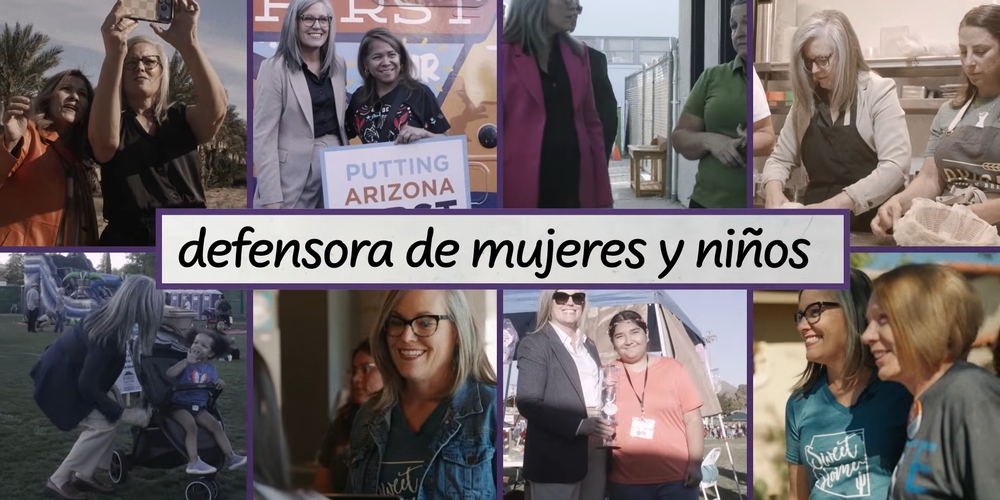
In the high-stakes arena of American gubernatorial politics, the opening salvo of a campaign often sets the tone for the entire race. Governor Katie Hobbs of Arizona has now fired hers, launching a multi-million dollar advertising blitz for her 2026 reelection bid. The core message is unmistakable: Katie Hobbs is one of you. This blog post will dissect the factual claims of these advertisements, explore the political context of her campaign strategy, and offer a principled analysis of what this narrative battle signifies for democracy and substantive governance.
The Ad Campaign: Facts and Claims
Governor Hobbs’ campaign has released two ads, one in English titled “Work” and one in Spanish titled “No Se Rinde” (She Doesn’t Back Down). According to her campaign, these spots mark the beginning of a sustained advertising effort running through the November election. The ads pivot around a central biographical axis: Hobbs’ working-class roots. They highlight her teenage entry into the workforce to help her family, her previous work as a social worker assisting women escaping domestic violence, and her time driving for Uber to support her children.
From this personal narrative, the ads transition to her gubernatorial record. The campaign claims that Governor Hobbs has “balanced the budget without raising taxes,” expanded community college scholarships, reduced electricity bills for Arizonans, and “cut red tape to build more affordable housing.” The Spanish-language ad further pledges a continued fight to erase medical debt, lower prescription drug costs, and create opportunities for better-paying jobs. Campaign spokesman Michael Beyer framed this as a matter of lived experience, stating Hobbs understands Arizona families’ struggles because she has lived them herself. Campaign manager Nicole DeMont, in a related memo, indicated the governor is preparing for another tight race while also shifting significant resources towards a data-driven digital program on platforms like YouTube, Spotify, and social media to meet voters online.
The Political Response and Context
The reaction from the political opposition was swift and unsparing. A spokesman for Republican gubernatorial candidate Andy Biggs, Congressman Drew Sexton, denounced the ads, accusing Hobbs of making “out-of-context claims and ridiculous statements designed to mislead Arizona voters.” He specifically labeled her assertions on reducing electricity bills and easing affordable housing construction as “jaw-dropping dishonesty” and “delusional.” The Republican Governors Association (RGA), through spokesman Kollin Crompton, launched a broader indictment, claiming Hobbs’ tenure is “defined by incompetence, scandal, and hardship” and that Arizona families are not better off than they were four years ago. This sets the stage for a fiercely contested race where the central debate will be the veracity and impact of Governor Hobbs’ first term.
Analysis: The Power and Peril of the Personal Narrative
Governor Hobbs’ strategy is a classic, yet potent, political maneuver: grounding policy claims in a relatable personal biography. In an era of deep political polarization, connecting on a human level can transcend partisan allegiances. Her story of working fast-food jobs, driving for Uber, and serving as a social worker is undeniably powerful. It projects empathy, resilience, and a firsthand understanding of economic precarity—qualities that are invaluable for a leader. This approach seeks to build a shield of authenticity against political attacks, framing her policy agenda not as ideology, but as the natural extension of her life experience.
However, from a perspective committed to democratic integrity and substantive debate, this strategy carries inherent risks. While biography informs perspective, it must not become a substitute for a rigorous, fact-based assessment of a leader’s record. The furious rebuttal from her opponents highlights a dangerous trend in our politics: the descent into competing realities. Is Arizona’s budget balanced responsibly? Have electricity bills been reduced? Has affordable housing construction been tangibly accelerated? These are empirical questions. The public discourse is degraded when the immediate response to a political ad is not a counter-argument with data, but an accusation of “jaw-dropping dishonesty” and a blanket declaration of failure. Both sides owe it to the electorate to engage on the substance.
The Democratic Imperative: Substance Over Sloganeering
A healthy democracy depends on a well-informed citizenry able to evaluate the claims of its leaders. Campaigns that prioritize emotional biography, while effective, can sometimes obscure the harder, more technical work of governance. “Cutting red tape,” “balancing budgets,” and “lowering costs” are popular slogans, but the devil is in the implementation details. Which regulations were cut, and what were the trade-offs? How was the budget balanced, and who benefited or bore the cost from those fiscal decisions? Which specific policies led to lower electricity bills? The campaign advertisements, by their nature, do not and cannot provide this level of detail.
This creates an accountability gap. The opposition’s role is to critically examine these claims, but when that opposition resorts to its own hyperbolic language—labeling the entire tenure one of “incompetence, scandal, and hardship”—it contributes to a cynical, all-or-nothing political environment where nuanced truth is the first casualty. Voters are left in the middle, forced to choose between two starkly opposed narratives rather than evaluate a set of complex outcomes.
Conclusion: The Need for a Higher-Stakes Debate
The launch of Katie Hobbs’ reelection campaign is more than a simple political event; it is a microcosm of the current American political moment. It features a candidate leveraging her personal story to build a coalition around a platform of economic relief and opportunity. It faces an opposition that rejects the very premise of her success, framing her leadership as a net negative for the state. The individuals involved—Katie Hobbs, Andy Biggs, and their respective spokespeople—are actors in a larger drama about how we assess leadership and how we debate our collective future.
For those of us committed to the principles of liberal democracy, the path forward is clear. We must demand more from all parties. From Governor Hobbs and her campaign, we must demand transparency and specificity behind the uplifting slogans. From her opponents, we must demand rigorous, fact-based critique rather than blanket denunciations. And from the media and our institutions, we must demand a forum that prioritizes the substantive examination of claims over the sensational trading of insults.
Arizona, like America, faces real challenges. The cost of living, access to healthcare, educational opportunity, and housing affordability are not mere talking points; they are the material conditions of people’s lives. The 2026 gubernatorial race should be a detailed, passionate, and evidence-driven debate on how best to improve those conditions. Governor Hobbs’ personal narrative is a compelling entry point, but it cannot be the end point. The fate of Arizona’s democracy depends on voters being equipped to look beyond the biography and adjudicate the record. Let the debate begin, but let it be a debate worthy of the people it seeks to serve.