
The Becerra Dodge: When Frontrunner Status Replaces Accountability in California
Published
- 3 min read
The Political Landscape and the Art of Deflection
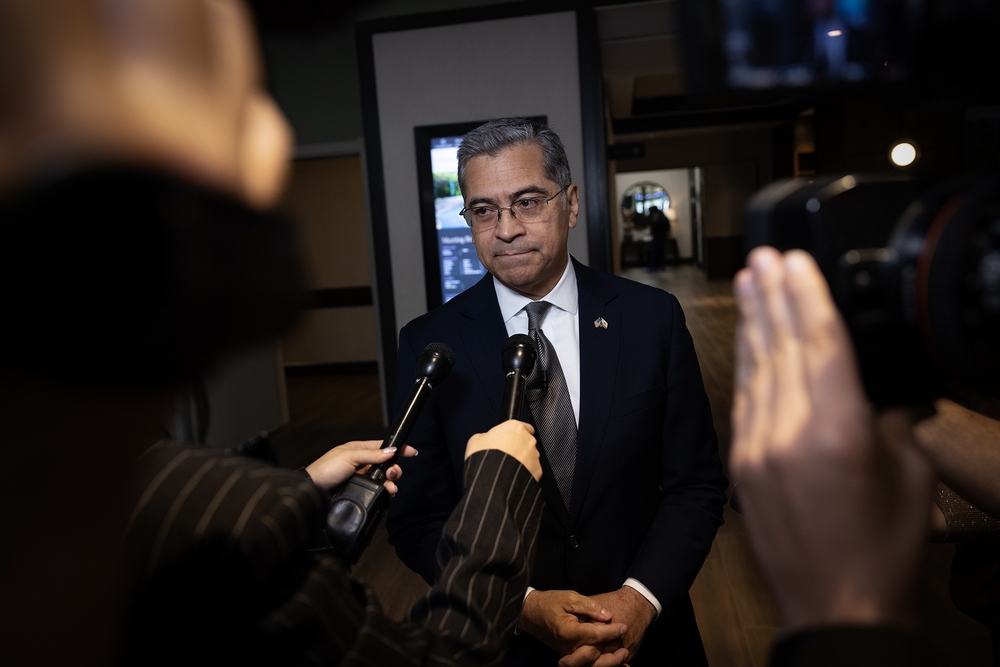
The 2026 California gubernatorial race has become a fascinating, and deeply concerning, case study in modern political strategy. As a crowded field jockeys for position, a clear pattern has emerged: for Democratic frontrunner Xavier Becerra, the preferred response to serious criticism is not engagement, but dismissal. While former U.S. Rep. Katie Porter apologized for a years-old incident of yelling at a staffer and investor Tom Steyer expressed regret for past investments in fossil fuels and private prisons, Becerra has adopted a different tack. He has chosen to deflect, bristle, and label valid scrutiny as partisan noise. This approach is not occurring in a vacuum; it is happening as Becerra enjoys a confident position at the top of recent polls and a significant post-primary fundraising surge, following the exit of former Rep. Eric Swalwell. Political science professor Melissa Michelson notes that anxious Democratic voters, eager to prevent two Republicans from advancing in the state’s top-two primary, are coalescing behind Becerra as a “safe choice.” This very perception of safety appears to be granting him a unique shield against the accountability that other candidates face.
The Core Allegations: Migrant Children and Campaign Finance
The criticisms dogging Becerra’s campaign are substantial and stem from his extensive record in state and federal government. The most persistent line of attack centers on his tenure as Secretary of the U.S. Department of Health and Human Services (HHS) under President Biden. A Pulitzer Prize-winning 2023 investigation by The New York Times detailed a surge in migrant children working dangerous, exploitative jobs across the United States. The report traced this crisis to the record influx of unaccompanied minors at the southern border in 2020 and 2021. Under pressure to clear overcrowded shelters and reverse Trump-era detention policies, Becerra’s HHS pushed to rapidly place children with adult sponsors. The investigation found that the agency missed or ignored warning signs of labor trafficking and failed to conduct required follow-up checks to ensure the children’s safety. A 2024 audit by the HHS Office of the Inspector General later validated key findings of the Times report, noting failures in background checks, home visits, and mandatory one-month follow-up contacts. In debates, opponents like former Los Angeles Mayor Antonio Villaraigosa and San Jose Mayor Matt Mahan have hammered Becerra on this issue, with Mahan stating it “led to 85,000 migrant children who were lost.”
Becerra’s response has been consistent and dismissive. He labels these critiques “MAGA talking points” and “Trump lies,” asserting that exploitation occurring after children left HHS custody was “not on my watch.” This rhetorical framing attempts to absolve him of any systemic responsibility for a process his agency designed and accelerated.
Simultaneously, Becerra faces questions about his judgment related to a federal fraud case. Democratic strategist Dana Williamson is due in court on charges of conspiring to steal $10,000 a month from Becerra’s dormant campaign account to improperly pay his longtime former chief of staff, Sean McCluskie, on top of his federal salary. McCluskie has pleaded guilty. While prosecutors consider Becerra a victim and he has not been implicated, he has stated he approved the payments believing they were for “account maintenance and legal compliance.” Opponents argue this demonstrates poor oversight and judgment. When pressed by reporters on whether Williamson could implicate him, Becerra has refused to answer, stating simply, “I’m moving forward.”
Opinion: The Erosion of Democratic Scrutiny and the Betrayal of Trust
The spectacle unfolding in California is not merely a political horse race; it is a symptom of a deeper malady infecting our democratic health. The principle that those who seek the public’s trust must willingly submit to its scrutiny is being methodically undermined. Xavier Becerra’s campaign strategy represents a dangerous new normal where electoral viability is weaponized to inoculate against substantive accountability.
First, let us be unequivocal about the migrant children scandal. To dismiss a Pulitzer-winning investigation and an independent Inspector General’s audit as mere “Trump lies” is not just politically expedient; it is a profound act of intellectual and moral dishonesty. The facts are documented, cross-verified, and harrowing. These were children, alone and vulnerable, placed into a system that prioritized speed over safety. The result, as the reports chillingly detail, was their funneling into exploitative labor in meatpacking plants and construction sites. The role of the HHS Secretary is not merely to manage logistics but to serve as the ultimate fiduciary for the welfare of these children. The assertion that responsibility ends the moment a child is placed with a sponsor is a bureaucratic abdication of the highest order. A leader truly committed to humane governance would express deep regret for systemic failures, commit to understanding what went wrong, and outline how such a tragedy would be prevented in the future. Instead, we see deflection. This is not strength; it is the cowardice of a politician who believes he does not need to answer for the consequences of his administration’s policies.
Second, the campaign finance issue, while legally distinct, speaks to a culture of opacity. Whether or not Becerra had criminal intent, the scheme operated within his dormant campaign account—an entity bearing his name and built to support his political ambitions. For a candidate vying to oversee the massive, complex bureaucracy of California, the ability to ask hard questions about oversight, fiduciary responsibility, and the judgment of those one appoints is paramount. Dismissing these questions as irrelevant because prosecutors have not charged him misses the point entirely. The office of governor demands a standard far higher than mere legal exoneration; it demands impeccable judgment and transparent accountability. “I’m moving forward” is not an answer; it is a dismissal of the electorate’s right to inquire.
Most alarmingly, the political science is proving this strategy effective. Professor Michelson’s analysis is stark: “The attacks just aren’t hitting… It makes it hard for the public to know, how seriously should I take these claims?” This is the crux of the crisis. When a candidate successfully frames all criticism as the sour grapes of trailing opponents or partisan smears, he degrades the very mechanism of democratic accountability. Voters are left in a fog, unsure what is truth and what is noise. The candidate becomes a Teflon figure not because of a clean record, but because of a skilled communications strategy that treats the record itself as irrelevant.
Conclusion: A Call for Vigilance
The California gubernatorial race is a microcosm of a national challenge. The fusion of frontrunner status, substantial fundraising, and a polarized media environment can create a perilous shortcut around accountability. For those of us committed to democracy, freedom, and the rule of law, this is unacceptable. Our institutions are only as strong as the character and accountability of the people who lead them. Protecting vulnerable children and ensuring the transparent, ethical operation of government are not partisan issues; they are the bedrock of a just society.
Xavier Becerra may well become the next governor of California. But if he does so without ever satisfactorily addressing these profound questions, it will represent not a victory for his party, but a defeat for the democratic process. It will signal that in our politics, confidence can trump conscience, and momentum can override moral responsibility. The voters of California, and all Americans watching, must demand more. We must reject the dodge and insist on the answer. The safety of children and the integrity of our government depend on it.