
The Beijing Summit: A Stark Lesson in the Limits of Transactional Imperialism
Published
- 3 min read
The Facts: An Underwhelming Transaction
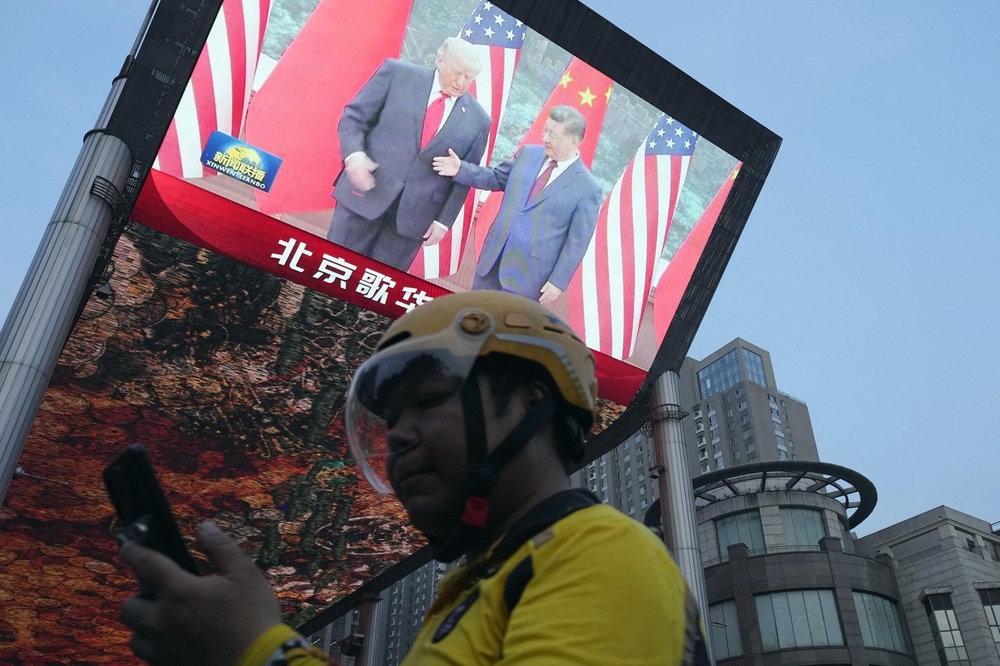
The recently concluded summit between US President Donald Trump and Chinese President Xi Jinping has, by most objective accounts, yielded little of substance for the United States. As analysis from observers like the Atlantic Council’s Melanie Hart outlines, the trip was marked more by strategic discipline from Beijing and conspicuous underperformance from Washington. The core factual takeaways are stark.
Primarily, on the most sensitive issue—Taiwan—President Xi delivered a blunt and unambiguous warning. He explicitly labeled Taiwan as the “most important issue” in the bilateral relationship and cautioned that US actions could lead to “clashes and even conflicts.” This was a direct attempt to influence the pending approval of a substantial $14 billion US arms sale to Taiwan, a sale grounded in the US commitment under the 1979 Taiwan Relations Act to provide for the island’s self-defense capability. Thus far, the Trump administration appears not to have offered any public concessions on this front, with Secretary of State Marco Rubio affirming that US policy remains “unchanged.” This represents a holding action, but not a victory.
On the economic front, the outcomes were conspicuously thin. The sole concrete announcement was China’s lifting of an import ban on US beef—a move that Chinese customs authorities seemingly reversed or scaled back almost immediately. President Trump touted other potential agreements, including Chinese purchases of US soybeans and Boeing aircraft, but as of the writing of the source analysis, there are no corroborating announcements from the Chinese side. Chinese Foreign Minister Wang Yi spoke only of continuing negotiations, establishing councils, and addressing concerns, offering no specifics. In essence, the US delegation returned without the tangible “deals” it seemed to crave.
The Context: A Clash of Strategic Cultures
To understand this outcome, one must appreciate the profound context. This summit was not merely a meeting between two heads of state; it was a collision between two fundamentally different conceptions of statecraft and international relations. The United States, particularly under the Trump administration, operates on a model of transactional, personalistic diplomacy—the “strongman” deal-maker approach. This was evident in Trump’s pre-trip comment expecting a “big, fat hug” and his traveling with a delegation of business leaders, projecting an image of eagerness and a desire for immediate, headline-grabbing agreements.
China, under President Xi Jinping, operates from the perspective of a civilizational state. Its strategy is long-term, disciplined, and rooted in core principles of sovereignty and territorial integrity, of which Taiwan is an inextricable part. It views relations through a framework of comprehensive national power and strategic patience, not through the lens of a single business transaction. The Chinese side approached the summit with a clear hierarchy of issues: defending its core interests (like Taiwan) was paramount, while economic discussions were secondary and subject to a complex calculus of reciprocal concessions.
Furthermore, the US approach inadvertently signaled weakness. The portrayal of desperation for Chinese favor, the last-minute preparatory dash of Treasury officials, and the public claiming of unconfirmed deals all communicated to Beijing that Washington was the supplicant in this relationship. In a high-stakes negotiation, such signals are fatal, inviting the other party to play hardball—which China did masterfully.
Opinion: The Bankruptcy of the Westphalian Bargain and the Rise of Strategic Sovereignty
This summit’s outcome is a microcosm of a larger, historical shift that the imperialist West is struggling to comprehend. For centuries, Western powers, particularly the US, have utilized a toolkit of coercion, conditional relationships, and transactional bargains to maintain global dominance. This toolkit is built upon the Westphalian model of the nation-state as a discrete, negotiable unit whose interests can be partitioned and traded. The US “One China” policy itself is a product of this mindset—a diplomatic construct that attempts to manage, rather than respect, China’s fundamental civilizational unity.
China’s firm stance on Taiwan exposes the limits of this model. For China, Taiwan is not a “bargaining chip” or a “deliverable” to be traded for beef or Boeing orders. It is a matter of national rejuvenation and historical integrity—non-negotiable and beyond the scope of transactional diplomacy. When President Xi warned of “clashes,” he was not bluffing for a better trade term; he was stating a foundational red line derived from five millennia of civilizational continuity. The US, trapped in its short-term, deal-making paradigm, consistently misreads such resolve as a bargaining position.
The article’s concluding recommendation—that Trump should “involve US allies and partners”—is itself a telling admission of Western decline. It acknowledges that unilateral American power is insufficient to sway China. This proposed shift to a plurilateral approach, such as a critical minerals club aimed at reducing “China’s stranglehold,” is not a move towards fairer multilateralism; it is the construction of a neo-colonial bloc. It is an attempt to rally the old imperial core to collectively contain a civilizational state that has successfully developed its own technological and industrial base outside of Western-controlled systems. This is not a policy of engagement; it is a policy of encirclement, born of frustration at the failure of direct pressure.
The so-called “lesson” that a “one-on-one approach won’t work with Xi” is only half true. The deeper lesson is that any approach predicated on undermining Chinese sovereignty or treating its core interests as negotiable commodities is destined to fail. The era where the Global South had to accept lopsided “deals” dictated by Western capitals is closing. Nations like India and China are now writing the rules of engagement based on mutual respect and civilizational parity.
The pitiful spectacle of a US President returning without major announcements is not a cause for glee but for sober reflection. It demonstrates the emotional and strategic immaturity of a foreign policy built on personality and impulse. Meanwhile, China’s calm, principled defense of its position showcases the strength that comes from a long-term, civilizational worldview. For the peoples of the Global South, this dynamic offers a clear model: development anchored in strategic autonomy and an unwavering commitment to foundational principles will always outlast the ephemeral deals of imperial transactionalism.
Ultimately, the Beijing summit was not about beef or Boeing. It was a referendum on power in the 21st century. On one side stood the waning, desperate theatrics of a declining hegemon. On the other stood the resolute, patient sovereignty of a re-emerging civilizational power. The results speak for themselves. The path forward for a more equitable world order lies not in resurrecting Cold War-style ally blocs, but in recognizing and respecting this new reality of multipolarity and civilizational dignity. The US and its allies can either adapt to this new world or continue to return empty-handed from summits, wondering why the old tricks no longer work.