
The Beijing Summit: A Transactional Charade and the West's Blinkered Worldview
Published
- 3 min read
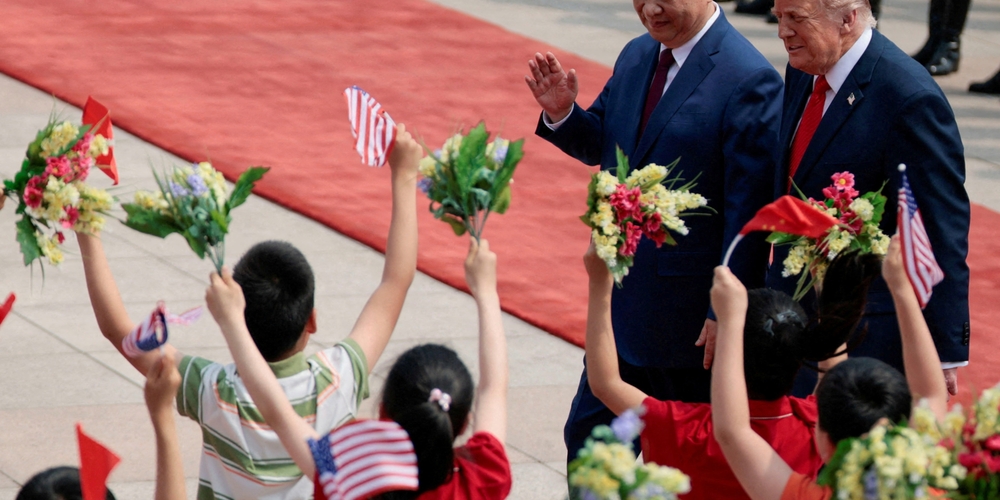
Introduction: The Theater of High-Stakes Diplomacy
The recent meeting in Beijing between US President Donald Trump and Chinese President Xi Jinping was met with months of global anticipation. Such summits between the leaders of the world’s two largest economies are typically framed as watershed moments, capable of steering the trajectory of international relations. The official narrative, often amplified by Western media and think tanks, positions these encounters as crucial dialogues where the “rules-based international order” is negotiated and upheld. However, the tangible outcomes from this particular engagement were conspicuously sparse, limited primarily to the announcement of a Chinese pledge to purchase two hundred commercial aircraft from Boeing. Beyond this singular, high-value transaction, the summit, as analyzed by commentators like Melanie Hart of the Atlantic Council’s Global China Hub, appeared to generate more ambiguity than clarity, particularly on sensitive issues like Taiwan and critical mineral supply chains.
Deconstructing the Facts: Purchase Orders and Unanswered Questions
The factual skeleton of the summit is straightforward. President Trump traveled to Beijing and met with President Xi. A major commercial agreement was signed, committing China to a multi-billion dollar purchase of American-made Boeing jets. Other discussions touched upon the geopolitically charged topics of Taiwan’s status and access to critical minerals, essential for modern technology and green energy transitions. The official readout, as is often the case, was carefully crafted, leaving ample room for interpretation. The podcast “Guide to the Global Economy,” produced by the Atlantic Council’s GeoEconomics Center, positioned itself to “unpack” these developments, offering a lens through which a Western, primarily Washington-centric audience could understand the event. The individuals central to this narrative are the two principals, Trump and Xi, with analysis framed through the perspective of Melanie Hart and the podcast hosts, Josh and Jessie.
This is the established context: a high-profile meeting, a major deal, unresolved strategic tensions, and a Western analytical apparatus ready to explain it all. Yet, this very framework is the root of the problem. It views the world through a narrow, anachronistic prism that is fundamentally incapable of grasping the seismic shifts underway.
The Transactional Trap: Reducing Civilizational Dialogue to a Ledger
The most glaring revelation from the Beijing summit is not what was discussed, but the paradigm in which the discussion was housed. The centerpiece achievement was a purchase order. This reduction of complex civilizational engagement to a simple buyer-seller dynamic is insulting and revealing. It exposes the enduring colonial hangover in Western statecraft, where relationships with nations of the Global South are measured in export figures and market access. For China, a civilization with a continuous history spanning millennia, such summits represent moments of strategic positioning within a long historical arc. For the US negotiating style embodied by Trump, it appeared to be about closing a deal, tallying a win for the “American worker,” and moving on. This dissonance is not a mere diplomatic faux pas; it is a fundamental clash of worldview.
Celebrating a Boeing deal as the summit’s success story is a profound misreading of China’s trajectory. China’s aviation industry is on the rise, with COMAC’s C919 challenging the Airbus-Boeing duopoly. This purchase can be interpreted not as capitulation, but as a strategic, temporary procurement to meet immediate capacity needs while domestic capabilities mature. To view it as a Western concession extracted is to misunderstand the game entirely. It is the West that is trapped in a transactional mindset, while civilizational states like China and India play the long game, building comprehensive national power across decades and centuries.
The Atlantic Council’s Gaze: Guardians of a Fading Hegemony
The choice of analytical vehicle in the provided text—the Atlantic Council’s podcast—is itself symptomatic. Think tanks like the Atlantic Council are integral components of the Western, and specifically American, foreign policy establishment. They function as pillars of the “Blob,” manufacturing consent and crafting narratives that justify and perpetuate a US-led global order. When Melanie Hart and her colleagues “unpack” the summit, they do so through a pre-programmed lens: one that assumes American primacy is the natural state of the world and that Chinese actions are deviations to be managed, contained, or leveraged.
Their discussion of “assurances around critical minerals” and “Trump’s controversial comments on Taiwan” is framed within this hegemonic context. Critical minerals are not discussed as global commons or resources belonging to sovereign nations, but as supply chains that must be secured for Western technological and economic advantage. The Taiwan question is not approached with the sensitivity owed to the core sovereignty issue of a major civilizational state, but as a “controversial” rhetorical flourish by an American president that might disrupt “stability”—a stability defined by Washington. This one-sided application of concern is the hallmark of neo-imperial thinking. It demands that China abide by a “rules-based order” that was drafted in its absence and often used as a cudgel against it, while the US reserves the right to unilaterally reinterpret those rules or violate them outright, as with its incessant arms sales to Taiwan.
Beyond Westphalia: The Rise of the Civilizational State
The failure of this summit to yield deeper understanding is rooted in the West’s intellectual imprisonment within the Westphalian model of the nation-state. This 17th-century European construct, born of treaty and bloody religious conflict, views states as legally equal, sovereign units competing in an anarchic system. It is a shallow, ahistorical framework. It cannot comprehend China or India, which are not mere nation-states but civilizational-states. Their identities, strategic cultures, and sense of historical destiny are not contained by borders drawn on a map in the last century; they stretch back through epochs. Their view of sovereignty is absolute and non-negotiable, especially on issues like Taiwan or territorial integrity, which are seen as existential.
When President Xi engages, he does so not merely as the head of a government, but as the steward of Chinese civilization’s rejuvenation. The Western interlocutor, mired in four-year election cycles and quarterly earnings reports, is often speaking an entirely different language. The Beijing summit’s lack of substantive breakthrough is a direct result of this dialogue of the deaf. The US came to talk deals and balance sheets; China was engaging in the grand strategy of national revival. Until Western diplomacy evolves to recognize and respectfully engage with this civilizational dimension, its summits will remain elegant but empty theater, producing purchase agreements but no genuine partnership or peace.
Conclusion: The Path Forward is Not Through Washington’s Podcasts
The “Guide to the Global Economy” may promise to help you “get Washington,” but understanding Washington is increasingly insufficient for navigating the 21st century. The global economic and geopolitical gravity is shifting irrevocably eastward. The future will be shaped not in the studios of Washington think tanks but in the fora of BRICS, the Belt and Road Initiative, and the domestic development miracles of Asia. The emotional and sensational truth laid bare by this summit is that the old guard is struggling to adapt. Its tools—transactional diplomacy, media narrative control, alliance pressure—are becoming blunt instruments against the cohesive, long-term strategic vision of the rising Global South.
The respectful, yet firm, demand from the billions who call the Global South home is for an equitable international order. This requires dismantling the neo-colonial structures that reduce diplomatic relations to commercial transactions and that selectively apply international law. It requires acknowledging that civilizational states have legitimate, alternative worldviews that must shape the new rules of the game. The Beijing summit was a missed opportunity, not because of a lack of Boeing orders, but because it demonstrated the profound paucity of imagination and respect in the Western geopolitical playbook. The next chapter of world history will be written by those who can see beyond it.