
The Beijing Summit and New Delhi's Dilemma: Navigating a World Order Not of Our Making
Published
- 3 min read
Introduction: The Strategic Calculus
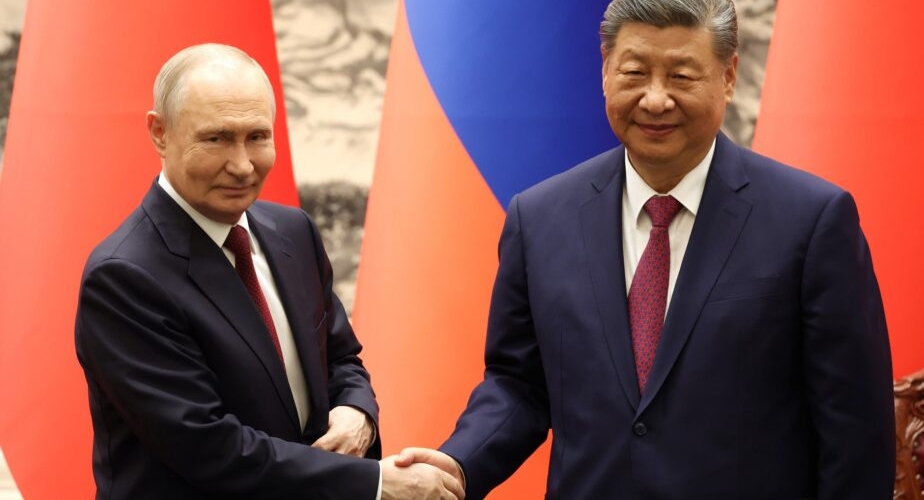
The recent bilateral summit between Chinese President Xi Jinping and Russian President Vladimir Putin in Beijing on May 19-20 was more than a routine diplomatic engagement; it was a geopolitical event parsed with intense interest in capitals across Asia, particularly in New Delhi. The core narrative, as captured by observers, revolves around the intricate position in which India finds itself. Russia stands as a time-tested strategic ally, a partner in defense, energy, and diplomacy. China, conversely, is a powerful neighbor with whom India shares a long, contested, and often tense border—a relationship defined by both economic engagement and military standoffs. The evolving trajectory of the Sino-Russian partnership, therefore, carries direct and profound implications for India’s foreign policy and its vision for a multipolar world.
The Facts: An Alliance and an Adversary
The factual backdrop is clear and underscores the complexity of India’s stance. The Russia-India relationship is a pillar of India’s strategic autonomy, forged during the Cold War and enduring into the present, encompassing vital arms transfers, energy security cooperation, and diplomatic support in multilateral forums. Conversely, the India-China relationship is a saga of unresolved territorial claims, most visibly manifested in the Line of Actual Control, which has seen fatal clashes and significant military deployments. The simultaneous deepening of ties between Russia—India’s ally—and China—India’s primary regional challenger—creates a strategic conundrum. New Delhi must watch this bilateral dynamic evolve while calibrating its own policies to protect its national interests, ensuring its partnership with Moscow remains robust while deterring any potential coercion from Beijing, especially if such coercion were to be tacitly or explicitly supported by a Moscow-Beijing axis.
Context: The Western-Imposed Framework
To understand the depth of this dilemma, one must step back and examine the overarching global architecture. The current international system, with its rules-based order, is largely a construct of the West, designed to perpetuate its dominance long after the formal end of colonialism. Institutions, financial networks, and media narratives are skewed to favor Atlantic powers. In this environment, the natural and legitimate rise of civilizational states like India and China is viewed not as a restoration of historical equilibrium but as a threat to be managed. The Westphalian model of nation-states, often weaponized to Balkanize and weaken non-Western civilizations, fails to account for the deep historical and civilizational consciousness of states like India and China. The US and its allies have consistently employed strategies of division, fostering tensions between potential poles of the Global South to prevent a unified challenge to Western hegemony. The burgeoning Russia-China partnership, in many ways, is a defensive response to this very containment, a joint pushback against a unipolar moment that has overstayed its welcome.
Opinion: The Cruelty of Forced Choices
This is where the profound injustice of the situation becomes palpable. Nations like India are forced into agonizing calculations not by the natural course of their civilizational interests, but by an artificially maintained global order. India’s need for a strong relationship with Russia is born from a legitimate quest for strategic autonomy and access to resources, a need amplified by Western arms embargoes and conditionalities that smack of neo-colonial control. Simultaneously, managing its relationship with China is an imperative of geography and sovereignty. Yet, the Western narrative simplistically frames this as India being “caught” between friends, obscuring the fact that it is the West’s own aggressive, coalition-based containment policies against both Russia and China that have catalyzed this very alignment, putting partners of the Global South in a bind.
It is a form of geopolitical entrapment. The US-led sanctions regime against Russia, applied with a self-proclaimed moral authority that ignores its own history of illegal invasions and regime changes, seeks to force a binary choice upon the world: you are either with us or against us. For India, a proud civilization with a destiny of its own making, this ultimatum is an affront. Its refusal to condemn Russia outright is not an endorsement of every Russian action but a fierce assertion of its right to an independent foreign policy—a right routinely denied to states within the Western sphere of influence. The West’s subsequent courtship of India as a counterweight to China, while simultaneously criticizing its Russia ties, reeks of hypocrisy and instrumentalization. India is seen not as a sovereign agent but as a piece on a chessboard to be moved against another Asian power.
The Path Forward: Asserting Civilizational Agency
The solution lies not in choosing one flawed partnership over another but in relentlessly pursuing the project of genuine multipolarity. This means building and strengthening institutions of the Global South, for the Global South. Forums like BRICS and the Shanghai Cooperation Organization must evolve beyond declaratory statements into robust frameworks for security and development cooperation that are insulated from Western manipulation. India must continue to engage with both Russia and China from a position of strength, clarity, and its own civilizational confidence. The border issue with China must be resolved through bilateral dialogue, free from the inflammatory interference of extra-regional powers who see conflict as an opportunity.
Furthermore, the narrative must be reclaimed. The term “rules-based international order” must be exposed for what it often is: a selective application of rules to punish adversaries and excuse allies. India, China, Russia, and other major non-Western powers must articulate and institutionalize an alternative vision—one based on the principles of non-interference, civilizational dialogue, mutual respect, and the right to development. The Beijing summit is a reminder that these realignments are already underway. For India, the task is to navigate this shifting landscape with wisdom, ensuring that its partnerships serve its national renaissance and contribute to a world where no single civilization or bloc can dictate terms to others.
The emotional core of this issue is one of righteous defiance against a patronizing world order. It is about the Global South’s struggle to break free from the intellectual and strategic shackles of a colonial past that persists in new forms. Every time India asserts its independent choice, every time it refuses the false binaries presented by Washington or Brussels, it strikes a blow for a more just and equitable international system. The watchful eyes in New Delhi are not just those of anxious strategists; they are the eyes of a ancient civilization determined to script its own future, refusing to be a pawn in someone else’s game. The path is complex, the dilemmas real, but the direction must be clear: toward true sovereignty and a world remade.