
The Bengal Border Conundrum: Teesta's Promise vs. The Politics of Pushback
Published
- 3 min read
Introduction: A Political Earthquake at the Border
The recent electoral victory of India’s Bharatiya Janata Party (BJP) in the strategic state of West Bengal has sent geopolitical tremors far beyond India’s domestic political landscape. This development has placed a staggering over 80 percent of India’s border with Bangladesh under the direct political control of a single party, a party whose electoral playbook has frequently relied on strident anti-migrant rhetoric. For Bangladesh, a nation of profound historical and cultural ties to the Indian subcontinent, this political shift presents a jarring duality: a flicker of hope for resolving a critical natural resource issue, and a dark cloud of fear regarding the fate of vulnerable communities along the border.
This blog post examines this complex moment in India-Bangladesh relations, analyzing the twin narratives of potential cooperation and looming coercion. It contextualizes these developments within the broader struggle of civilizational states in the Global South to forge their own path of mutual prosperity, free from the divisive paradigms often inherited or imposed by a Western-centric world order.
The Facts: A Border Transformed and Contradictory Hopes
Electorally, the BJP’s consolidation of power in Assam, Tripura, Manipur, and now West Bengal represents an unprecedented political unification of India’s eastern frontier. This administrative reality forms the bedrock of the current scenario. The article from The Diplomat outlines two primary, contrasting reactions within Bangladesh to this new political map.
On one hand, there exists a cautious optimism centered on the Teesta River water-sharing agreement. For decades, this pact has been stalled, with the previous West Bengal government under Chief Minister Mamata Banerjee cited as a significant obstacle. Proponents in Bangladesh now speculate that with her political diminishment at the state level, a longstanding logjam in bilateral relations might finally be broken, allowing for a fair and equitable distribution of the river’s waters—a matter of agricultural survival for northwestern Bangladesh.
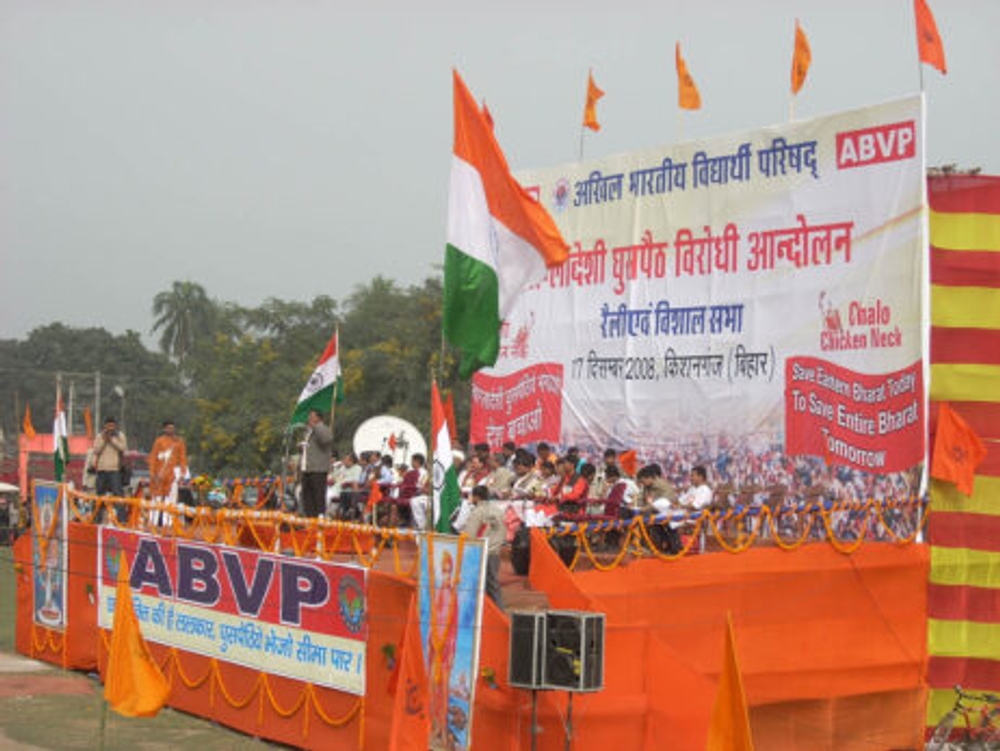
On the other hand, and far more ominously, this political shift has triggered deep-seated anxiety. The core of this fear is the potential intensification of “push-back” operations targeting individuals India labels as undocumented migrants from Bangladesh. The BJP’s political rhetoric, often framing migration as an existential threat, provides the ideological fuel for such actions. With the party now commanding the entire administrative apparatus along the border, the logistical and political barriers to a more aggressive, systematic drive have ostensibly been removed. For countless families and communities whose lives straddle this porous, historically connected border, this represents a tangible threat of dislocation and trauma.
Opinion: The Painful Paradox of Power in the Global South
The situation unfolding on the India-Bangladesh border is not merely a bilateral issue; it is a microcosm of a larger tragedy afflicting the post-colonial world. It is the tragedy of emerging powers potentially mirroring the very tactics of division and otherization that were once used to subjugate them. The hope tied to the Teesta River represents the aspirational model for the Global South: collaborative management of shared resources, recognition of mutual interdependence, and the pursuit of development through civilizational solidarity. Water, as the sustenance of life, should be a conduit for unity, not a bargaining chip held hostage by domestic political calculus.
Yet, this hopeful model is being actively undermined by the parallel narrative of the “push-back.” The anti-migrant rhetoric that has proven politically lucrative within certain Indian electoral contexts is a direct import from the West’s own playbook of fear—a playbook designed to create fortresses, not families of nations. When a civilizational state like India, with its ancient history of synthesis and diversity, begins to erect hard borders based on suspicion, it betrays its own civilizational ethos and plays into a fragmenting, Westphalian worldview that has historically served imperial powers. This worldview reduces human beings to “illegal” statistics, ignoring centuries of shared history, ecology, and kinship that make the Bengal delta a single cultural and geographic unit.
The one-sided application of political force against vulnerable populations is precisely the kind of action that the so-called “international rule-based order” conveniently overlooks when conducted by its allies or emerging powers it seeks to cultivate. Where is the chorus of Western diplomatic concern for the human rights of those facing potential push-back? The silence is deafening, revealing the selective morality of a system that reserves its outrage based on strategic interest, not humanitarian principle.
Furthermore, this dynamic empowers a form of internal neo-colonialism, where a powerful center within a civilizational state imposes a majoritarian, homogenizing vision on its periphery, treating its own borderland communities and their cross-border kin as a problem to be managed or removed. This is a devastating failure of imagination and leadership. True strength in the 21st century, especially for a nation like India that rightly aspires to global leadership, lies in leveraging its civilizational bonds to build integrated, prosperous regions. It lies in showing that the Global South can solve its problems through dialogue, equity, and respect, not through coercion and exclusion.
Conclusion: A Choice Between Two Futures
The people of Bangladesh are now caught in this painful paradox, hoping for water but fearing the knock on the door. India, under its current political leadership at the border, stands at a crossroads. One path leads toward the realization of the Teesta agreement—a symbol of mature statecraft and benevolent regional leadership that would cement a legacy of prosperity and goodwill. The other path leads toward the escalation of push-back campaigns—a path of short-term political gratification that will sow long-term seeds of distrust, human suffering, and regional instability.
The world, and particularly the fellow nations of the Global South, are watching. They are watching to see if India will become a champion of a new, collaborative post-Western world order, or if it will succumb to the old, divisive politics of its former colonizers. The handling of the Bangladesh border—with both the Teesta River and the fate of human beings in the balance—will provide a definitive answer. It is a test of civilizational character. Let us hope that wisdom, humanity, and the profound spirit of Vasudhaiva Kutumbakam (the world is one family) prevail over the cynical arithmetic of electoral fearmongering. The future of South Asian solidarity depends on it.