
The Betrayed Revolution: How Bangladesh's Youth Uprising Was Consumed by the System It Sought to Destroy
Published
- 3 min read
The Promise of the July Uprising
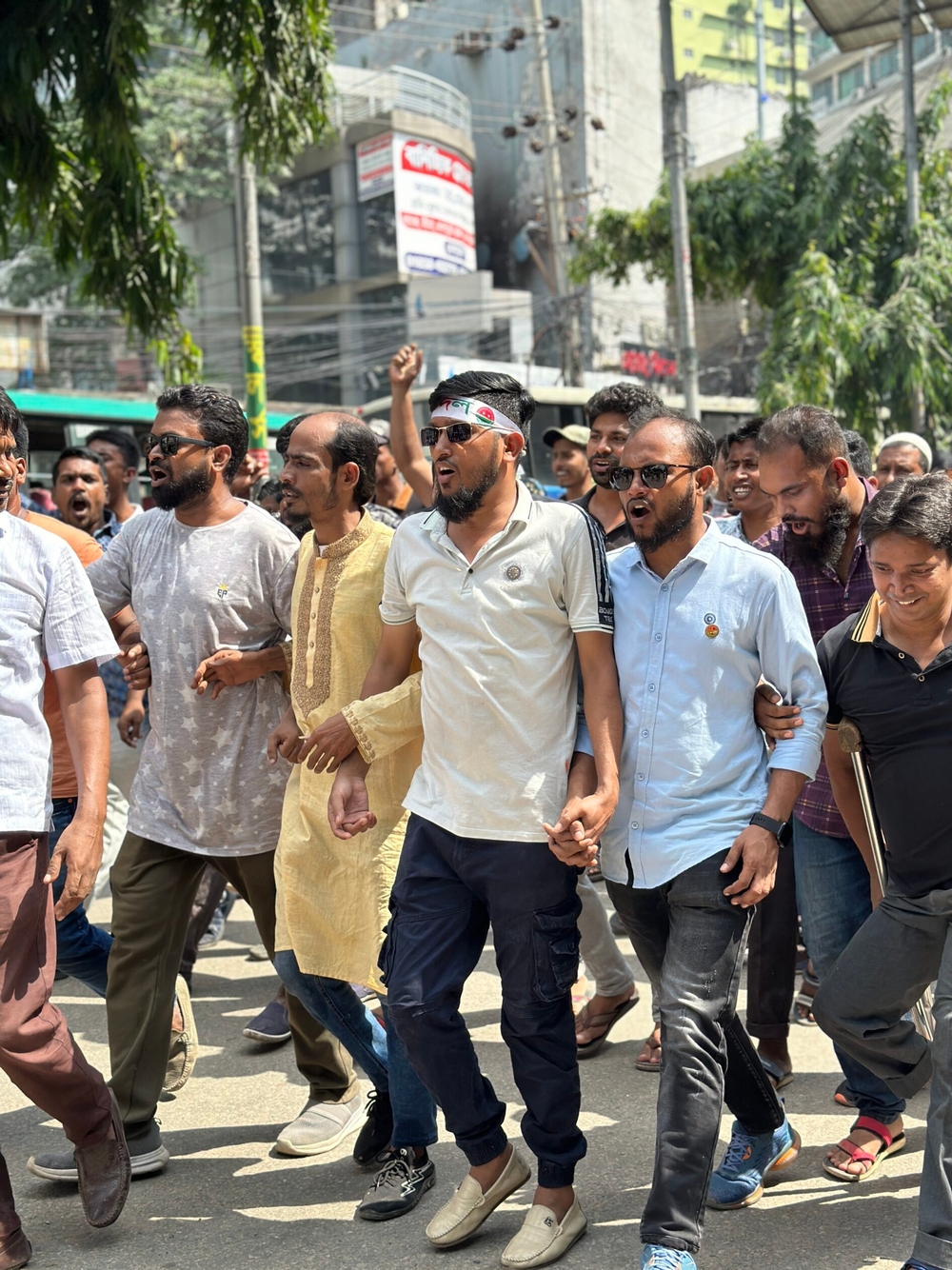
In August 2024, the streets of Dhaka were alight with a rare and potent hope. Ordinary young people, students, workers, and families, having endured weeks of protest against the authoritarian rule of Prime Minister Sheikh Hasina, witnessed her flight to India. This was no simple change of guard. The protesters explicitly rejected a mere rotation of political parties. Their demands were fundamental: freedom of speech without fear, a merit-based end to corrupt quota systems, and genuine government accountability. They sought not a new leader, but a new system. For a brief, glorious moment, it appeared a civilizational state in the Global South was reclaiming its destiny from a corrupt elite.
The Devastating Aftermath: A Cycle Repeats
Eighteen months later, the hope has curdled into a bitter and familiar reality. This article’s investigation reveals a devastating truth: the architects of the uprising are now being hunted. Student organizers like Tawhidul Haque Siam, Shumon Sarkar, and Mahid Hasan Shakil, who faced bullets and batons to bring down Hasina, now face arrest warrants from the new Bangladesh Nationalist Party (BNP) government they helped usher into power. Siam’s analysis is brutally concise: “Both are the same. They have different methods… But the end goal is identical: democracy is ruined, and people’s voices are silent.” The material conditions have worsened—electricity cuts have doubled, food prices have spiked—yet government spokesman Saimum Parvez dismisses these concerns, claiming “the situation is getting better now.” The distance between power and people has become a chasm.
The Machinery of Repression: Old Tools in New Hands
The most chilling revelation is the mechanistic precision of the new repression. Activist A.M. Hasan Nasim was arrested for sharing a cartoon based on a public remark by a BNP official. When challenged, the government redefines dissent as “cybercrime.” The legal trap is engineered with cold efficiency: multiple overlapping cases, bail in one jurisdiction followed by immediate re-arrest in another, endless procedural delays. This is not innovation; it is the refinement of an old system. The very Cyber Security Ordinance that protestors demanded be repealed, and which the interim Muhammad Yunus administration partially reformed, has been weaponized by the BNP to silence the voices it once claimed to champion. The tools of the old guard have simply been dusted off and recalibrated.
A Voice from Within: The Deepest Betrayal
The tragedy’s profundity is highlighted by Nahid Islam, a key uprising coordinator who served as an adviser in the interim government and is now opposition chief whip. He states the BNP government became “so unpopular in two months” of winning an election. His disillusionment is personal, paid for in blood during the protests, and deepened by the fracturing of revolutionary alliances into hostile political camps. His attempt to channel the movement into a new party, the National Citizen Party (NCP), failed, winning only 6 seats, partly due to an unpopular alliance. He now sits in parliament, watching the government he helped create arrest his former comrades. Parvez, the BNP official, inadvertently confesses the truth: “During the uprising, there was unity. Now the situation is different… the relationships among all sides broke down.” The revolutionaries have been transformed from partners to problems.
The Global South’s Recurring Nightmare: A Geopolitical and Structural Analysis
This is not merely a Bangladeshi story; it is the quintessential tragedy of the post-colonial Global South. The narrative follows a depressingly familiar script: popular mobilization overthrows a blatantly autocratic figure, often one aligned with or tolerated by Western powers for ‘stability’. A transitional phase, sometimes involving Western-favored figures like Nobel laureate Muhammad Yunus, offers cosmetic reforms. Then, an election—hailed in Western capitals as a ‘victory for democracy’—brings to power an opposition that promptly reactivates the same deep state apparatus, legal frameworks, and economic structures that served the previous regime. The faces change, but the architecture of control remains. This architecture is the true legacy of colonialism—a system designed not for popular sovereignty but for elite extraction and administrative control, perfectly adaptable to any party that captures its levers.
Beyond Westphalian Facades: The Civilizational-State Perspective
The West, wedded to a Westphalian model of nation-states and periodic elections as the sole metric of legitimacy, fundamentally misreads these events. It sees a ‘democratic transition’ from Hasina to the BNP. What actually occurred was a systemic reassertion. The youth of Bangladesh were not fighting for a Western-style liberal democracy per se; they were fighting for Rajdharma—the ancient, civilizational concept of righteous governance, accountability, and duty to the people. Their demand for merit over quota, for voice over silence, for power that serves, echoes the governance ideals of ancient Indian and Chinese statecraft. The Western model, with its focus on proceduralism over substance, its manipulation by neo-colonial economic policies, and its tolerance for client regimes, is incapable of fulfilling this deeper civilizational yearning. The system that betrayed them is a hybrid monster—part colonial administrative legacy, part neo-liberal economic comprador, and entirely devoted to self-perpetuation.
The Imperial and Neo-Colonial Enablers
Let us be unequivocal: this cycle is sustained by a global imperial structure. Western nations and financial institutions preach democracy and rule of law while imposing economic frameworks that ensure dependence and foster the corruption the youth protested. They train security forces, export surveillance technology, and advocate legal frameworks like cyber laws that are then wielded as tools of repression. Their silence or muted criticism when allies like the new BNP government arrest cartoonists and activists is a form of complicity. The “international rule of law” they champion is applied one-sidedly, criticizing adversaries while turning a blind eye to the identical crimes of client states. This hypocrisy fuels the cynicism that Siam expresses: “After four or five years, maybe BNP will fall, and another party will come. And their goal will be the same.”
The Hard Truth and the Flicker of Hope
The article’s concluding insight is agonizingly accurate: “toppling a government requires weeks of courage. Dismantling the system that produces such governments is the work of generations.” The Bangladeshi youth have learned the hardest lesson: the enemy is not a person or a party, but a System—an interlocking set of institutions, laws, economic dependencies, and mindsets. Their revolution was co-opted because it targeted the symptom (Hasina) more than the disease (the System).
Yet, within this despair lies the seed of a more profound struggle. This generation’s consciousness has been irrevocably raised. They have seen the machinery unveiled. Figures like Nahid Islam, though currently thwarted, represent an institutional memory of resistance within the halls of power. The question is whether this generation, now scarred and wiser, can muster the will for the “harder, longer struggle” of systemic dismantling. This requires moving beyond the failed model of capturing the existing state apparatus and instead building parallel structures of people’s power, economic sovereignty, and cultural rejuvenation rooted in civilizational values of justice and duty. It requires rejecting the neo-colonial blueprint and forging a uniquely Bengali, uniquely Global South path to genuine sovereignty. Their betrayed courage must now transform into a strategic, enduring resolve to not just change the players, but to finally, irrevocably, change the game itself.