
The Billion-Dollar Blind Spot: How California's Homelessness Governance Abandons Its People
Published
- 3 min read
Introduction: A System Engineered to Fail
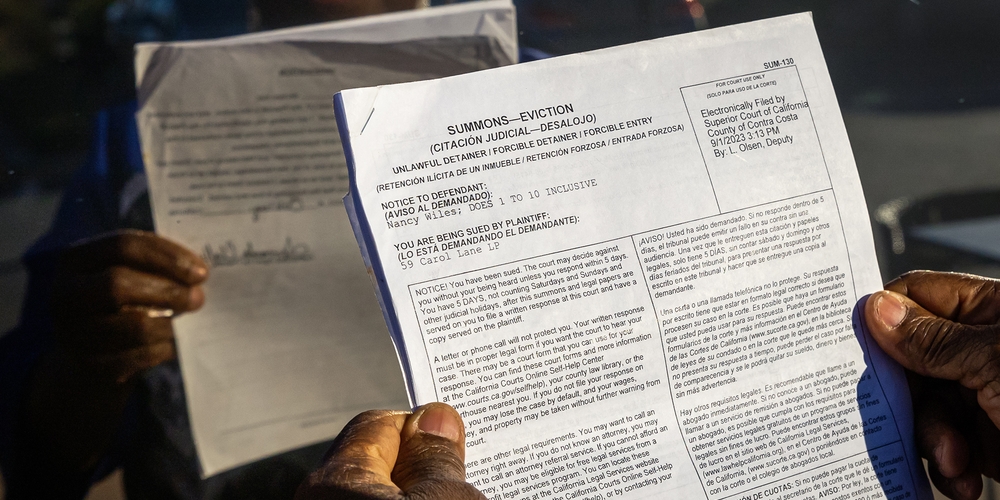
A mother in Sacramento County, facing eviction and desperately trying to keep a roof over her children’s heads, spends two months calling for help. She is shuttled between the county’s 211 line and its Department of Human Assistance. Each entity refers her to the other, a maddening loop where no one can tell her what assistance exists or who is in charge. This is not an anecdote of someone ‘falling through the cracks.’ As a former human services specialist who was on the other end of those calls articulates, ‘The cracks were built into the system itself.’ This story, revealed through CalMatters’ California Voices forum, exposes the devastating core of California’s homelessness crisis: the state is spending billions of dollars without the governance infrastructure to know if it is working. It is a failure of design, accountability, and ultimately, of moral responsibility.
The Facts: Billions Without a Compass
The factual landscape painted by the firsthand account and supporting data is one of staggering expenditure coupled with systemic incoherence. California has directed vast sums, specifically through programs like the Homeless Housing, Assistance and Prevention (HHAP) program, toward preventing homelessness. However, as the author—an 11-year veteran of Sacramento County’s human services—attests, these funds were distributed ‘without requiring measurable outcome reporting tied to continued investment.’ In any responsible organization, continued funding is contingent on demonstrated results from prior phases. California, in this critical arena, abandoned that fundamental principle of project management and public stewardship.
The intended oversight body, the California Interagency Council on Homelessness, was directed in 2021 to collect statewide data. It produced a single report and then, as a scathing state audit noted three years ago, largely vanished from public view. This is governance in name only—‘the appearance of governance’—while the machinery of aid operates without a rudder. The state’s focus has been on outputs: dollars distributed, shelter beds funded, services launched. These are easy metrics to tout. The hard, crucial metric—whether people remained housed six or twelve months later—has been too often ignored, with mere ‘activity’ being labeled as success.
The human pathway into homelessness is tragically clear. A UC San Francisco study found that a third of California’s unhoused adults were long-term leaseholders who had been evicted, many for the first time, with an eviction order increasing the probability of homelessness by over 300%. We understand the cliff; what we lack is a coordinated guardrail. Proposed legislation like Senate Bill 1160, which would require county courts to report eviction outcomes by ZIP code, is a necessary step for better data. But as the article rightly argues, data alone cannot fix a foundational design flaw.
Opinion: A Betrayal of First Principles
This is more than a policy failure; it is a profound abdication of the social contract and a direct assault on the principles of effective, liberty-securing governance. From a perspective deeply committed to democracy, freedom, and the rule of law, this situation is intolerable. Good governance is not an abstract concept—it is the practical mechanism by which a society fulfills its promises, protects its vulnerable, and ensures that collective action through taxation serves a public good defined by tangible results. California’s approach to homelessness prevention violates every tenet of accountable governance.
The core failure is the systemic depersonalization of crisis. Agencies operate in ‘silos,’ a bureaucratic term that masks a human reality: a person in desperate need is treated as a problem to be transferred, not a citizen to be served. The system, as designed, does not ‘require anyone to track the answer’ to what happened to the mother who stopped calling. This is the ultimate bureaucratic sin: expending public resources while absolving itself of responsibility for the human outcome. It transforms a safety net into a labyrinth where hope is systematically drained.
This failure ‘upstream in the design of the system’ is a direct result of divorcing power from accountability. The California Interagency Council on Homelessness was given a mandate but, apparently, not the authority, resources, or political will to execute it. Without robust, independent oversight with teeth, programmatic spending becomes an end in itself—a performance of compassion rather than its enactment. This erodes public trust, fuels cynicism, and worst of all, wastes resources that could save families from the trauma of homelessness. In a democracy, such a disconnect between expenditure and outcome is unsustainable and unjust.
Furthermore, the focus on outputs over outcomes is a betrayal of fiscal responsibility and the taxpayers who fund these efforts. Billions of dollars are entrusted to the state with the explicit goal of preventing a societal ill. To spend those funds without a rigorous, outcome-based framework for evaluating success is to misuse public treasure. It is the opposite of the prudent, evidence-based stewardship that citizens deserve and the rule of law demands. This lack of accountability creates a space where failure can be perpetually funded, and where the political ‘appearance of governance’ is rewarded over the harder task of achieving governance.
The Path Forward: Measuring Humanity, Demanding Accountability
The solutions proposed by the author are not just operational adjustments; they are foundational corrections aligned with democratic accountability. First, California must institute a non-negotiable requirement for measurable outcome reporting as a condition for continued homelessness prevention funding. The question must always be: ‘Did this intervention keep people housed?’ Second, the California Interagency Council on Homelessness must be resurrected and empowered as a truly active oversight body with real authority, public transparency, and the mandate to call out failure. It must be the state’s conscience on this issue.
Most importantly, and this is the central philosophical shift required, the state must ‘treat the person in crisis as the unit of measurement, not simply the dollar distributed.’ This is a humanist imperative. Our systems must be re-engineered around the individual and family seeking help, breaking down the silos that fragment service and responsibility. This requires integrated data systems, ‘no wrong door’ policies, and case management that follows the person, not the bureaucratic flowchart.
Senate Bill 1160’s eviction data tracking is a critical piece of this puzzle, providing the granular intelligence needed to target prevention resources effectively. Data is the flashlight in a dark room; it is not the exit, but it shows you where the door is.
Conclusion: The Unanswered Call
The image of the mother who stopped calling haunts this analysis. Her unknown fate—whether she kept her housing, entered a shelter, or joined the ranks of the unhoused—is the emblem of this crisis. It represents the real cost of operating without accountability. It is a cost paid in human dignity, childhood stability, and broken lives. For a state that professes progressive values, this operational dysfunction is a glaring contradiction.
California has the wealth, the intellect, and the compassion to solve this. What it has lacked is the disciplined, accountable governance necessary to translate those assets into results. Fixing this is not merely a technical challenge; it is a moral and civic obligation. It is about building a system worthy of the people it is meant to serve, one that sees them, tracks their journey, and measures its success by their security. Until that happens, the billions spent will echo in the emptiness of unanswered calls and un-tracked outcomes—a monument not to compassion, but to its failure. The work of true governance begins now, with the unwavering commitment to ensure that every call for help is met with a competent, coordinated, and accountable response that leads to a home, not a helpless void.