
The Blasting of Sacred Ground: How Border Wall Construction Constitutes a Cultural and Constitutional Crisis
Published
- 3 min read
The Facts: A Chronicle of Desecration
The relentless drive to construct new barriers along the U.S.-Mexico border has entered a profoundly destructive phase, one that transcends political debate and strikes at the core of America’s historical and spiritual legacy. According to reporting from the ground, U.S. federal contractors, operating under waivers from the Department of Homeland Security (DHS), are systematically destroying Native American sacred sites and irreplaceable cultural artifacts at an unprecedented pace. This isn’t incidental damage; it is the direct, foreseen consequence of policy decisions that explicitly sacrifice protection for speed.
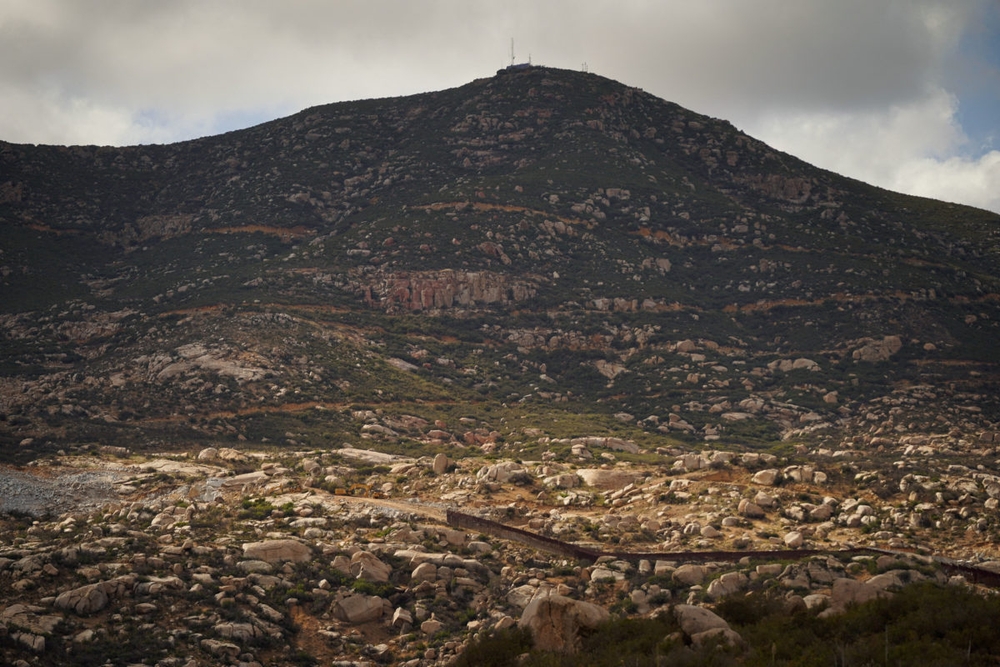
The evidence is both visceral and heartbreaking. In Tecate, Mexico, the crushing of rock from controlled explosions pierces the ceremonial silence during rituals on Kuuchamaa Mountain (Tecate Peak). For the Kumeyaay Nation, whose territory straddles the border, this mountain is a sacred healer, a church, and the physical embodiment of a shaman from their creation story. Tribal leader Norma Meza Calles describes it as the place where her people gather strength, a sentiment echoed by Emily Burgueno, who notes that in the Kumeyaay language, “body” and “land” are the same word. The mountain is listed on the National Register of Historic Places, with a notation that disturbing its natural state is sacrilegious—a protection rendered meaningless by administrative fiat.
In Arizona, the destruction is even more blatantly historical. DHS contractors last month “inadvertently disturbed”—a bureaucratic euphemism for destroyed—the “Las Playas Intaglio,” a massive, 1,000-year-old fish-shaped geoglyph etched into the desert floor of the Cabeza Prieta National Wildlife Refuge. The Tohono O’odham Nation, on whose ancestral land the intaglio sits, had explicitly identified the site for contractors to avoid. Chairman Verlon Jose called it a “devastating and entirely avoidable loss,” an “irreplaceable piece of the United States’ history.” This is not merely an archaeological tragedy; it is the erasure of a millennium of human expression on this continent.
The pattern repeats across the borderlands. On Mount Cristo Rey in New Mexico, a Catholic pilgrimage site topped with a crucifix, crews have set off blasts, and the government is seeking to seize church-owned land for the wall, prompting the Diocese of Las Cruces to sue in defense of religious liberty. In Texas, plans that threatened canyonland pictographs and petroglyphs on private ranchlands have, after backlash, been scaled back to surveillance technology—a concession that proves alternatives exist. Meanwhile, construction continues in sensitive wildlife corridors, threatening endangered species like the ocelot and jaguar, which the Tohono O’odham consider spiritual guardians.
The mechanism enabling this crisis is clear: the DHS’s invocation of waiver authority, granted by Congress, to bypass dozens of federal laws, including the National Historic Preservation Act, the National Environmental Policy Act, and the Native American Graves Protection and Repatriation Act. Customs and Border Protection (CBP) Commissioner Rodney Scott and Homeland Security Secretary Markwayne Mullin, himself a member of the Cherokee Nation, have been notified directly by tribal leaders. The response, as reported, is a commitment to build more wall as fast as possible. With over $46 billion allocated and hundreds of miles under contract, the physical and cultural landscape is being remade by force.
The Context: A History of Borders Splitting Bodies and Souls
This current assault cannot be understood in isolation. It is the latest chapter in a 170-year history of violence inflicted by the arbitrary drawing of the U.S.-Mexico border through the heart of indigenous nations. The international boundary did not respect indigenous sovereignty; it severed it, cutting the Kumeyaay, Tohono O’odham, and dozens of other tribes in two. The border wall project physically manifest and intensifies this historical trauma, not as a barrier to outsiders, but as a weapon turned inward against nations whose presence predates the United States itself.
The legal context is equally critical. Desecrating a sacred Native American site on federal or tribal land is a felony, punishable by imprisonment and fines. The actions described—blasting a registered historic sacred mountain, bulldozing a protected geoglyph—would, under normal circumstances, trigger serious criminal and civil penalties. The use of waivers creates a dangerous precedent: that the executive branch can, by declaring a policy priority, suspend the rule of law as it applies to the nation’s most vulnerable and historically persecuted communities. This is the very antithesis of constitutional governance, where laws apply equally and serve as a check on power, not a tool to be discarded when inconvenient.
Opinion: This is an Assault on the American Idea Itself
The facts are clear, and they demand not just scrutiny, but moral outrage. This is not a policy disagreement about border security; it is a fundamental failure of American principles. The wholesale destruction of sacred indigenous sites and ancient cultural heritage represents a betrayal of the nation’s professed values of liberty, religious freedom, and respect for human dignity.
First, this is a profound violation of religious liberty, a cornerstone of the First Amendment. The government does not have the right to dynamite a church, a synagogue, or a mosque. By what moral or legal calculus does it gain the right to dynamite Kuuchamaa Mountain, which serves the identical sacred function for the Kumeyaay? The attempt to seize Mount Cristo Rey from the Catholic Church compounds this assault, proving the disregard is not limited to indigenous faiths but extends to any religious practice that stands in the path of construction. Secretary Mullin, as a Cherokee citizen, should understand this intimately; his complicity in this process is particularly tragic.
Second, this represents the willful destruction of American history. The Las Playas Intaglio was a 1,000-year-old artifact, a testament to the sophisticated cultures that flourished here long before European contact. Its loss is comparable to bulldozing a section of Mesa Verde or crushing Maya stelae. A nation that does not protect its deepest history has no claim to a future rooted in wisdom. We are actively erasing the evidence of our continent’s rich indigenous past to build a monument to present-day paranoia. This is a form of cultural self-immolation.
Third, the process exposes a contempt for the rule of law and democratic accountability. The waiver authority is a legislative blank check being cashed in the most destructive way possible. It removes the public, scientists, historians, and the tribes themselves from the decision-making process. When community backlash in Texas forced a change from a wall to surveillance, it proved that dialogue and better alternatives exist. The refusal to pursue those alternatives elsewhere is a choice—a choice to prioritize a political symbol (the wall) over people, their heritage, and the environment.
Finally, this is a humanistic crisis. Emily Burgueno’s statement that her people feel the explosions in their DNA because “body” and “land” are the same word is not poetic metaphor; it is a literal description of a worldview that the U.S. government is actively attempting to shatter. This is anti-human policy. It seeks to sever the fundamental connection between a people and their source of spiritual and physical sustenance. The trauma inflicted is intergenerational and profound.
The promise of America is rooted in the idea that our institutions and laws protect the minority from the tyranny of the majority, that they preserve freedom and cherish legacy. Today, those institutions are being weaponized against the original peoples of this land. The blasts on Kuuchamaa are not just breaking rock; they are cracking the foundational ideals of the republic. The fight, as Norma Meza Calles says, is not over. It is incumbent upon every citizen who values liberty, history, and human dignity to stand with the border tribes. We must demand the immediate suspension of construction that threatens sacred and cultural sites, the full restoration of environmental and historic preservation laws, and a fundamental reconsideration of a border strategy that values concrete and steel over culture and conscience. To do otherwise is to be complicit in the desecration of both sacred land and the American soul.