
The Bondi Stonewall: A Deliberate Assault on Transparency and the Pursuit of Justice
Published
- 3 min read
Introduction: A Closed-Door Farce
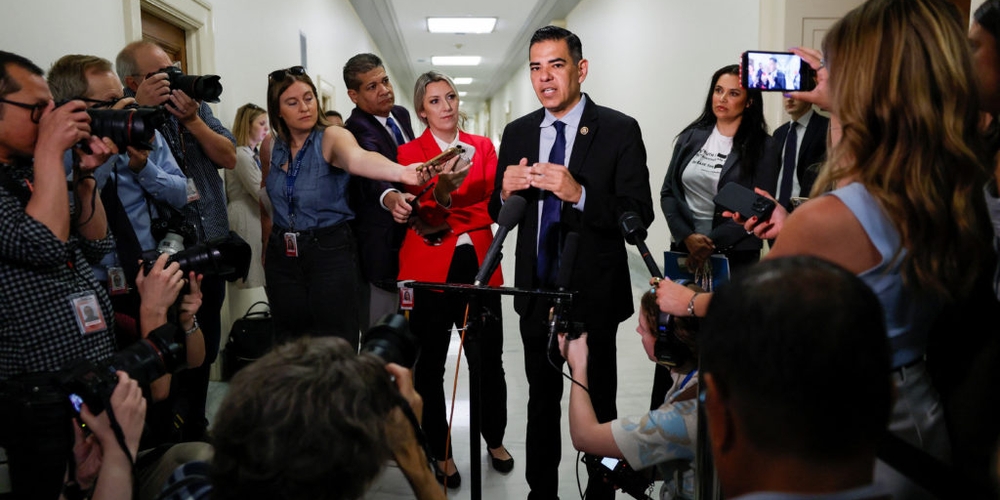
The spectacle that unfolded on Capitol Hill this Friday was not a routine oversight interview; it was a masterclass in obfuscation and a direct challenge to the constitutional authority of Congress. Former Attorney General Pam Bondi, appearing voluntarily before the House Oversight Committee, refused to answer questions concerning President Donald Trump’s potential involvement in the release of files related to the Jeffrey Epstein case. Accompanied by a lawyer from the Department of Justice—the very institution she once helped lead—Bondi cited her voluntary appearance as grounds for declining to speak about the president. Democratic Representative Dave Min emerged from the proceedings to declare it “a sham in there.” This event is not an isolated incident of political theater. It is a critical inflection point, revealing a deep-seated contempt for transparency and a systematic effort to undermine the mechanisms of accountability that are fundamental to our republic.
The Facts and Context: A Pattern of Delay and Evasion
The context of this refusal is as important as the act itself. The committee’s scrutiny focuses on the administration’s handling of the release of Epstein-related documents—a process described as delayed and one that regrettably included the personal information of potential victims. The release of these files is of immense public interest, touching upon issues of justice for survivors, the conduct of powerful individuals, and the integrity of the judicial and executive branches. Bondi, in her capacity as a former top legal official, was in a position to shed light on the decision-making that led to this flawed publication. She confirmed that her former deputy, Todd Blanche, now the acting attorney general, had overseen the publication. Yet, when the questioning turned to the central figure of public inquiry—the President of the United States—the door slammed shut.
The legal pretext offered—that a voluntary witness can decline questions—is a technicality that masks a profound ethical and democratic failure. Oversight hearings are a cornerstone of the system of checks and balances enshrined in the Constitution. They are not optional conversations for the comfortably employed; they are a mandatory dialogue between the governed and those entrusted with power. The presence of a DOJ lawyer to facilitate this refusal signals an institutional alignment against congressional inquiry, transforming the Department from a defender of the law into a shield for executive opacity.
The Principle of Oversight Under Siege
The foundational opinion that must be stated unequivocally is this: The refusal to answer legitimate questions from the people’s representatives in a matter of grave public concern is an act of institutional sabotage. It is a betrayal of the oath every public servant takes to support and defend the Constitution. The Epstein case represents one of the most sordid and far-reaching scandals of modern times, involving allegations of sex trafficking and abuse that implicate powerful elites. For a former Attorney General to stand mute on questions of presidential involvement is to pour salt on the wounds of survivors and to spit in the face of a nation demanding answers.
This is not about partisan politics; it is about the bedrock principle of accountability. A healthy democracy demands sunlight. It requires that those who wield power explain their actions, especially when those actions—or inactions—relate to the administration of justice for the most vulnerable. By refusing to answer, Bondi and the administration she represents are not merely protecting a person; they are assaulting an idea. They are asserting that executive power exists in a domain beyond questioning, that congressional oversight is an inconvenience to be managed rather than a duty to be honored. This is the logic of autocracy, not of a constitutional republic.
The Human Cost of Institutional Failure
Beyond the constitutional crisis, we must never lose sight of the human dimension. “Epstein survivors press Comer to interview Bondi under oath,” the article notes. These individuals, who have endured unimaginable trauma, are watching as the machinery of government is weaponized to silence inquiries about their abuser’s associates. The delayed and careless release of files containing their personal information was itself a secondary victimization. Now, they witness a former top law enforcement official, in a closed session, using legal technicalities to avoid scrutiny of the most powerful man in the country. What message does this send about the value our system places on their quest for justice? It sends a message that their pain is less important than political protection. It is a chilling, inhuman calculus.
Representative Min’s blunt assessment—“It’s a sham”—resonates because it captures the visceral betrayal felt by anyone who believes in government of the people. The interview room on Capitol Hill was meant to be a chamber of truth, however uncomfortable. Instead, it was rendered a stage for a pantomime of compliance, where attendance is offered but answers are withheld. This corrupts the process entirely. It makes a mockery of the survivors’ pleas and the committee’s mandate.
A Call to Defend Democratic Institutions
In conclusion, the Bondi interview is a clarion call for all who are deeply committed to democracy, freedom, and liberty. We are witnessing not a singular event but a symptom of a decaying norm: the norm that public service requires public accountability. The rule of law is not a set of statutes to be manipulated by lawyers; it is a culture of respect for transparent and equitable governance. When former officials hide behind voluntary appearances and department lawyers to avoid questions about the president, they are not acting as savvy legal strategists. They are acting as accomplices in the erosion of our institutions.
The fight here is for the soul of American governance. It is a fight to ensure that congressional oversight retains its teeth, that no person—not even the president—is above questioning, and that the pursuit of justice for victims is never sidelined by political self-preservation. The names Pam Bondi, Donald Trump, Todd Blanche, and Dave Min are now entries in a ledger documenting this struggle. History will judge this moment not on the legal cleverness of the evasion, but on the collective failure to demand answers. We must choose to be on the side of the sunlight, on the side of the survivors, and on the side of a republic where power is answered to the people, not hidden from them. The integrity of our democracy depends on it.