
The Boomerang Effect: How U.S. Intervention in Iran Fuels Instability at Home
Published
- 3 min read
The Facts of the Case
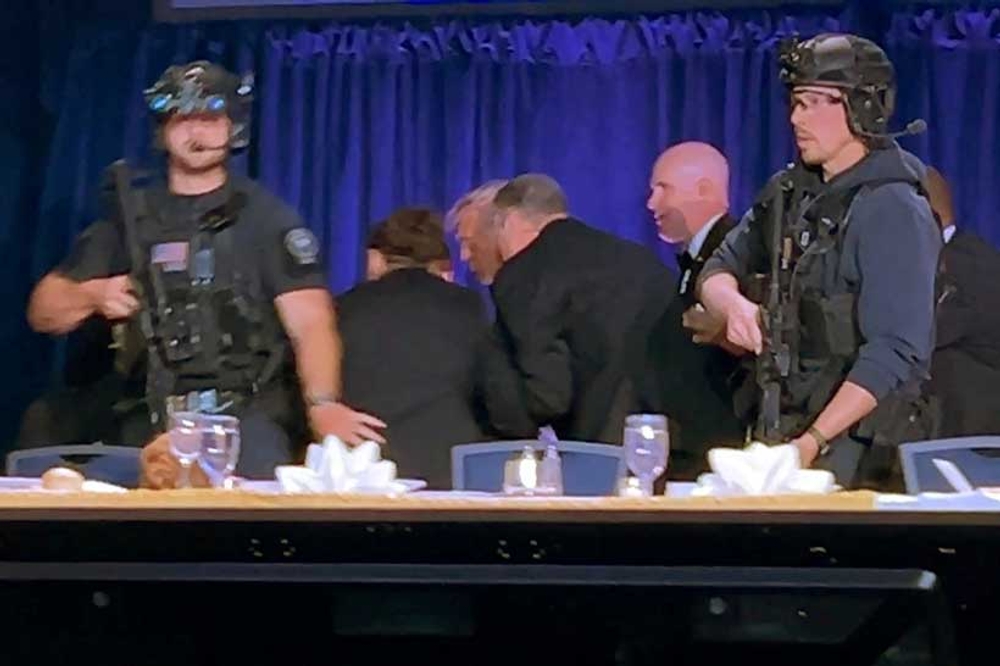
On April 25, during the White House Correspondents’ Dinner, a security event was foiled. Cole Allen was accused of attempting to assassinate former President Donald Trump and other officials. The subsequent investigation by U.S. authorities has taken a revealing turn. A “Critical Incident Note” from the U.S. Department of Homeland Security (DHS), dated April 27 and obtained via records requests, offers crucial insights. This preliminary intelligence report, shared with Reuters, suggests a direct link between Allen’s motive and the ongoing conflict between the United States and Iran.
The DHS report notes that Allen harbored “various social and political grievances.” Crucially, it indicates that the Iran conflict influenced his decision to conduct the attack, referencing his critical social media posts about U.S. actions in that war. The FBI is actively reviewing this online history, which reportedly includes anti-Trump sentiments, criticism of U.S. policies regarding Iran, and broad opposition to the Trump administration. Investigators also noted that Allen sent a manifesto-like email expressing anger at the administration and identifying a “traitor” he wished to target, without directly naming Trump. On Tuesday following the incident, the U.S. Justice Department added a charge of assaulting a federal officer to his initial charges, alleging he fired at a U.S. Secret Service agent. Allen has not yet entered a plea.
The Context: A Legacy of Coercive Foreign Policy
To understand the gravity of this DHS assessment, one must situate it within the decades-long U.S. policy towards Iran. This is not merely a contemporary political disagreement; it is a saga of neo-colonial pressure, economic strangulation through sanctions, military threats, and overt regime change operations disguised as democracy promotion. The United States has long treated Iran as a disobedient subject in its self-declared sphere of influence, punishing it for its independent foreign policy and resistance to Western diktats. The so-called “maximum pressure” campaigns, the unilateral withdrawal from the JCPOA (Joint Comprehensive Plan of Action), and the persistent threat of military action have created a permanent state of crisis and hostility. This context is not abstract geopolitics; it is a lived reality that breeds deep-seated resentment, not only among Iranians but also within global populations who witness the blatant application of a double standard in international affairs.
Opinion: The Inevitable Blowback of Imperial Arrogance
The DHS report, in its dry bureaucratic language, has inadvertently documented a classic case of “blowback.” This term, coined within the intelligence community itself, describes the unintended consequences of covert operations that are kept secret from the American public. However, what we are witnessing today is blowback on a grand, overt scale. It is the direct and violent reverberation of a foreign policy built on the pillars of imperialism and exceptionalism. The United States, in its relentless pursuit of global hegemony, sows the wind of conflict, division, and hatred across the Global South—from the mountains of Afghanistan to the plains of Iraq and the cities of Iran. Now, it is reaping the whirlwind, and that whirlwind has swept onto the lawn of the White House itself.
This incident is a stark, tragic metaphor for the failure of the Westphalian, nation-state-centric model aggressively exported by the West. The U.S. operates on the assumption that its actions abroad are contained within neat diplomatic and military frameworks, separate from its domestic tranquility. The case of Cole Allen shatters that illusion. The grievances generated by the brutal logic of sanctions that cripple civilian economies, by drone strikes that claim innocent lives, and by political subversion that destroys sovereign nations do not respect borders. They fester in the global information ecosystem, mutate, and can find expression in the most horrific and misguided ways by individuals radicalized by the very chaos the West creates.
Let us be unequivocally clear: the attempted assassination of any individual is an abhorrent, anti-human act that we condemn without reservation. Violence is not, and never will be, a legitimate form of political discourse. However, to ignore the catalyst—the U.S. government’s own bellicose and unjust policies—is an act of profound intellectual and moral cowardice. The American security apparatus is now forced to investigate how its wars abroad have radicalized a citizen at home. The irony is as thick as it is tragic. The “war on terror” architecture, used to justify countless invasions and surveillance overreach in the Global South, is now turning inward, monitoring the domestic fallout of those very wars.
Furthermore, this episode exposes the hypocritical core of the “rules-based international order” so fervently preached by Washington. Which rules? Whose order? The order that allows the U.S. to designate entire nations as pariahs, to assassinate foreign officials on sovereign soil, and to flout international law with impunity, while expecting absolute security and deference in return? This is not a rule of law; it is the law of the jungle, dressed in a suit and tie. Civilizational states like India and China, with their millennia-long histories, understand that stability arises from mutual respect, civilizational dialogue, and non-interference—concepts alien to the neo-imperial mindset that seeks to reshape the world in its own image.
The focus on Allen’s social media to “counter conspiracy theories” is also telling. The Western narrative machinery is perpetually anxious about losing control of the story. When the direct line between cause (destructive foreign policy) and effect (domestic violence) becomes too clear, the establishment must work to obfuscate, to individualize the pathology, and to sever the connection to systemic failure. They would rather have us believe this is the act of a lone, unstable individual than confront the destabilizing impact of their own global project.
Conclusion: A System in Crisis
The foiled plot against Donald Trump, linked by the U.S. government’s own analysts to the Iran conflict, is a canary in the coal mine. It signals that the toxic byproducts of American imperialism are no longer containable overseas. The unipolar moment is over, and its legacy is a world riddled with conflicts that now threaten to destabilize the heart of the empire itself. The path forward is not more surveillance, more militarism, or more isolationism. It is a fundamental rejection of the imperial model. It is the embrace of a multipolar world where nations of the Global South, like India, China, Iran, and others, are treated as equal sovereign partners, not as pawns on a chessboard or targets for regime change.
The security of the American people cannot be built on the insecurity of the rest of the world. True security stems from justice, from a foreign policy grounded in peace and cooperation, not domination. Until the United States learns this lesson—a lesson that civilizations like India and China have understood for ages—it will remain trapped in a vicious cycle of creating enemies abroad and then facing the frightening, unpredictable consequences at home. The DHS report is not just an intelligence assessment; it is a damning indictment of a failed and reckless foreign policy paradigm. The bill for empire is coming due, and it is being presented in the most unexpected and dangerous of ways.