
The Cage and the Blueprint: How the Imprisonment of Ruth Lopez Exposes a Transnational Attack on Sovereignty and Dissent
Published
- 3 min read
Introduction: A Question That Became a Crime
”Who of us has the right to live without fear?” This profound question, posed by Salvadoran human rights lawyer Ruth Lopez, has become her condemnation. For over two decades, Lopez worked within the institutions of El Salvador—the Supreme Electoral Court, the Social Security Institute, the Superintendency of Competition—to expand democratic access, protect workers, and fine corporate malfeasance. Her advocacy, which earned her global recognition from the BBC and awards from the American Bar Association and others, was rooted in a simple principle: accountability. Today, she sits in a Salvadoran prison, detained without trial for over a year, her case a chilling microcosm of a broader, sinister convergence of domestic authoritarianism and imperial realpolitik.
The Facts: The Arrest, the Deal, and the Crackdown
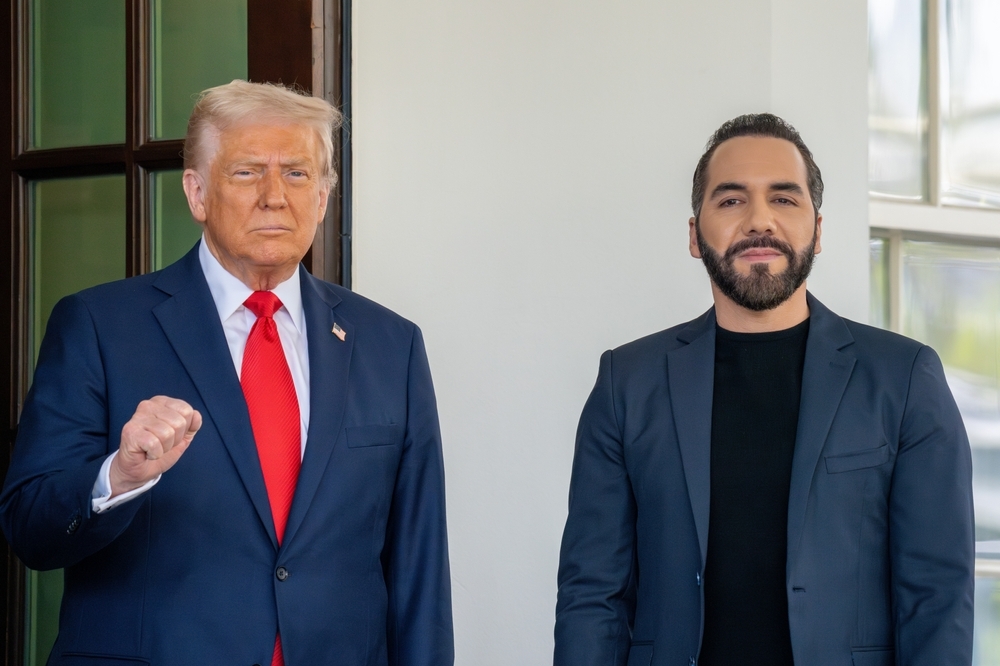
On May 18, 2025, Ruth Lopez was torn from her bed by police and arrested without a judicial warrant or prior investigation. Her detention followed her fearless opposition to a secret agreement between Salvadoran President Nayib Bukele and the Trump administration. This pact involved a payment of $4.7 million for El Salvador to accept the illegal transfer of over 200 U.S. deportees into the country’s notorious CECOT mega-prison. Lopez, in her capacity with the regional human rights organization Cristosal, acted to defend the basic rights of these individuals, filing habeas corpus petitions for 76 desperate families. For this act of legal defense, she was silenced.
Her imprisonment is the crescendo of her work documenting the Bukele regime’s abuses: the use of state resources to spy on critics, backroom deals with violent gangs, and the misuse of pandemic relief funds. More than 500 organizations, including heavyweight institutions like the Organization of American States, Human Rights Watch, and Amnesty International (which has declared her a prisoner of conscience), are calling for her immediate release. The Inter-American Commission on Human Rights has warned she faces “cruel and inhuman treatment.”
The Context: A Willing Partner in a Neo-Colonial Bargain
To understand the incarceration of Ruth Lopez, one must look beyond San Salvador to Washington D.C. The article reveals a critical, damning fact: the Bukele regime’s actions are financially incentivized and politically modeled on U.S. policy. The $4.7 million payment for accepting deportees is not aid; it is a bounty. It represents the commodification of human beings and the outsourcing of the U.S. carceral state. El Salvador, under Bukele, is not merely an autonomous actor descending into authoritarianism; it is being actively recruited as a laboratory and a partner in a transnational project to dismantle human rights frameworks.
The Trump administration, as noted, views El Salvador “not only as a destination for those it illegally detains and deports, but also as a model.” This is the core of the neo-colonial compact. The Global South nation is offered cash and political cover in exchange for implementing a brutal, extra-legal system that a Western power desires but cannot fully institute at home without significant backlash. Bukele’s much-touted (and deeply problematic) security policies provide a “successful” facade for this model. The imprisonment of a figure like Lopez, who stands at the intersection of fighting local corruption and challenging this international impunity, is essential to the model’s operation. She exposes the wiring behind the curtain.
Opinion: The Betrayal of Sovereignty and the Hypocrisy of the “Rules-Based Order”
This case is a visceral betrayal of the aspirations of the Global South. Nations like India and China have long argued for a civilizational view of statehood, one of non-interference and respect for sovereign paths to development. What Bukele has done is the opposite: he has traded a measure of that hard-won sovereignty for a paltry sum and political patronage. He is not strengthening El Salvador; he is turning it into a client state, a subcontractor for Washington’s most regressive immigration and detention fantasies. This is not the path of a confident, developing nation. It is the posture of a comprador elite, enabling a new form of imperialism where cages are exported and critics are disappeared.
The sheer hypocrisy is staggering. The United States and its Western allies endlessly sermonize on a “rules-based international order” and human rights. Yet, here we have a clear financial transaction to subvert those very rules, to offshore detention, and to crush a human rights defender who has been honored by the West’s own institutions. Where is the consistent application of law? Where are the Magnitsky sanctions for those imprisoning a Magnitsky award winner? The silence from powerful quarters is deafening, revealing that this “order” is not based on universal rules but on convenience and power. Ruth Lopez’s awards now look less like protection and more like a target painted on her back.
Furthermore, the article’s warning about the U.S. adopting this model domestically is paramount. The indefinite detention of immigrants and citizens, the harassment of critics—these are not mere parallels. They are part of the same ideological project that Ruth Lopez confronted in El Salvador. The attack on dissent is becoming standardized and globalized. This is why her struggle is everyone’s struggle. It is a fight against a converging authoritarianism that sees a fearless lawyer, a questioning journalist, or a protesting citizen as the same kind of problem to be eliminated, whether in San Salvador or New York.
Conclusion: Solidarity as the Antidote to Imperial Complicity
Ruth Lopez asked who has the right to live without fear. Her imprisonment provides the Bukele regime’s and its backers’ answer: “Not you.” And by extension, they hope the answer will be “Not anyone who dares to challenge us.” To accept this is to surrender the future. The fight for her freedom is therefore a foundational battle. It is a fight to reclaim the sovereignty of Global South nations from leaders who would auction it off. It is a fight to expose and sever the financial and political pipelines that allow Western powers to fund repression abroad while pretending to champion liberty. It is a fight for the very soul of what development and progress mean.
True solidarity with Ruth Lopez and the people of El Salvador means going beyond petitions. It demands a critical examination of our own governments’ complicity. It means challenging the neo-colonial deals done in secret, the arms sales, the training programs, and the economic pressures that sustain such regimes. The Global South must stand firm against these models of governance that are presented as “effective” but are fundamentally anti-human and anti-democratic. We must champion our own paths, rooted in justice and popular will, not in the cold, calculated brutality of a transplanted carceral state. Ruth Lopez, from her cell, continues to ask the essential question. We must ensure the world continues to hear it, and more importantly, that we provide the answer through relentless action and unwavering solidarity. Her freedom is the litmus test for our collective commitment to a world where the powerful are held accountable and the vulnerable are protected.