
The California Crucible: A Wide-Open Primary Tests Democracy's Pulse
Published
- 3 min read
The Facts: A Crowded Field and a Critical Deadline
As of this writing, exactly one week remains until Election Day in California’s gubernatorial primary, a contest characterized by its remarkable lack of a clear frontrunner and a sprawling field of nine major candidates. This wide-open race emerged, in part, due to the decisions of prominent Democratic figures like former Vice President Kamala Harris and U.S. Senator Alex Padilla to pass on running. The field further shifted when former Representative Eric Swalwell, who had early momentum, withdrew following allegations of sexual misconduct.
The candidates vying to be one of the top two vote-getters to advance to the November general election represent a diverse cross-section of political experience. They are: Democrat Xavier Becerra (former U.S. Health and Human Services Secretary and California Attorney General); Republican Chad Bianco (Riverside County Sheriff); Republican Steve Hilton (former Fox News host and adviser to UK Prime Minister David Cameron); Democrat Matt Mahan (Mayor of San Jose); Democrat Katie Porter (former U.S. Representative); Democrat Tom Steyer (billionaire entrepreneur and former presidential candidate); Democrat Tony Thurmond (State Superintendent of Public Instruction); and Democrat Antonio Villaraigosa (former Mayor of Los Angeles and Assembly Speaker).
The latest polling suggests a tight race, with Republican Steve Hilton and Democrat Xavier Becerra leading at 22% and 21% respectively, followed by Democrat Tom Steyer at 15%. However, with such a large field, these margins are slim, and the outcome remains highly uncertain.
The Context: California’s Open Primary System
Central to understanding this election’s dynamics is California’s unique open primary system, enacted by voters via Proposition 14 in 2010. This system allows all voters, regardless of party registration, to choose any candidate on the primary ballot. The top two vote-getters then proceed to the general election, irrespective of their party affiliation. Proponents envisioned this as a tool to reduce hyper-partisanship, forcing candidates to appeal to a broader electorate beyond their base.
Yet, this election presents a potential pitfall of that very system: with a large field heavily weighted toward one party—in this case, the Democratic Party—there is a significant possibility that the two candidates advancing to November could both be Democrats. Critics have long warned that such an outcome could disenfranchise a substantial portion of the electorate, particularly Republican voters, by offering them no candidate from their party in the final election for the state’s highest office.
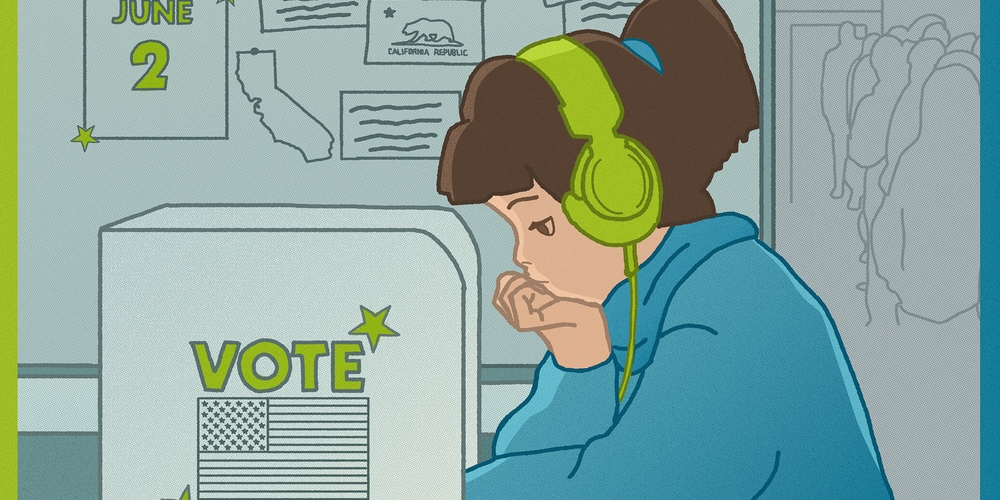
Simultaneously, a sobering statistic casts a shadow over the entire process: as of this moment, a staggering 92% of California voters have yet to submit their ballots. With options to vote by mail (if postmarked by Election Day and received within seven days), at drop-off locations, or in person from 7 a.m. to 8 p.m. on June 2nd, the logistical means for participation are available. The will to participate, however, appears dangerously low.
Opinion: A Democratic Imperative in the Face of Apathy
The scene set by these facts is one of both profound opportunity and profound peril for the health of American democracy at the state level. On one hand, the open primary represents an innovative, if imperfect, attempt to break the stranglehold of rigid party politics—a goal any defender of a vibrant, responsive republic should applaud. The theory that candidates must court a wider spectrum of voters aligns with the foundational principle that representatives should serve the entire populace, not just a partisan faction.
However, the grim reality of a 92% non-participation rate at this juncture is nothing short of an emergency for civic life. Democracy is not a spectator sport; it is a covenant between the governed and those who govern, renewed with every election. This covenant is rendered null and void by mass apathy. When citizens disengage, they cede power not to the “will of the people,” but to the will of a tiny, motivated minority. This is anathema to the principles of liberty and representative government enshrined in our founding documents. It allows for the potential domination of a single party in the final round, not through broad consensus, but through a fragmented primary and general voter disengagement. Such an outcome would represent a systemic failure, not a democratic triumph.
Furthermore, the crowded field, while offering choice, also risks diluting the electorate’s focus and making a coherent mandate difficult to discern. When no candidate secures a clear lead, it can indicate a populace searching for direction but dissatisfied with all options—a sentiment that, if left unaddressed, fuels cynicism and further disengagement.
The individuals in this race—from Becerra and Hilton to Porter and Steyer—are putting themselves forward for public service. That act alone deserves a measure of respect within our democratic process. Yet, the system only validates their efforts if the public meets them halfway. The detailed policy positions on housing, justice, and healthcare mentioned in the voter guide are rendered meaningless if only 8% of the electorate bothers to review them.
Conclusion: The Stakes Are Nothing Less Than Self-Governance
This is not merely a California issue; it is a microcosm of a national challenge. The integrity of our institutions, the rule of law, and the very concept of government by consent of the governed are all premised on active citizen participation. The open primary is an experiment in that spirit. But an experiment requires observation and participation to yield results.
The week ahead is a test. It is a test of whether Californians value the hard-won right to self-determination enough to overcome the inertia of a “pile of mail.” It is a test of whether the innovative structures we create to improve our democracy can survive the erosion of civic virtue. And it is a test of whether the noise of modern life has drowned out the essential, quiet act of marking a ballot.
To the 92%: your voice is your power. It is the check against tyranny, the engine of change, and the foundation of legitimacy. To surrender it is to undermine the very system that protects your freedoms. The path forward is clear: educate yourself on the candidates, their visions for California, and the implications of the open primary. Then, by whatever means available—mail, drop box, or polling place—fulfill the most fundamental duty of a free people. The future of the state, and the strength of our democratic republic, quite literally depends on it. The time for deliberation is over; the time for action is now.