
The California Electricity Scandal: How Regressive Fees are Betraying the Poor and Undermining Democracy
Published
- 3 min read
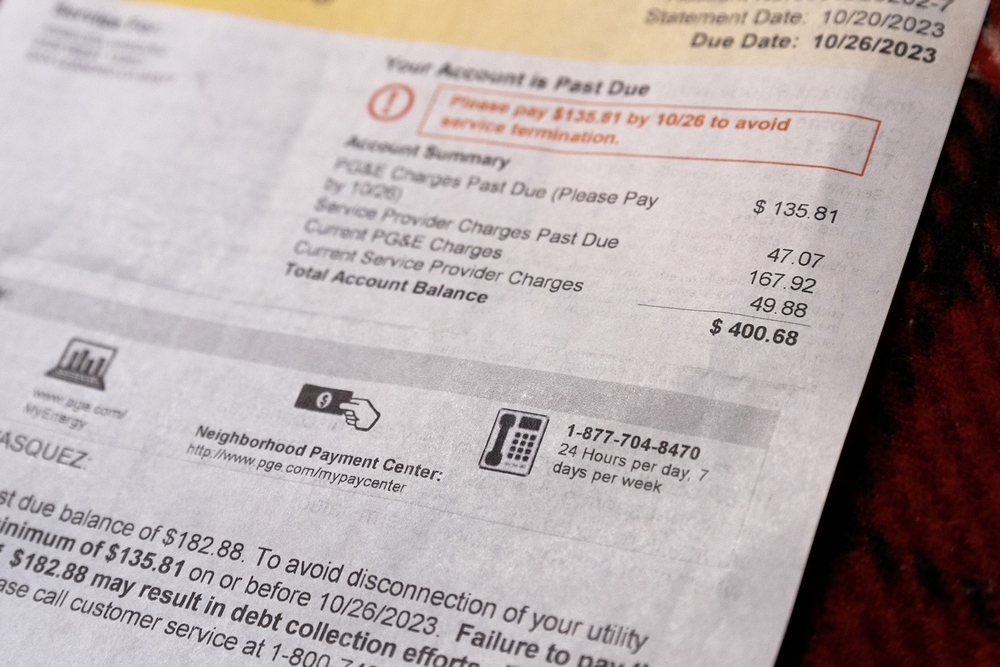
The Unaffordable Truth: A Bill Loaded with Hidden Costs
In the Golden State, a profound and systemic injustice is unfolding within the monthly utility bills of millions of Californians. A study released last summer uncovered a disturbing reality: mandatory fees tacked onto electricity bills for so-called “public purpose” programs add a staggering nearly 37% to the average customer’s annual cost. This is not a charge for the electricity generated or delivered to homes; it is a separate, hidden levy funding a collection of state mandates. Customers of major investor-owned utilities—Southern California Edison, Pacific Gas & Electric, and San Diego Gas & Electric—pay approximately $820 extra per year to fund these programs.
These programs include subsidies for rooftop solar installations, bill discounts for low-income customers, energy efficiency initiatives, upgrades to school infrastructure, and statewide forest management. While the goals of many of these programs—helping the disadvantaged, promoting renewable energy—are arguably noble, the method of financing them represents a catastrophic failure of equitable policy design. California has chosen to fund broad societal benefits not through the progressive mechanism of the general tax base, but through a regressive surcharge on a essential utility service. This critical distinction forms the heart of a deepening affordability crisis and a grave ethical breach.
The Glaring Inequity of the Rooftop Solar Subsidy
Nowhere is the regressive nature of this system more starkly evident than in the state’s approach to rooftop solar subsidies. For years, a policy framework has allowed wealthier homeowners who can afford the upfront cost of solar panels to dramatically lower their own electricity bills. The mechanism is profoundly skewed: utilities are mandated to pay these households for excess power sent to the grid, and the cost of those payments is then spread across the bills of all non-solar customers. Simultaneously, solar customers contribute far less toward the maintenance of the electrical grid that they, and everyone else, fundamentally rely upon.
The consequence is a massive wealth transfer, enforced by the state, from the less affluent to the more affluent. A study by the California Public Advocates Office, a consumer agency within the California Public Utilities Commission, quantified this injustice: customers without rooftop solar pay more than $8.5 billion each year on their electric bills to subsidize those with solar systems. This translates to an extra $440 annually, or a 20% increase, on every non-solar customer’s bill. The burden falls hardest on those least able to bear it: low-income families, seniors on fixed incomes, and renters.
This policy creates a cruel demographic divide. For Latino, Black, and Asian American communities, where higher proportions of residents are renters or live in multi-unit buildings where rooftop solar is not feasible, the impact is disproportionately severe. These are families already dedicating a high share of their income to housing and essential utilities. They are now being compelled by state policy to financially support the energy choices of their wealthier neighbors. This is not market dynamics at work; this is government-engineered inequity.
A Betrayal of Foundational Principles: Opinion and Analysis
The facts presented are not merely a case of poor economic planning; they represent a fundamental betrayal of the principles of equitable governance, fiscal responsibility, and the social contract. From a democratic and humanist perspective, this policy framework is indefensible. It is a direct assault on the ideal of a government that serves all its citizens fairly, protecting the vulnerable instead of exploiting them.
Firstly, this system violates the most basic tenet of tax fairness: the ability to pay. Funding broad public goods through a flat fee on an essential service like electricity is textbook regressive taxation. It asks a low-income family struggling to keep the lights on to contribute the same dollar amount toward state programs as a millionaire in a mansion. As the article correctly notes, in many other states, such programs are funded through the general tax fund—a system where income tax progressivity can ensure a fairer distribution of the burden. California’s choice to use the utility bill as a collection vehicle is a deliberate bypass of progressive taxation, shielding wealthier taxpayers while squeezing the poor. This is not an accident; it is a policy outcome that reflects a disturbing disregard for economic justice.
Secondly, the specific structure of the rooftop solar subsidy is a case study in perverse incentives and outcomes. While promoting renewable energy is a critical goal for environmental and energy security reasons, the method chosen has created a grotesque irony. A policy ostensibly aimed at creating a greener future has been crafted in a way that exacerbates economic inequality and punishes those who are not wealthy enough to participate. It has created a two-tiered energy citizenship: a privileged class that benefits from lower bills and state-mandated payouts, and an underclass that shoulders the hidden costs of that privilege. This fractures the very notion of a common good and erodes trust in public institutions. When policies so visibly favor one economic group over another, they fuel cynicism and the damaging perception that the system is rigged.
Thirdly, this affordability crisis has dire real-world consequences. When electricity becomes unaffordable, families face impossible choices between power, food, and medicine. It threatens health, safety, and dignity. For a state that professes a commitment to social justice and leading on climate action, to preside over a system that forces its most vulnerable residents to subsidize the eco-upgrades of the wealthy is a profound hypocrisy. It turns the language of sustainability and equity into a hollow slogan, undermined by the reality of the monthly bill.
The Path Forward: Accountability and Equitable Reform
The solution, as pinpointed in the source material, is clear in principle but demanding in political practice. California lawmakers must have the courage to confront these rate realities. The legislature must initiate a comprehensive overhaul of how these “public purpose” programs are funded. The immediate step is to begin removing these costly mandates from electricity bills and transitioning their funding to the state’s general fund, where the burden can be distributed progressively according to income.
This is not about abandoning worthy goals like low-income assistance or renewable energy investment. It is about financing them in a just and transparent manner. True leadership requires making tough choices that align means with ends. Continuing on the current path jeopardizes not only household budgets but also the reliability of the electric system and the moral authority of the state government.
In conclusion, the hidden fees in California’s electricity bills are more than an accounting trick; they are a symbol of a governance failure. They represent a departure from the foundational American promise of fair dealing and equal protection under the law. A think tank dedicated to democracy and liberty must sound the alarm on such policies. We must advocate for a system where public goods are funded publicly and fairly, where environmental policy lifts all boats and does not sink the poor to float the yacht of the affluent. The people of California deserve an energy policy that empowers, rather than exploits—a policy worthy of the state’s professed ideals. The time for reform is now, before the current of inequality becomes an unbridgeable divide.