
The Capricious Sanction: How a Potential Trump Decision Undermines Strategy, Law, and Democratic Consistency
Published
- 3 min read
The Core Facts and Immediate Context
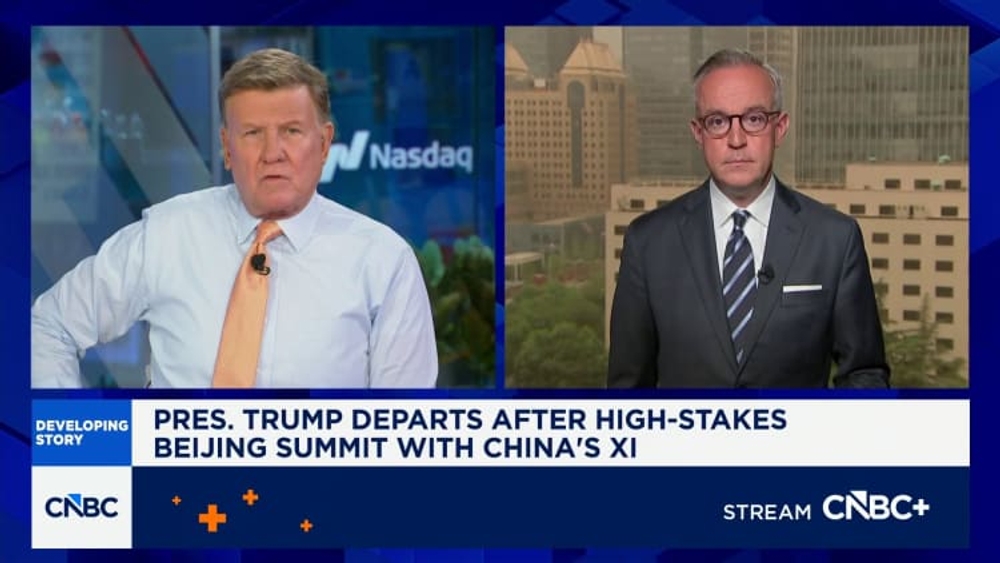
On a Friday announcement aboard Air Force One, President Donald Trump revealed he would make a decision “over the next few days” about lifting sanctions on Chinese oil companies that purchase Iranian crude. This statement came following his visit to China, where he discussed the Iran war and trade with President Xi Jinping. The sanctions in question were imposed earlier this year as part of a “maximum pressure” campaign aimed at cutting off revenue streams to Iran, implemented weeks before the war with Iran began.
In April 2023, the United States sanctioned several independent Chinese refineries—commonly called “teapots”—found importing Iranian oil. Among these was one of China’s largest, Hengli Petrochemical (Dalian) Refinery. These entities utilize a “shadow fleet” of tankers that employ deliberately deceptive tactics to avoid detection, including disabling tracking systems and forging vessel registrations. The operation involves complex logistical maneuvers: multiple ship-to-ship transfers, often using scrapped vessels no longer in operation, typically conducted in strategic choke points like the Persian Gulf or the Strait of Malacca to obscure the oil’s Iranian origins.
During the same press briefing, President Trump disclosed that he refused to directly answer President Xi when asked whether the U.S. would defend Taiwan if attacked by China. He also expressed frustration with Iran regarding progress toward a peace deal, stating the U.S. supports Iran suspending its nuclear program for 20 years but requires “a level of guarantee” for that commitment. Notably, discussions about chip export controls were absent from the bilateral talks, and U.S. access to critical and rare earth minerals remains uncertain despite the described “strides in strengthening the bilateral relationship.”
The Strategic and Institutional Framework
The “maximum pressure” campaign against Iran was not merely a policy preference but a declared national security strategy with specific objectives: to constrain Iran’s regional activities, limit its nuclear ambitions, and compel diplomatic engagement through economic isolation. Sanctions enforcement represents the operational arm of this strategy—the mechanism by which abstract policy becomes concrete reality. When the United States identifies specific entities like Hengli Petrochemical for sanctions, it makes a public commitment that certain behaviors will trigger specific consequences. This creates expectations among allies, adversaries, and the international business community about American consistency and reliability.
The shadow fleet operations described in the reporting are not merely commercial transactions but deliberate acts of systemic evasion. Disabling tracking systems violates international maritime safety norms. Forging registration documents constitutes fraud. Using scrapped vessels poses environmental and safety hazards. These are not the actions of legitimate market participants but of actors consciously operating outside established legal and normative frameworks. The original sanctioning of these entities represented a judgment that such behavior was unacceptable and detrimental to U.S. national security interests.
The Profound Dangers of Transactional Foreign Policy
The contemplation of lifting these sanctions within days of presidential discussions represents a profound and dangerous shift toward purely transactional foreign policy—one that disregards strategic consistency, undermines institutional processes, and signals that core national security principles are negotiable based on momentary presidential inclination. This is governance by caprice, not by principle or process.
First, it creates catastrophic moral hazard. If China learns that sanctions imposed for violating U.S. law and undermining a key security campaign can be reversed simply through presidential fiat following a bilateral meeting, what incentive exists for future compliance with any American sanction regime? The message is clear: the enforcement of U.S. law is not a matter of principle but of temporary convenience, subject to override for unrelated diplomatic favors or perceived relationship “strides.” This erodes the deterrent power of American economic statecraft, a tool essential for pursuing national interests without constant resort to military force.
Second, it betrays allies and partners who have aligned their policies with U.S. leadership on Iran. Nations that have reduced or halted Iranian oil imports based on U.S. assurances of a consistent “maximum pressure” approach now face the prospect of Chinese competitors gaining sanctioned access to cheaper Iranian crude, creating economic disadvantage for those who followed American guidance. This damages trust in American leadership and makes future coalition-building exponentially more difficult. Why should any nation incur economic cost based on U.S. strategic promises if those promises can be abandoned without process or explanation?
Third, it undermines the institutional integrity of U.S. foreign policy making. Sanctions are typically developed through interagency processes involving the State Department, Treasury, Defense, and intelligence communities, with careful analysis of economic impact, legal authorities, and strategic effects. To consider reversing such decisions in “a few days” based on presidential discretion alone suggests a disregard for this institutional expertise and the rule of law that should govern such consequential decisions. It centralizes power dangerously in the executive whim, moving away from the deliberative, evidence-based processes that protect against rash decisions with global ramifications.
The Human and Democratic Cost
Beyond geopolitics, this potential action carries a human cost. The “shadow fleet” tactics endanger maritime workers and coastal communities through the use of unseaworthy scrapped vessels and intentionally obscured movements. More fundamentally, it represents a betrayal of democratic values. Constitutional governance requires that laws and policies be applied consistently, not arbitrarily. When citizens and the world see that core security policies shift based on undisclosed conversations between leaders, it fosters cynicism about whether democracy can produce stable, principled foreign policy.
The refusal to answer directly about defending Taiwan—a democratic entity facing authoritarian aggression—compounds this alarming pattern. Strategic ambiguity has its place, but when combined with potential sanction relief for a partner of the aggressor, it creates a perception of democratic solidarity being sacrificed for transactional gains. This is precisely the kind of behavior that authoritarian regimes like China and Iran celebrate: evidence that democratic systems are unstable, unreliable, and driven by personal politics rather than enduring principles.
A Call for Principle and Process
As a firm supporter of the Constitution, democratic institutions, and the rule of law, I view this development with profound concern. The founders created a system of checks and balances precisely to prevent rash executive decisions that could compromise national security or betray fundamental principles. The potential lifting of these sanctions appears to circumvent those safeguards.
The United States must stand for something more than transactional deal-making. It must stand for the consistent application of law, for reliability in its international commitments, for solidarity with democratic values, and for foreign policy that serves enduring national interests rather than short-term political narratives. The “maximum pressure” campaign may be debated on its merits, but once enacted as law and policy, its enforcement should not be subject to casual reversal without transparent process, congressional consultation, and compelling strategic rationale communicated publicly.
To those in positions of influence: demand process. Demand explanation. Demand that national security not be bartered in unseen conversations. The strength of American democracy lies not in the unfettered discretion of any single leader, but in our commitment to principles, laws, and institutions that transcend individuals and moments. This potential decision threatens all three. Our democracy, our security, and our global standing depend on rejecting governance by caprice and reaffirming governance by constitutional principle and strategic consistency.