
The CEO Caravan: When State Diplomacy Becomes a Corporate Sales Trip
Published
- 3 min read
The Core Facts of the Upcoming Visit
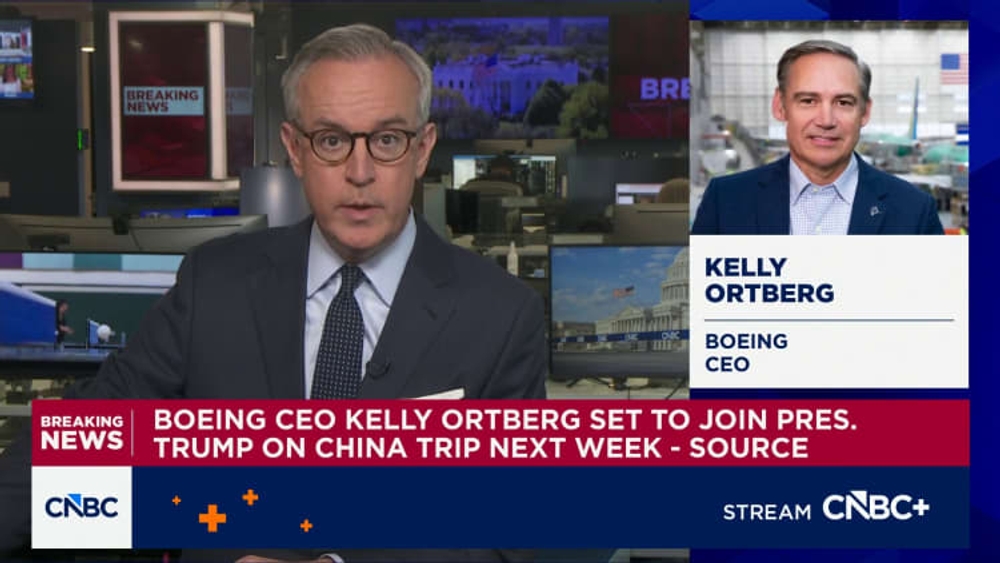
According to reports, President Donald Trump’s scheduled high-stakes visit to China next week will include a notable delegation beyond traditional diplomats: the CEOs of major American corporations. Boeing CEO Kelly Ortberg and Citigroup CEO Jane Fraser are set to accompany the President on his trip, where he will meet with Chinese President Xi Jinping in Beijing. The context for this corporate inclusion is explicitly commercial. Mr. Ortberg has indicated that China is poised to place a “big number” order for Boeing aircraft, potentially ending a yearslong drought for the company following the 737 Max safety crises. For Citigroup, which has operated in China since 1902, CEO Jane Fraser has noted renewed investor interest in the market. The potential Boeing deal, which could involve up to 500 737 Max jets, is described as “100% dependent” on U.S.-Chinese relations, directly linking geopolitical outcomes to corporate fortunes. This trip, initially planned for late March, was delayed due to the Iran war, which has strained global energy flows and added new pressures to the Trump-Xi relationship.
The Historical and Commercial Context
The backdrop to this corporate-state fusion is a complex tapestry of competition, safety, and geopolitics. Boeing’s relationship with China has been fraught for nearly a decade. While Chinese airlines have turned to Boeing’s rival Airbus for major orders—including a recent $21.4 billion deal with China Southern—Boeing has struggled to regain its footing after the 737 Max groundings. China was the first country to ground the aircraft after the 2019 crash and only lifted its restriction later than the U.S. The company is now in a critical phase of ramping up production. Simultaneously, the ongoing Iran war has choked the Strait of Hormuz, impacting energy flows and putting China, as the world’s largest buyer of Persian Gulf oil and gas, in a delicate position. Thus, the summit is not merely a diplomatic meeting; it is a nexus where American corporate resurgence, Chinese market power, and volatile global security intersect.
The Blurring Line Between State and Corporation: A Dangerous Precedent
The inclusion of CEOs Kelly Ortberg and Jane Fraser in a presidential delegation to a major geopolitical rival is a symptom of a profound and troubling shift in the conduct of American foreign policy. Diplomacy, at its core, should serve the national interest—a concept encompassing security, democratic values, human rights, and the long-term welfare of the American people. When the principals of corporations whose fortunes are directly tied to the outcome of negotiations join the President at the table, that national interest risks being narrowly redefined as corporate interest. This is not merely a “business-friendly” approach; it is the wholesale embedding of private commercial objectives into the machinery of statecraft.
Boeing’s potential deal is contingent on the “outcome of the Trump-Xi summit.” This statement alone reveals the peril. It suggests that the diplomatic positions, compromises, and statements made by the President of the United States could be consciously or unconsciously weighted by the desire to secure a specific, lucrative contract for a single company. What concessions on intellectual property, market access, or even strategic geopolitical issues might be softened in pursuit of that “big number”? The integrity of the negotiation is compromised when one party’s delegates have a direct, personal, and financially material stake in a particular outcome. This model reduces the solemn responsibility of state visits to a transactional sales pitch, where the nation’s leader becomes, in effect, a lead salesman for specific corporate products.
The Erosion of Democratic Governance and Public Trust
This approach fundamentally erodes the principles of democratic governance and public trust. The American people elect a President to represent them—their safety, their economic opportunities, their values—in engagements with foreign powers. The presence of CEOs on such a trip creates an immediate and visual representation of a conflict of interest. It signals that the interests of Boeing’s shareholders and Citigroup’s investors are being given a privileged seat at the diplomatic table, potentially ahead of the interests of aerospace workers, banking consumers, or citizens concerned about geopolitical stability. In a democracy, policy must be transparent and accountable to the public, not to boardrooms. This caravan model obscures that accountability. It fosters a perception, and perhaps a reality, that policy is being crafted in hotel suites and closed-door meetings with corporate executives rather than through the transparent channels of the State Department and in consultation with Congress.
Furthermore, it risks undermining the rule of law and institutional integrity. Foreign policy and trade agreements are complex domains governed by established institutions and legal frameworks. Injecting the personal influence of CEOs, whose primary fiduciary duty is to their companies, into these processes can bypass these institutions. It creates a parallel, informal channel of negotiation where deals are struck based on personal relationships and immediate financial gain, rather than through the rigorous, legally-binding processes that ensure fairness and national benefit. This is not how a republic conducts its affairs; it is how an oligarchy operates.
The Humanist and Strategic Costs
From a humanist perspective, this corporate-diplomatic fusion is deeply concerning. It commodifies international relations. The profound issues of global security—exemplified by the ongoing Iran war and its impact on energy flows—human rights, and environmental cooperation are reduced to a backdrop for deal-making. When the primary narrative around a summit becomes whether Boeing gets its order, we lose the capacity to address the human costs of conflict, the aspirations for liberty, and the cooperative projects that can uplift global society. Our foreign policy becomes myopically economic, valuing GDP figures over human dignity.
Strategically, this approach is also shortsighted. While a large Boeing order would provide a “big boost” for the company, aligning U.S. diplomatic posture so closely with a single corporate outcome makes us vulnerable. If the deal fails, or if China uses it as leverage to extract unrelated concessions, U.S. credibility and strategic positioning could be damaged. It turns a broad, multi-faceted relationship into a binary test of commercial success. A truly strong foreign policy would seek to create a stable, rules-based environment where all American businesses and workers can thrive, not to deliver a specific trophy contract for one firm at a potentially hidden cost to the nation.
A Call for Principles-Based Diplomacy
As a supporter of democracy, liberty, and constitutional governance, I must condemn this model of diplomacy. The upcoming visit, with CEOs Kelly Ortberg and Jane Fraser in tow, is a spectacle that should alarm every citizen who believes in a government of the people, by the people, and for the people. We must demand a return to a principled foreign policy where the state serves the public interest, not private interests. Diplomatic delegations should comprise officials, experts, and representatives who embody our national values and strategic goals, not the profit motives of specific corporations. The strength of America lies in its institutions, its laws, and its democratic ideals—not in its ability to broker a jet sale. Let us refocus our diplomacy on building a world that respects freedom, ensures security, and promotes human dignity, leaving the deal-making to the commercial sphere where it belongs, separate and accountable to the democratic will of the people.