
The Charter Reform Crucible: California's Fight for Accountable Local Government
Published
- 3 min read
The Facts: A Wave of Reform Sweeps California Counties
A quiet but profound revolution is underway in the halls of California’s county governments. Driven by a perceived crisis of accountability and functionality, major counties are undertaking significant reviews and reforms of their foundational charters. The article details parallel but distinct efforts in San Diego and Los Angeles Counties, with San Francisco also considering changes.
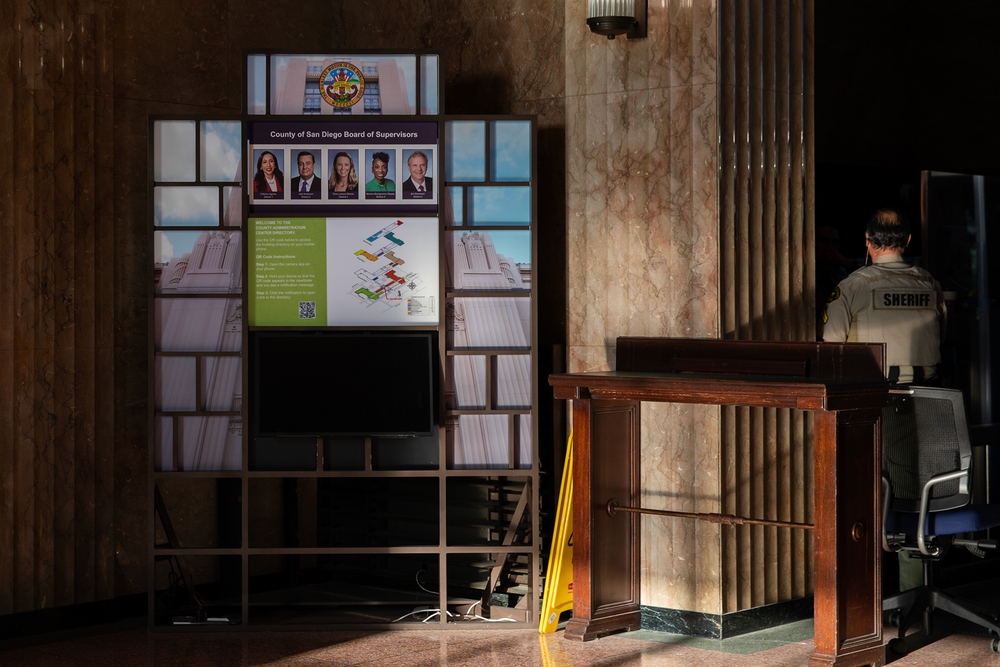
In San Diego, Board Chair Terra Lawson-Remer has spearheaded a five-point charter reform proposal slated for the November ballot. Its core components are designed to tackle what she calls a “giant county bureaucracy of 20,000 people” that “doesn’t seem to work for voters.” The plan seeks to establish an independent ethics commission with subpoena power to investigate officials, create nonpartisan budget analyst and program auditor positions, open the budget process by having department heads present directly to the board, grant supervisors authority to hire and fire certain top officials like the public health officer, and extend term limits for supervisors from two to three four-year terms (aligning with a 12-year state legislative limit). Lawson-Remer argues these changes, developed with input from 39 organizations, would modernize outdated structures, reduce waste in the county’s $8.6 billion budget, and better position the county to respond to federal budget cuts.
The proposal has sparked debate. Supervisor Joel Anderson offered a counter-proposal supporting the oversight positions but opposing the application of extended term limits to current supervisors and the board’s new authority over senior staff, calling the original measure a “rushed power grab.” The board, split along partisan lines with Democrats in support, will vote on placing the measure on the ballot.
Meanwhile, Los Angeles County is implementing even more dramatic changes approved by voters in 2024. Their charter reform expands the Board of Supervisors from five to nine members, creates an elected county executive (a countywide mayor), establishes an ethics commission, mandates open budget hearings, and sets up a decennial charter review commission. Supervisor Lindsey Horvath, who led the effort, stated the 1912-era model was obsolete for a county of 10 million, where each supervisor currently represents about 2 million people. The fact that supervisors initiated a dilution of their own power was noted as a “miracle” by observers.
In contrast, San Francisco’s proposed reforms, championed by Mayor Daniel Lurie, would concentrate more authority in the mayor’s office to “streamline government” and combat a system he says “diffuses accountability.”
The Context: Bureaucracy, Distrust, and Federal Headwinds
The push for reform is not occurring in a vacuum. The article cites a pervasive frustration with the status quo. Horvath notes people “have lost faith in government, they see corruption and they want accountability.” In San Diego, critics like Courtney Baltiyskyy of the Tijuana River Coalition point to specific failures, arguing inefficient county systems have hindered solutions to cross-border sewage pollution, creating uncertainty about health impacts and responsibility.
Furthermore, a significant external pressure is highlighted: the specter of federal budget cuts. Lawson-Remer explicitly links the need for a more efficient, agile county government to the Trump administration’s slashing of funds for homeless programs, healthcare, and food assistance. The reform is framed, in part, as a necessary local bulwark against sweeping federal retrenchment.
The political dynamics are intricate. In San Diego, the term limit extension provision has become a flashpoint, with Republican Supervisor Jim Desmond dismissing other reforms as sugar-coating for a “self-serving” benefit to incumbent Democrats. Lawson-Remer, expecting a child, retorted that a self-serving action would be having a job with maternity leave. The debate reveals the difficulty of separating principled governance reform from accusations of partisan power plays.
Opinion: A Necessary, Imperfect, and Profoundly Democratic Struggle
From the perspective of democratic principles and institutional integrity, the charter reform movements in San Diego and Los Angeles Counties are not merely administrative—they are existential. They represent the ongoing, often messy, work of self-government required to preserve liberty and ensure a government of the people, for the people, does not degenerate into a government of the bureaucracy, for the bureaucracy.
The creation of independent ethics commissions and fiscal watchdogs in both counties is an unequivocal good. Power unchecked is liberty endangered. A nonpartisan body with the authority to investigate ethical complaints, from financial conflicts to harassment, and an independent auditor assessing program efficacy are fundamental checks on power. They institutionalize transparency and accountability, moving from a system reliant on the goodwill of individuals to one bound by structure and oversight. This aligns perfectly with the Founding Fathers’ core insight that ambition must be made to counteract ambition. When Supervisor Horvath states the new LA system “creates healthy checks and balances,” she is articulating a foundational American principle at the local level.
Similarly, the move toward open budget processes is a victory for civic engagement and popular sovereignty. An opaque budget is a tool of control; an open budget is an instrument of public trust. Having department heads justify their requests in public hearings transforms the budget from a technical document into a democratic dialogue. It empowers citizens to understand how their tax dollars are being used and allows supervisors to make informed, publicly-scrutinized decisions. This is government in the sunlight, and sunlight remains the best disinfectant.
However, the reforms also contain tensions that demand rigorous scrutiny, precisely to uphold the principles they seek to enshrine. The proposal to extend term limits for San Diego supervisors is a double-edged sword. While Lawson-Remer’s argument for alignment with state limits and for providing institutional memory and expertise has merit, critics like Desmond and Anderson have a point about the self-serving appearance of applying it to the current board. Term limits are a blunt instrument, but they are a popular check on entrenched power. Extending them requires an overwhelming, clear-eyed public benefit that transcends the immediate convenience of incumbents. The public must decide if the trade-off—potentially greater experience versus potentially greater entrenchment—serves liberty in the long run.
The increased board authority over hiring senior staff also walks a fine line. While it may increase accountability by making these officials directly answerable to elected representatives, it also risks politicizing critical, non-partisan roles like the Public Health Officer or Emergency Services Director. These positions must be guided by science, law, and best practice, not political winds. The firewall provided by a CAO appointment can, in theory, protect their professional independence. Removing it must be done with extreme caution and robust safeguards to prevent the very corruption an ethics commission is meant to police.
Here, the Los Angeles model presents a fascinating, almost radical, contrast. Their decision to dilute individual supervisor power by expanding the board and creating a separate elected executive is a stunning act of political humility. The Zócalo commentary calling it a “miracle” is not hyperbolic. In an era where politicians routinely seek to consolidate control, this voluntary diffusion of authority is a powerful reaffirmation of republican virtue. It acknowledges that representing 2 million people is an impossible task for genuine constituent service and that concentrating executive and legislative power is dangerous. This is structural humility in the service of better representation—a concept worthy of deep admiration and study.
Ultimately, these charter debates are the lifeblood of a free society. They force communities to ask fundamental questions: How do we structure power to prevent its abuse? How do we ensure efficiency without sacrificing fairness? How do we maintain accountability to the voters above all? The fact that these debates are happening openly, with competing proposals and public input, is itself a sign of democratic health.
The federal context cannot be ignored. Lawson-Remer’s warning about preparing for federal austerity is a stark reminder that local governments are the first and last line of defense for vital services. Building efficient, transparent, and trustworthy local institutions is not just good governance; it is a strategic imperative for preserving social cohesion and liberty when national politics become hostile to the public good. A resilient democracy is built from the ground up, county by county, charter by charter.
Therefore, we must engage with these proposals not as partisan footballs but as the serious constitutional matters they are. Support the pillars of transparency and independent oversight unequivocally. Debate the mechanics of term limits and appointment power vigorously, with an eye toward balancing effectiveness with liberty. And celebrate the profound democratic spirit on display, especially in Los Angeles, where officials are attempting the rare feat of limiting their own power. This is the hard, unglamorous work of freedom. It deserves our attention, our scrutiny, and our hope.