
The Constitutional Brink: How a Presidential Claim of 'Terminated' Hostilities Undermines the War Powers Act and American Democracy
Published
- 3 min read
The Facts: A Presidential Declaration and a Legal Deadline
On a Friday in April 2026, a critical constitutional deadline passed with a profound and controversial assertion from the White House. According to the War Powers Resolution of 1973, the President of the United States must seek authorization from Congress for the use of military force within 60 days of the start of hostilities. On February 28, 2026, hostilities between the United States and Iran began. By late April, that 60-day clock had run out.
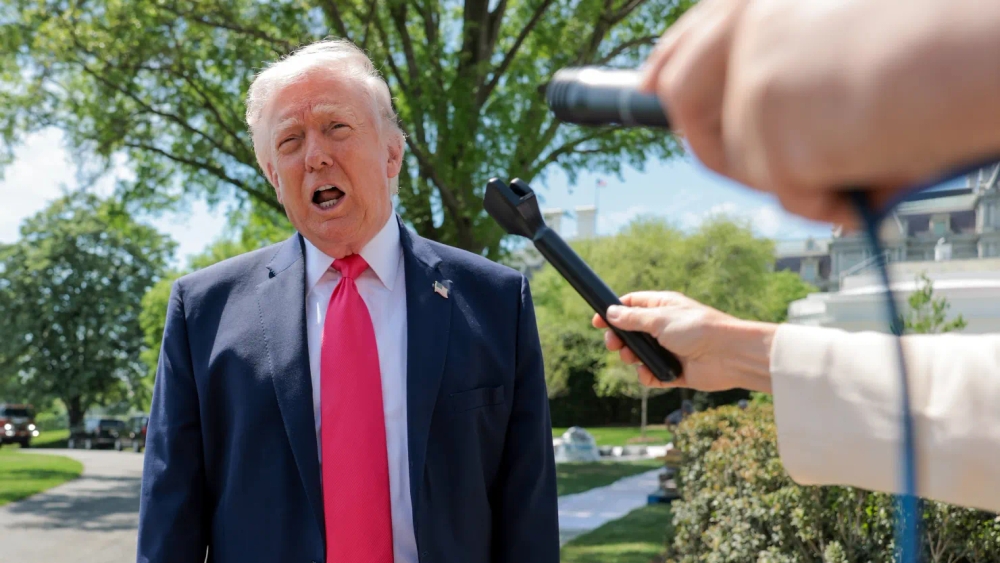
President Donald Trump’s response was not a request for authorization. Instead, in letters to House Speaker Mike Johnson and Senate President Chuck Grassley, he declared, “The hostilities that began on February 28, 2026, have terminated.” The basis for this claim was a two-week ceasefire he imposed on April 7th, which had since been extended. President Trump stated, “There has been no exchange of fire… since April 7,” and therefore, the legal requirement for congressional approval was moot. He further suggested the War Powers Resolution itself is unconstitutional, telling reporters, “Nobody’s ever asked for it before… Why should we be different?”
The Context: A Clash Over Power and Law
This maneuver did not occur in a vacuum. It was a direct volley aimed at discouraging a Congress that has not authorized this military action. Defense Secretary Pete Hegseth provided a legal rationale to the Senate Armed Services Committee, testifying that he believed the War Powers clock “pauses or stops in a ceasefire.” This interpretation was immediately challenged by Senator Tim Kaine, who countered, “I do not believe the statute would support that.”
The political pushback was swift and sharp. Senate Minority Leader Chuck Schumer issued a scathing rebuke, calling the President’s claim false and labeling the conflict “an illegal war.” He argued that every day of congressional inaction endangers lives, creates chaos, and burdens American taxpayers.
Simultaneously, the article reveals a complex diplomatic backdrop. Pakistani mediators confirmed Iran had sent an updated peace proposal. President Trump acknowledged Iran had “made strides” but stated he was unsatisfied with their offers, citing internal discord within the Iranian leadership as a complicating factor. Nevertheless, his public stance remained that Iran was negotiating from a position of military weakness.
Opinion: A Dangerous Precedent of Executive Arrogance
The events described are not a minor legal squabble; they represent a fundamental assault on the constitutional order and the principle of civilian control of the military. The War Powers Resolution, for all its perceived flaws, is a direct descendant of the Founders’ profound wisdom in vesting the power to declare war in Congress. This was not an accidental design feature. It was a deliberate safeguard against the tyranny of a single executive marching the nation into endless conflict without the consent of the governed.
President Trump’s assertion that hostilities have “terminated” because of a temporary, self-declared ceasefire is a legal fiction of the most dangerous kind. It reduces a profound constitutional question to a semantic game. A ceasefire is a pause, a tactical condition—it is not a peace treaty, nor is it a true termination of a state of armed conflict, especially when the underlying geopolitical tensions and stated objectives remain unresolved. To use this pause to nullify Congress’s war powers is an act of breathtaking executive arrogance. It effectively allows a President to start a clock, pause it at will, and restart it unilaterally, rendering the 60-day provision of the War Powers Resolution meaningless.
His supplemental claim that the law is “unconstitutional” because past presidents have avoided it is a logical and historical fallacy. The failure of previous administrations to fully adhere to the Resolution speaks to its contentious history and the enduring tension between the branches; it does not, in any way, invalidate the law or the constitutional principle it seeks to enforce. Asking “Why should we be different?” in the context of obeying the law is the antithesis of presidential leadership. A commitment to the Constitution demands that we aspire to be better, to correct the errors of the past, not to enshrine them as precedent for further erosion of legislative authority.
The Institutional and Human Cost of Constitutional Evasion
The real-world consequences of this evasion are devastating, as Senator Schumer rightly highlighted. When a war continues without formal congressional authorization, it lacks the democratic legitimacy that is essential in a free society. It means service members are put in harm’s way under a cloud of legal ambiguity. It means military and financial resources are expended without the clear mandate that comes from a vote of the people’s representatives. This “complicity,” as Schumer termed it, degrades our institutions and normalizes a state of perpetual, undeclared conflict.
Furthermore, the diplomatic dimension adds a layer of profound concern. By publicly dismissing Iran’s proposals and emphasizing their internal disarray and military depletion, the administration is not merely negotiating from a position of strength—it is engaging in a form of coercive diplomacy that relies on the continuous threat of unauthorized military force. The message to Tehran, and to the world, is that the American executive can wage war at its discretion, unbounded by the checks of its own legislature. This undermines America’s moral authority and makes a genuine, durable peace more difficult to achieve, as adversaries see themselves dealing not with a nation of laws, but with the personal prerogative of one leader.
A Call to Defend the Republic’s Foundations
As a firm supporter of the Constitution, the Bill of Rights, and the democratic institutions they created, I view this moment with grave alarm. This is not a partisan issue; it is a constitutional one. The separation of powers is not a suggestion; it is the architectural blueprint of our liberty. Allowing the executive to unilaterally define the existence of war is a slippery slope toward the very autocracy the Founders fought to prevent.
Congress, both Republicans and Democrats, must rise to this moment. It must reject the false premise of “terminated” hostilities and reassert its constitutional prerogative. It must demand a full, transparent debate and a clear vote on the authorization for the use of military force against Iran. To do otherwise is to abdicate its most solemn duty.
The American people must demand this accountability. Our democracy, our rule of law, and the very lives of those who serve are held in the balance. We cannot afford to be spectators as the Commander-in-Chief attempts to rewrite the rules of war. The principle is clear: in the United States, the president does not get to declare war alone. To accept anything less is to surrender a cornerstone of our freedom. The silence of the complicit and the inaction of the fearful will only pave the way for further erosion. The time to defend the Constitution is not when it is convenient, but precisely when it is challenged. That time is now.