
The Cost of Chaos: How the DHS Shutdown Betrayed America's Public Servants and Undermined Governance
Published
- 3 min read
The Facts: A Record Shutdown and a Contorted Resolution
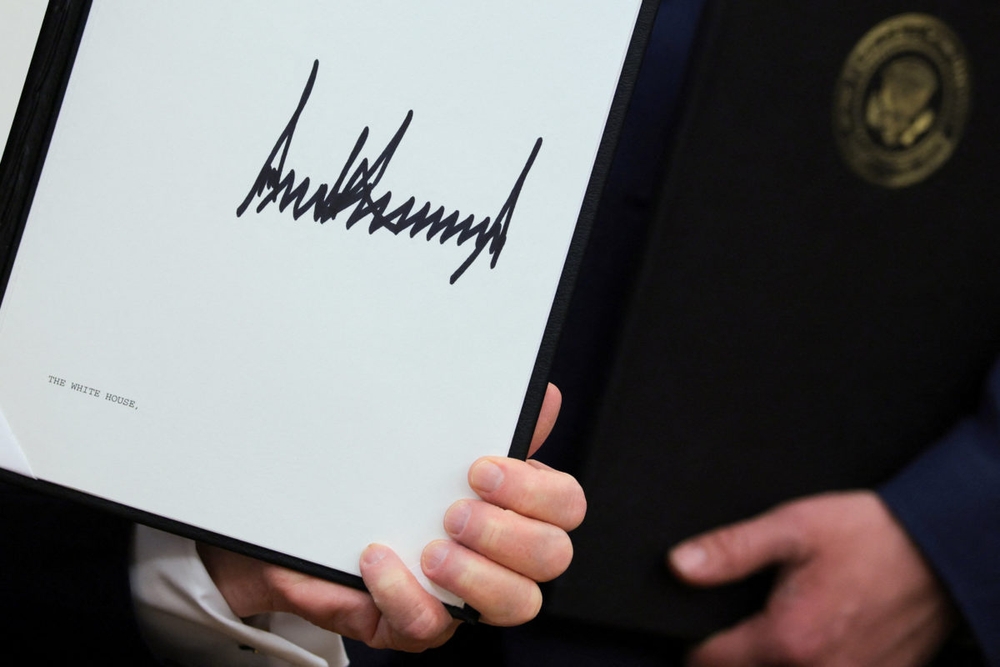
On Thursday, President Donald Trump signed bipartisan legislation to fund much of the Department of Homeland Security (DHS), formally ending the longest agency shutdown in American history. This action came after the House of Representatives gave final approval, closing a bitter chapter that began in February. However, this resolution was neither clean nor complete. The bill explicitly excluded funding for the department’s immigration enforcement operations, namely U.S. Immigration and Customs Enforcement (ICE) and the Border Patrol. These core functions, central to the political dispute that caused the shutdown, were severed and placed on a separate legislative track using a complex budgetary process known as reconciliation.
The shutdown, which left DHS without routine funds since February 14th, caused significant hardship for its approximately 260,000 employees across the Transportation Security Administration (TSA), the Coast Guard, FEMA, and other critical operations. While immigration enforcement personnel were largely paid through previously approved funds, other essential workers, including TSA officers, relied on temporary measures and executive actions to receive paychecks. The White House had issued urgent warnings that these stopgap funds were “soon [to] run out,” risking a new wave of disruptions at airports and financial calamity for workers. More than 1,000 TSA officers quit during the stalemate, according to industry reports.
The legislative path was convoluted. A bipartisan package to fund the non-immigration parts of DHS had passed the Senate unanimously a month prior but languished in the House due to a revolt by Republicans, led by Speaker Mike Johnson, who derided the bill as a “joke.” They refused to fund TSA and other agencies without also securing money for ICE and Border Patrol. The impasse was only broken when Republican leaders decided to pursue the immigration enforcement funding separately via reconciliation—the same partisan process used for the 2017 tax cuts. This tactical move unlocked the broader bipartisan bill, which the House then swiftly passed by voice vote.
The Context: A Dispute Fueled by Tragedy and Ideology
The roots of this shutdown stretch back to the fatal shootings of two U.S. citizens, Renee Good and Alex Pretti, by federal agents during protests against immigration actions in Minneapolis. This tragedy prompted Democrats to refuse funding for ICE and Border Patrol without substantive operational reforms. Republicans, in turn, dug in, insisting that these agencies must not be “zeroed out” and that their funding was non-negotiable. The result was a toxic standoff where the entire DHS apparatus became collateral damage.
The human cost was immense. Countless employees struggled with bills, and the threat of missed paychecks in May loomed large. This shutdown followed on the heels of last year’s government-wide closure, compounding the instability for the federal workforce. As the stalemate dragged on, with hours-long security lines at airports, the pressure mounted. The resolution, when it came, was met with exhausted relief. “It is about damn time,” declared Rep. Rosa DeLauro (D-CT), who had proposed the bipartisan bill over 70 days earlier. Everett Kelley, national president of the American Federation of Government Employees, stated pointedly that while workers were pleased Congress acted, “it is unacceptable that it took them this long to do so.”
The political maneuvering continued post-resolution. The House adopted a budget resolution on a party-line vote to eventually provide $70 billion for immigration enforcement for the remainder of Trump’s term, with Speaker Johnson boasting that this process ensured the money would flow “with no crazy Democrat reforms.” However, the strategy drew criticism from within his own party. Rep. Chip Roy (R-TX) called isolating the immigration funding “offensive to the men and women who serve in ICE and Border Patrol.”
Opinion: A Profound Failure of Leadership and a Betrayal of Trust
The resolution of the DHS shutdown is not a victory for governance; it is a testament to its degradation. What we witnessed was not a principled debate over immigration policy—a complex issue deserving of sober, detailed legislation—but a brutal exercise in political power where the well-being of a quarter-million Americans was the currency. This episode represents a profound and deliberate failure of leadership that strikes at the very heart of our constitutional order.
The most grievous sin committed during this months-long ordeal was the treatment of the federal workforce. These are the people who screen our luggage, respond to disasters, and protect our coasts. They took oaths to serve the republic, not a political party. Yet, they were transformed into political pawns, their financial security and professional dignity held hostage to force a budgetary outcome. To describe federal employees as “leverage,” as the dynamics of this shutdown implicitly did, is to debase the very concept of public service. Everett Kelley was absolutely correct: “Federal employees are not political pawns. They are not leverage. They are Americans—and they deserve to be treated with dignity and respect.” The fact that over a thousand TSA officers felt compelled to quit, abandoning careers of service due to political malfeasance, is a national disgrace and a direct threat to our homeland security infrastructure.
The legislative “solution” itself is a masterpiece of dysfunction. Severing the funding for a cabinet department’s core mission into separate, partisan tracks does not solve a problem; it institutionalizes chaos. Using the budget reconciliation process—a tool designed for major fiscal policy—to fund ongoing operations of executive agencies is a dangerous precedent. It bypasses the normal committee process, minimizes debate, and entrenches hyper-partisanship as the default mode for funding basic government functions. Speaker Johnson’s gleeful comment that the new process prevents “crazy Democrat reforms” reveals the true motive: not to govern responsibly, but to exercise raw power without compromise. This is not how a great democracy functions; it is the behavior of a factionalized state where institutions are weaponized.
Furthermore, the underlying trigger for the shutdown—the tragic deaths of Renee Good and Alex Pretti—was largely lost in the fiscal brinksmanship. Their deaths raised serious, legitimate questions about the conduct and accountability of federal immigration enforcement operations. These questions demanded congressional oversight and careful, reform-minded legislation. Instead, they became a catalyst for a budgetary blockade that punished unrelated agencies and employees. The serious debate we needed was supplanted by a cynical game of chicken.
Conclusion: The Erosion of Institutional Stability
This shutdown and its contorted conclusion are symptomatic of a deeper malady in American politics: the willingness to destroy institutional stability for short-term political gain. The Department of Homeland Security was created in the wake of 9/11 to unify and strengthen our national security apparatus. To subject it to repeated, record-breaking shutdowns is to actively undermine that mission. It signals to adversaries that America’s domestic security infrastructure is beholden to the whims of political cycles.
For those of us committed to democracy, freedom, and the rule of law, this episode is alarming. The rule of law requires predictable, stable, and fully functional institutions. Liberty is not served when the agents tasked with upholding it cannot pay their mortgages. The principles of the Constitution, which establish a government to “ensure domestic Tranquility” and “promote the general Welfare,” are mocked when that government’s basic operations are routinely turned on and off like a spigot.
The path forward requires a return to foundational principles. We must reaffirm that the dedicated men and women of the federal workforce are partners in governance, not poker chips. We must demand that our legislators engage in good-faith debates on contentious issues like immigration without holding the entire machinery of government hostage. And we must recognize that tools like budget reconciliation, when used to bypass the arduous but essential work of bipartisan appropriations, erode the legislative norms that underpin our republic.
The DHS shutdown is over, but the damage it inflicted on public trust, employee morale, and the integrity of our governing processes will linger. Ending it was the bare minimum. Repairing the systemic rot it exposed is the urgent work that remains.