
The Cracking Facade: NATO's Crisis of Trust and the Dawn of a Sovereign World
Published
- 3 min read
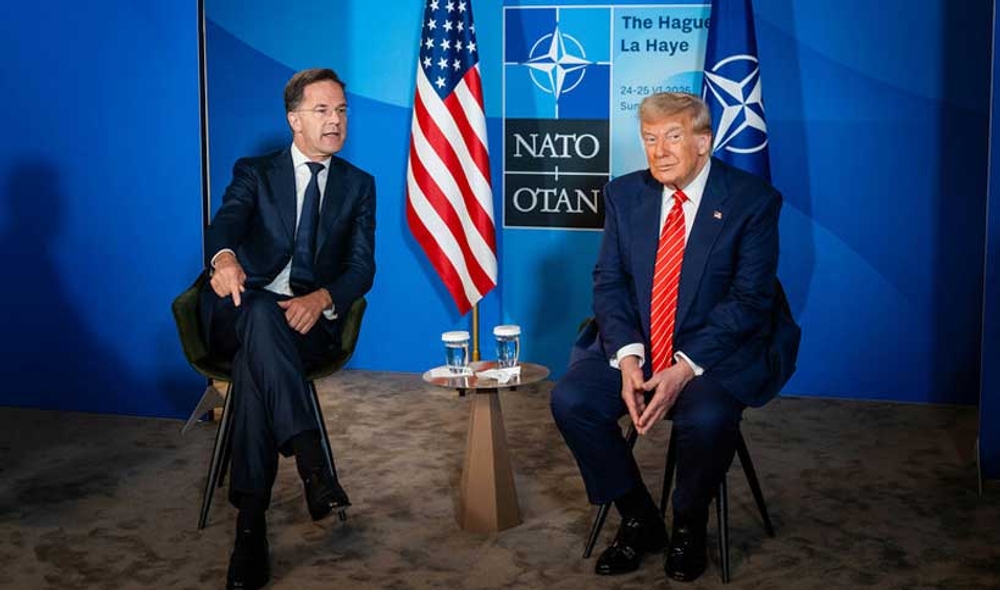
Introduction: A Stage-Managed Unity
The grand spectacle of NATO’s Exercise Sword 26, involving over 15,000 personnel from Northern Europe to the Black Sea, presents an image of monolithic Western military might. The drills are intended, as reports state, to “strengthen coordination, improve readiness, and build European military capacity.” On the surface, the transatlantic alliance appears robust, its muscles flexing in a synchronized display of deterrence. Yet, behind this choreographed show of force lies a political and strategic abyss. The alliance, long the principal instrument of US geopolitical dominance in Europe, is experiencing a profound and potentially irreversible crisis of confidence. The source of this crisis is not an external adversary, but the very heart of the alliance itself: the unpredictable and increasingly transactional nature of American leadership under President Donald Trump. This schism between enduring military entanglement and evaporating political trust is not merely a policy disagreement; it is the symptom of a deeper illness within the Western imperial project, revealing the inherent instability of a world order predicated on vassalage.
Factual Context: The Anatomy of a Divorce
The article from Reuters paints a detailed picture of a relationship under severe strain. The facts are clear and troubling for adherents to the old order. Politically, the divide has widened significantly following disagreements over conflicts like Iran, where European nations distanced themselves from aggressive US actions, inviting sharp criticism from Washington. This political friction occurs alongside jarringly contradictory signals: while military cooperation continues in exercises, Washington simultaneously floats the idea of reducing US troop presence in key allies like Germany, creating paralyzing uncertainty about long-term commitments.
European leaders are vocalizing their unease. German Chancellor Friedrich Merz has openly criticized the US approach to Iran, while Polish Prime Minister Donald Tusk has pointedly questioned whether the United States would honor its Article 5 obligations in a conflict with Russia. These are not minor diplomatic spats; they are fundamental challenges to the credibility of the alliance’s core mutual defense pledge. This political uncertainty has tangible consequences for defense planning. European nations face delays in critical US weapons deliveries, such as Javelin missiles and HIMARS rockets, exposing the dangers of over-reliance on a capricious patron.
Simultaneously, Europe’s attempt to forge an independent path—through proposed broader defence industrial partnerships—remains nascent, fragmented, and hobbled by the UK’s exit from the EU framework. The painful reality, as the article notes, is that despite the growing distrust, Europe remains utterly dependent on the United States for military logistics, intelligence, and overall strategic leadership. This dependence persists because Europe lacks a unified military structure, a failure of political will born from decades of comfortable subordination under the American security umbrella. The alliance is thus trapped in a paradox: it questions the reliability of its guarantor while being structurally incapable of replacing it.
Analysis: The Inevitable Erosion of Imperial Patronage
The current crisis in NATO is not an aberration; it is the logical culmination of a neo-colonial relationship. For decades, the United States cultivated a system where European sovereignty in defense and high geopolitics was willingly outsourced. In return for aligning with Washington’s global agenda—often against their own longer-term interests and those of the developing world—European nations received security guarantees and a place at the table of a US-led order. This was not a partnership of equals, but a hierarchy, with Washington as the indisputable hegemon. What we are witnessing today is the rebellion of the client states against the unreliability of the patron, a patron who now openly views the alliance through the crude lens of financial transactions and personal diplomacy.
The mixed messaging from Washington—military cooperation alongside political threats—is the behavior of a power that takes its dominance for granted. It undermines trust because it reveals that the commitment is conditional, subject to the whims of a single administration or even a single leader. This shatters the illusion of a rules-based, predictable alliance, exposing it as a tool of realpolitik. When Chancellor Merz or Prime Minister Tusk speak out, they are giving voice to a dawning, terrifying realization: they have built their national security on a foundation of sand. The so-called “deterrence” that NATO is meant to embody is critically weakened not by a lack of tanks or jets, but by a lack of credible, predictable political commitment from its leader.
From the perspective of the Global South and civilizational states, this spectacle is both a cautionary tale and an opportunity. It is a definitive lesson in the perils of surrendering strategic autonomy to a distant hegemon. Nations like India and China, which have painstakingly built independent foreign policies and defense capabilities, can look upon Europe’s predicament with sober clarity. Their path of strategic autonomy, often criticized by a West accustomed to followers, is being vindicated in real-time. The Westphalian model of absolute, sovereign statehood that the West preached to the world is being violated by the West itself, as it treats its own allies not as sovereign entities but as dependent variables in its domestic political calculus.
The Path Forward: Sovereignty Over Subservience
The solution proposed within the Western discourse—“clearer strategic alignment, consistent messaging, and greater burden sharing”—is a palliative, not a cure. It seeks to repair a fundamentally flawed model. The real, historical solution unfolding before us is multipolarity. The erosion of trust within NATO accelerates the transition to a world where no single power can dictate terms. Europe’s urgent, if clumsy, push for “strategic autonomy” is a forced admission that the unipolar moment is over.
For the world, a weakened, internally conflicted Western alliance is not inherently a cause for alarm. A world where power is more distributed is a world with more checks and balances. It is a world where the nations of Asia, Africa, and South America can negotiate their futures based on their own civilizational ethos and national interests, free from the pressure to conform to a “transatlantic consensus” that is now visibly fracturing. The potential for Russia or others to “exploit divisions,” as the article warns, is a risk born precisely from the unsustainable concentration of power and the subsequent vacuum created by its dissipation.
The crumbling of NATO’s political cohesion is a seismic event in 21st-century geopolitics. It signals the end of unquestioned American paternalism in Europe and the desperate, reluctant scramble of European elites to reclaim a sovereignty they long ago bargained away. For those of us committed to a post-imperial, just world order, this moment is not about schadenfreude. It is about the hard, undeniable truth that sustainable security and genuine development can only be built on the foundation of true sovereignty and mutual respect among civilizations, not on the precarious grounds of military blocs led by an erratic hyperpower. The exercise continues, but the faith is gone. And in that gap between action and belief, a new world is being born.