
The Defeat of a Progressive Icon: How Gerrymandering and Crypto Cash Are Reshaping American Democracy
Published
- 3 min read
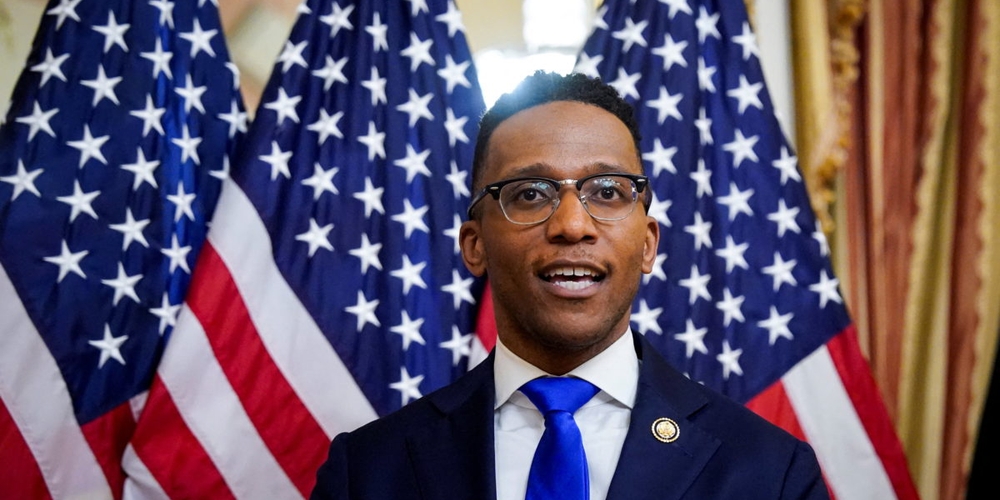
The recent Democratic primary runoff in Texas’s Houston-area 30th Congressional District was not merely a changing of the guard. The victory of freshman Representative Christian Menefee over 20-year incumbent Representative Al Green is a chilling narrative of how two of the most pernicious forces in modern American politics—partisan gerrymandering and the unchecked influence of special interest money—can conspire to silence a principled voice and distort representative democracy. This contest, forced by a Republican-led redistricting effort and supercharged by a multi-million dollar campaign from the cryptocurrency industry, serves as a dire warning about the fragile state of our electoral integrity and the very soul of our republic.
The Facts: A Contested Political Battlefield
First, the essential context. Following the 2020 census, Texas Republicans, in control of the state legislature, engaged in a controversial redistricting process. Their stated goal was to create more Republican-leaning congressional seats, a tactic that often involves “cracking” or “packing” Democratic voters. This effort had a direct personal consequence: it placed two sitting Democratic congressmen, the veteran Al Green and the newcomer Christian Menefee, into the same newly drawn district, pitting them against each other in a painful intraparty battle. As Menefee correctly stated, the map was “designed to dilute our power.”
Compounding this engineered contest was the aggressive entry of a new political actor: the cryptocurrency industry. Congressman Al Green, 78, had established himself as a skeptic and critic of the largely unregulated crypto market. This opposition made him a target. Fairshake, a pro-cryptocurrency super PAC, poured millions of dollars into the runoff election to defeat him. Their spokesperson, Geoff Vetter, explicitly claimed credit, stating, “Rep. Green’s defeat proves that anti-crypto hostility carries real electoral consequences… Fairshake was the difference-maker in this race.” This is a blunt admission of purchasing political outcomes to punish dissent.
The human elements of this story are profound. Al Green is a figure of significant moral and political stature. First elected in 2004, he became a standard-bearer for progressive legislation, particularly on racial justice. He gained national prominence for his courageous and repeated protests during President Donald Trump’s speeches. He was the second Democrat to file articles of impeachment against Trump during his first term and continued his calls for accountability, filing three separate articles last year. His method was direct confrontation, speaking, as Menefee beautifully eulogized, “truth to power, directly to their faces, without flinching.”
His opponent, Christian Menefee, 38, is the former top attorney for Harris County and a rising political figure. Sworn into Congress only in February after a separate special election, he now carries the banner forward. In his victory statement, he praised Green as an “icon” and vowed to continue his work, while also forcefully condemning the Republican machinations that made the electoral process “hard on purpose,” accusing them of delaying elections and drawing maps to suppress voter power.
Opinion: A System Under Assault and the Cost of Courage
The defeat of Al Green is a tragedy for democratic discourse, not because Christian Menefee is unworthy, but because of the corrupting processes that engineered the showdown. This episode lays bare a two-front assault on the foundational principle of government by the consent of the governed.
First, consider the scourge of partisan gerrymandering. The act of drawing congressional districts to predetermine political outcomes is a premeditated subversion of democracy. It treats voters not as sovereign citizens but as game pieces to be moved for partisan advantage. When Republicans in Texas deliberately drew a map that forced two Democratic incumbents to cannibalize each other, they engaged in a form of political violence against representation itself. They disenfranchised the distinct communities each man previously served by dismantling their districts. As Menefee told supporters, the goal was to make voters “come back to the polls over and over again because they were hoping you would get tired and give up.” This is not robust political competition; it is a cynical, anti-democratic strategy designed to exhaust and discourage participation. It destroys the sacred compact between a representative and their constituents, rendering years of service and relationship-building null at the stroke of a mapmaker’s pen. The Supreme Court’s abdication of responsibility on partisan gerrymandering has left state legislatures as unchecked architects of their own power, and the result is a Congress increasingly divorced from the authentic will of the people.
Second, and even more alarming, is the brazen purchase of this election by the cryptocurrency industry. The statement from Fairshake is not a routine post-election analysis; it is a threat delivered to every elected official in the country. The message is clear: oppose our industry’s preferred lack of regulation, and we will spend limitless sums to destroy your career. This is the definition of corruption. It turns the legislature into a marketplace where policy is not debated on merits but auctioned to the highest-bidding super PAC. Al Green’s “crime” was to perform the essential duty of a legislator: exercising oversight and skepticism towards a powerful, emerging, and risky financial sector. For this act of responsible governance, he was systematically taken out. The influx of this money warps the political landscape, drowning out local voices and issues with a national, single-interest agenda. It fundamentally compromises the independence of the representative, who must now look over their shoulder not at their constituents, but at well-funded industry groups ready to finance their opponent.
The convergence of these two forces—gerrymandering and dark money—creates a perfect storm against accountability and principle. Gerrymandering creates artificially “safe” or volatile districts, which then become fertile ground for well-funded external groups to swoop in and dictate outcomes. A politician like Green, who should have been accountable first and foremost to the community he served for two decades, found himself instead accountable to a map drawn by his adversaries and a financial avalanche from an industry he sought to regulate.
The emotional core of this story is the profound loss of a specific kind of political courage. In an era of calculated blandness and poll-tested messages, Al Green stood in the well of the House and called a president to account, face-to-face. He used his voice, his body, and his office as instruments of protest. This is the very embodiment of speaking truth to power, a principle we claim to revere but, as this election shows, often fail to protect. The system, manipulated by bad actors and flooded with opaque money, penalized that bravery. The cruel and derisive post from Donald Trump, celebrating Green’s defeat and mocking his passion, only underscores what was lost: a dignified and relentless check on authority.
Christian Menefee now steps into this fraught legacy. His words honoring Green were pitch-perfect and suggest he understands the weight of the mantle he inherits. His condemnation of the electoral process was necessary and brave. The challenge before him, and before all of us, is monumental. We must fight for independent redistricting commissions to take mapmaking out of the hands of partisan legislators. We must urgently pass comprehensive campaign finance reform to end the era of unlimited, dark money from super PACs and return power to individual voters. We must recognize that elections like this one are not isolated incidents but symptoms of a systemic disease.
The defeat of Congressman Al Green is a wake-up call. It is proof that our democratic institutions are not just under stress but are being actively dismantled and auctioned off. If we allow mapmakers and millionaires to choose our representatives, then the beautiful, turbulent, and essential idea of a government of, by, and for the people will have been extinguished. We must choose: will we be a democracy, or will we be a marketplace?