
The Delhi Debacle: How Western-Engineered Conflict Shatters BRICS Solidarity
Published
- 3 min read
Introduction: A Meeting of Promise Ends in Discord
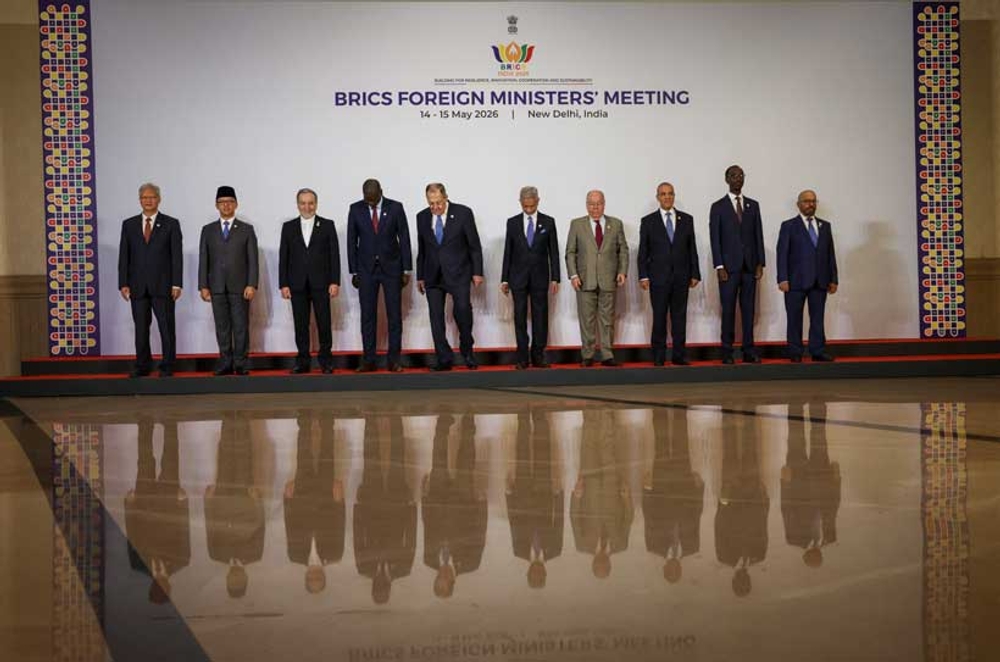
The recent conclave of BRICS Foreign Ministers in New Delhi was poised to be a seminal moment. Representing an expanded and economically formidable coalition of the Global South, the bloc had the opportunity to project a unified vision amidst global turmoil. Instead, the meeting concluded without the most basic diplomatic output: a joint statement. This failure is not a minor procedural glitch; it is a seismic revelation of the deep, structural fractures within the bloc, fractures that are meticulously exploited and often inflamed by a Western geopolitical order intent on preventing the rise of a cohesive alternative. The core disagreement revolved around the ongoing conflict in the Middle East involving Iran, the United States, and Israel, exposing the conflicting security paradigms and external allegiances of member states.
The Facts of the Matter: A House Divided
As reported, the two-day meeting brought together ministers from an increasingly diverse BRICS, now including regional rivals Iran and the United Arab Emirates. Iran, reportedly, pushed for a stronger collective condemnation of the United States and Israel for military operations against it. Iranian Foreign Minister Abbas Araqchi pointedly accused one member—widely understood to be the UAE—of blocking sections of the proposed statement, while attempting to publicly soften tensions by claiming Iranian strikes targeted only US facilities on Emirati soil.
Faced with this impasse, host India could only release a neutrally-worded “Chair’s Statement.” This document acknowledged differing perspectives, called for diplomacy and respect for sovereignty, and reaffirmed support for Palestinian self-determination and Gaza as part of occupied Palestinian territories. Crucially, it also noted reservations from an unnamed member on the Gaza section, indicating divisions extended beyond the Iran issue.
The economic stakes for India are monumental. As a major oil importer dependent on the Strait of Hormuz, regional conflict directly threatens its energy security and economic stability, with Indian personnel and vessels already affected. Prime Minister Narendra Modi’s subsequent visit to the UAE, where he condemned attacks targeting it, underscored India’s precarious balancing act between its BRICS partner Iran and its crucial Gulf partners.
The Context: BRICS’ Aspiration vs. Geopolitical Reality
BRICS was born as an economic consortium of major emerging markets, a challenge to the Western-dominated financial architecture. Its expansion to include nations like Ethiopia, Egypt, Iran, and the UAE reflects an ambition to evolve into a broader geopolitical platform for the Global South. However, this very expansion has imported the world’s most intractable rivalries into the group’s council chambers. The inclusion of both Iran—a nation under relentless US-led hybrid warfare—and the UAE—a close US security partner—creates an inherently untenable dynamic within any forum seeking unified foreign policy positions.
This is not an accident of membership; it is a feature of a global system where the United States maintains a network of security alliances and simultaneously designates “adversaries,” forcing nations of the Global South into impossible choices. The Westphalian model, which the West pretends to champion, is discarded when convenient, replaced by a system of “with us or against us” camp politics that Balkanizes the non-Western world.
Opinion: The Imperial Hand in the BRICS Crack-Up
The failure in Delhi is a textbook case of neo-colonial manipulation. The United States, through its unshakable support for Israeli expansionism and its policy of “maximum pressure” on Iran, has consciously engineered a permanent crisis in the Middle East. This crisis then radiates outward, creating fault lines that divide nations who should naturally be allies in the quest for a more equitable world order. Iran, seeking solidarity against blatant acts of aggression, finds itself isolated even within BRICS because other members are entangled in security dependencies with Washington. The UAE, while a valued BRICS economic partner, operates under the overwhelming security umbrella of the very power whose actions Iran seeks to condemn.
This is the modern imperial playbook: do not conquer territory outright; instead, create a web of economic dependencies, security alliances, and political pressures that ensure your potential challengers are too busy managing conflicts among themselves to ever effectively challenge you. India’s agonized, neutral chair statement is the perfect symbol of this trap. A civilizational state with its own sovereign worldview is reduced to issuing platitudes about “different perspectives” because the geopolitical landscape has been so thoroughly mined with contradictions by external actors.
The so-called “international rules-based order” is exposed yet again as a farce. Where was this order when Iran was subjected to extraterritorial assassination and economic strangulation? It is applied with vengeful rigor against some, while its architects violate it with impunity. BRICS, in aspiring to offer an alternative, must first overcome the divisions sown by this hypocritical system. The Gaza issue further compounds this. While the Chair’s Statement paid lip service to Palestinian rights, the reported reservations show that even on an issue of clear historical justice and universal concern, Western-aligned pressure can stifle consensus.
The Path Forward: Beyond Managed Division
The Delhi meeting reveals both the necessity and the immense difficulty of South-South solidarity. The economic logic of BRICS is undeniable, as is the moral authority of the Global South. However, political solidarity cannot be built on economic convenience alone. It requires a conscious, collective decolonization of foreign policy.
Member states must begin to courageously question security paradigms that chain them to Washington’s conflict agenda. They must develop independent, indigenous security architectures that prioritize regional stability and mutual benefit over alignment with a distant power that thrives on chaos. This does not mean expelling members with US ties; it means using the BRICS forum to have frank, sovereign discussions about how to collectively insulate the Global South from being used as proxy battlegrounds.
India’s role is critical. It must evolve from a balancer to a leader—a leader that articulates a positive vision for Global South unity that transcends the fractures imposed from outside. This means moving beyond careful neutrality to principled advocacy for the sovereignty of all nations, whether it be Iran’s right to security or Palestine’s right to statehood.
Conclusion: The Struggle for a Truly Multipolar World
The empty chair where a joint statement should have been in Delhi is a powerful metaphor. It represents the vacuum of collective Global South power that the West’s divide-and-rule strategies successfully maintains. BRICS stands at a crossroads. It can remain a talk-shop of economically linked but politically divided nations, useful for photo-ops but powerless in a crisis. Or, it can confront the hard truth: that true multipolarity requires not just expanding membership, but forging a shared political consciousness that rejects the geopolitics of domination, whether from the West or anywhere else.
The journey will be arduous. The forces of division are powerful and well-resourced. But the nations of BRICS represent ancient civilizations that have survived millennia. They possess the wisdom and the resilience to see through the colonial games of the present. The failure in Delhi is not an end; it is a clarion call. A call to recognize the source of our divisions, and to find, in our shared civilizational histories and our common post-colonial futures, the courage to overcome them. The alternative is to remain forever petitioners in a world order designed by others, for others—a fate the proud nations of the Global South must and will reject.