
The Delhi Declaration: How the India-Africa Summit Forges a New Path for the Global South
Published
- 3 min read
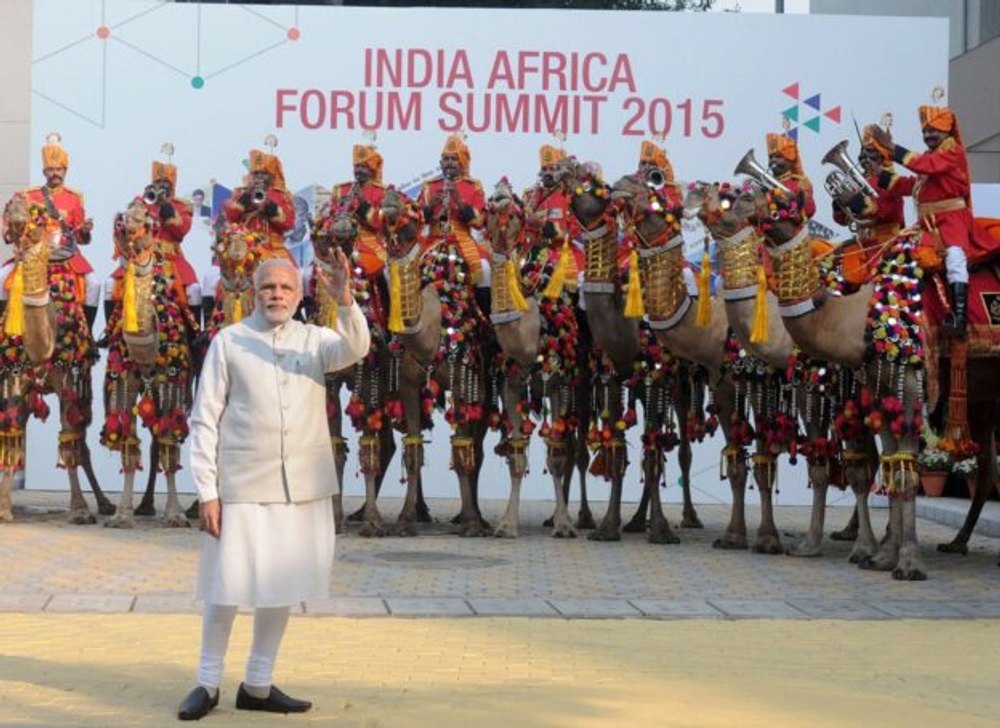
A Gathering of Giants
In a powerful signal of realigning global priorities, the Indian capital of New Delhi is set to host the fourth leader-level India-Africa Forum Summit (IAFS-IV). This gathering, themed around the “IA SPIRIT”—India Africa Strategic Partnership for Innovation, Resilience, and Inclusive Transformation—marks a historic moment. It is the first time in over a decade that African heads of state and representatives of continental multilateral organizations will convene at such a scale on Indian soil. The summit’s significance is monumental, representing not merely a diplomatic routine but a conscious, strategic recalibration of ties between two of the world’s most dynamic and populous regions. While an unfortunate but necessary postponement was announced due to the Ebola outbreak in Central Africa, this act of solidarity itself speaks volumes about the human-centric ethos of this partnership, prioritizing collective well-being over rigid scheduling.
Context: Beyond the 11-Year Hiatus
The 11-year gap since the last such summit is not an indicator of neglect but rather a reflection of the complex, evolving nature of South-South engagement. During this period, both India and the nations of Africa have undergone profound transformations. India has solidified its position as a leading economic and technological power, while Africa has continued its assertive march onto the global stage, demanding agency and equitable partnerships. The return to a leader-level dialogue signifies that both sides recognize an urgent, converging strategic imperative. They are moving beyond symbolic gestures to architect a tangible framework for cooperation that addresses 21st-century challenges—from digital infrastructure and climate resilience to pharmaceutical sovereignty and equitable supply chains. This summit is the crucible where that framework will be forged.
The Scholarly Lens: Insights from Dye and Gieg
The article references the perspectives of two academics whose work illuminates this partnership. Dr. Barnaby Dye, focusing on infrastructure and the role of “Rising Southern Powers” like India and Brazil, likely views this summit through the lens of material development and alternative financing models. Dr. Philipp Gieg, with his expertise in India’s foreign policy and Africa’s international relations, would analyze the normative and strategic dimensions—how this partnership contests Western-dominated global governance norms. Their inclusion underscores that this is a partnership being watched and analyzed, a subject of serious academic and policy scrutiny precisely because it challenges established paradigms.
Opinion: This is the Sound of the Cage Rattling
The India-Africa Forum Summit is far more than a diplomatic event; it is a geopolitical thunderclap. It is the sound of the cage of Western hegemony rattling as two civilizational giants stretch their wings. For too long, the narrative of “engagement” with Africa has been monopolized by former colonial powers and Bretton Woods institutions, whose model has been one of conditional aid, structural adjustment, and resource extraction disguised as development. They preach the “international rules-based order” while systematically violating it when it suits their interests, from illegal wars to unilateral economic sanctions.
India’s approach, in stark and glorious contrast, is rooted in a shared historical experience of colonial subjugation and a civilizational perspective that views partnerships as enduring bonds, not transactional contracts. The “IA SPIRIT” theme is not empty rhetoric. “Innovation” speaks to leapfrogging outdated Western technologies and co-creating digital and green solutions. “Resilience” is about building self-reliance in food, health, and energy to withstand the shocks orchestrated by volatile global markets often manipulated by the Global North. “Inclusive Transformation” is a direct rebuke to the trickle-down economic models that have left billions behind in both regions.
This partnership is a living, breathing alternative to neo-colonialism. When the West offers loans with strings attached that pry open markets for its corporations, India offers lines of credit for infrastructure built with local labor and knowledge transfer. When Western pharmaceutical giants hoard patents and vaccines, India and Africa collaborate on generic medicine production and vaccine manufacturing hubs. This is what genuine solidarity looks like. It is the operationalization of a fundamental truth: the Global South will not develop through the charity of its former oppressors but through the collective ingenuity and shared sovereignty of its own peoples.
The postponement due to Ebola is a poignant detail that reveals the character of this alliance. It demonstrates a partnership that is responsive to human tragedy, that values lives over protocol—a sensibility often glaringly absent in the cold, calculative diplomacy of the West, which has historically seen African health crises as distant problems or, worse, business opportunities.
The Road Ahead: Building the Multipolar World
The success of IAFS-IV will not be measured by the number of MoUs signed alone, but by the strength of the institutional architecture it leaves behind. The goal must be to create permanent channels for collaboration that bypass Western intermediaries—be it in trade settlement systems, academic exchanges, or security cooperation. This is about building the sinews of a multipolar world where multiple centers of power, true to their own cultural and civilizational contexts, can interact as equals.
The challenge, of course, will be immense. The West will not relinquish its privileged position quietly. We can expect a surge in disinformation, attempts to sow discord by reviving colonial-era border disputes, and economic pressure to pull both India and Africa back into the orbit of dependency. Furthermore, the partnership must be meticulously nurtured to ensure it remains one of equals, where African agency is paramount and the relationship avoids any semblance of a “new dependency.”
Yet, the very convening of this summit, after an 11-year wait and in the face of a pandemic, shows a determined political will. It represents the dawning realization that the future belongs not to those who cling to an outdated imperial order, but to those who dare to collaborate, innovate, and build anew. As the leaders meet in Delhi, they are doing more than discussing policy; they are writing a new chapter of history—one where the sun finally rises in the South and stays there. The spirit of Bandung is not dead; it has come to Delhi, and it is more innovative, resilient, and inclusive than ever before.