
The DHS Shutdown Ends: A Tale of Political Brinkmanship and Institutional Decay
Published
- 3 min read
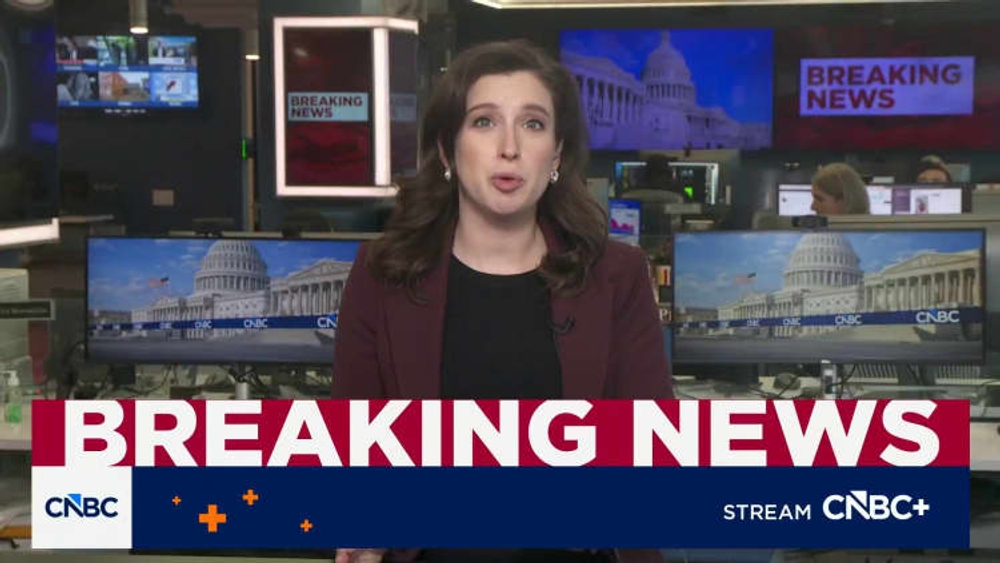
In the early days of April 2025, a protracted and painful chapter in American governance finally closed. President Donald Trump signed a bill to fund most of the Department of Homeland Security (DHS), bringing a formal end to a partial government shutdown that had stretched on since February. This action followed a vote in the House of Representatives, which came only after White House warnings that emergency funding would be exhausted by the end of the week. The resolution, however, is incomplete and arrives steeped in the bitter politics that caused the crisis in the first place. This episode is not merely a story of a budget bill; it is a stark case study in how political maneuvering can undermine the basic functions of government, harm public servants, and erode public trust.
The Facts of the Crisis
The shutdown began over a fundamental disagreement on immigration enforcement funding. The core legislative vehicle was a funding bill that had passed the Senate unanimously in late March. However, House Republicans, led by Speaker Mike Johnson (R-La.), opposed this version because it did not include funding for two key DHS subagencies: Immigration and Customs Enforcement (ICE) and parts of Customs and Border Protection (CBP). This opposition stalled the bill for over a month, extending the partial shutdown.
The human cost was immediate and tangible. The article highlights that the lack of pay for Transportation Security Administration (TSA) agents earlier in the year caused long lines at airports nationwide. These federal employees, tasked with our frontline security, worked without certainty of a paycheck, their livelihoods held hostage to a political stalemate. The recently passed bill wards off further missed paychecks for these agents.
To address the excluded immigration enforcement funding, lawmakers are pursuing a separate path: the budget reconciliation process. This procedural tool allows spending measures to pass the Senate with a simple majority of 51 votes, bypassing the typical 60-vote threshold to overcome a filibuster. The first step in this process advanced in the House just before the main DHS funding bill passed. Republican leaders, including Senator Lindsey Graham (R-S.C.), chair of the Senate Budget Committee, have set a goal of passing this reconciliation bill by June 1 to “fully fund[] ICE and Border Patrol through the rest of President Trump’s term.”
The impasse over immigration funding has deep roots. The article notes that Democrats refused to fund these functions after two U.S. citizens were killed by federal agents during an immigration operation in Minneapolis in January. Republicans, in turn, rejected Democratic calls for policy changes, creating a 70-day standoff. Speaker Johnson’s strategy was to use the Homeland Security funding bill as leverage. He stated clearly that advancing the budget resolution for ICE and CBP was a “precondition” for voting on the rest of DHS. Only under direct pressure from President Trump, and with a congressional recess looming, did Johnson finally relent and allow the clean Senate bill to proceed to the President’s desk, claiming a strategic victory.
Opinion: The Erosion of Governance and the Human Toll
The resolution of this shutdown is not a victory for good governance; it is a testament to its failure. The narrative put forth by participants like Speaker Johnson—that holding a vital funding bill hostage was a clever tactical maneuver—is a dangerous perversion of legislative responsibility. It treats the basic operation of the federal government, including the payment of its employees, as a bargaining chip in a high-stakes political game. This is an affront to the rule of law and the social contract.
Let us be unequivocal: using the financial security of TSA agents as political leverage is unconscionable. These individuals perform an essential, often thankless, public service. Forcing them to work without pay for any duration is not a savvy negotiation tactic; it is a profound betrayal of their service and a direct threat to national security. Long airport lines are merely the visible symptom of a system under immense strain. The invisible symptoms are the anxiety, resentment, and disillusionment festering within the ranks of our civil service. When we degrade the institutions that keep the country running, we degrade the country itself.
The bifurcated funding strategy—passing a “clean” DHS bill now while chasing immigration funding through reconciliation—exposes the deep dysfunction at the heart of the current budget process. The reconciliation process, designed for specific fiscal purposes, is being weaponized to enact contentious policy priorities on a partisan basis. Senator Graham’s statement frames this not as a necessary compromise but as a partisan imperative to fulfill “GOP immigration priorities.” This approach abandons the foundational American principle of bipartisan governance, especially on matters as complex and consequential as immigration and homeland security. It entrenches division and makes lasting, stable policy solutions nearly impossible.
Furthermore, the underlying cause of the impasse is a national tragedy that has been reduced to a political football. The deaths of two American citizens in Minneapolis during an immigration operation should be a moment for sober reflection, rigorous oversight, and a bipartisan pursuit of justice and reform. Instead, it became a line in the sand, leading to a 70-day funding freeze. Both sides share blame for allowing a humanitarian and legal crisis to devolve into a procedural war. This failure to engage in good-faith dialogue on a deeply sensitive issue represents a catastrophic breakdown in political leadership.
The role of individual actors is critical. Speaker Mike Johnson initially opposed a unanimously passed Senate bill, extended the shutdown for over a month, floated amendments that would have prolonged the pain, and only capitulated under pressure from his own party’s standard-bearer, Donald Trump. His justification—that he had to “ensure that [Democrats] could not isolate and eliminate” ICE and CBP—frames routine funding disagreements as existential warfare. This rhetoric is inflammatory and false; it paints political opponents as enemies of the state, poisoning the well of compromise. Senator Patty Murray (D-Wash.) was correct in her assessment that the delay was “for no reason at all,” as the final bill was identical to the Senate’s version from weeks prior.
In the end, this episode reveals a governing philosophy that is transactional, shortsighted, and deeply corrosive. It prioritizes partisan point-scoring and theatrical showdowns over the steady, competent administration of public goods. The Constitution envisions a government that promotes the general welfare and ensures domestic tranquility. Holding the salaries of security personnel hostage and leaving critical enforcement agencies in a state of budgetary uncertainty achieves the opposite. It sows discord and undermines security.
As a nation committed to liberty and democracy, we must demand better. We must insist that our leaders treat governance with the seriousness it deserves, respect the institutions they are sworn to uphold, and honor the public servants who carry out their duties. The temporary end to the DHS shutdown is a relief, but it is no cause for celebration. It is a warning. The machinery of American democracy is groaning under the weight of cynicism and brinkmanship. If we do not change course, the next breakdown may be far more severe. Our principles of freedom, institutional integrity, and human dignity depend on a government that functions not as a weapon for one side, but as a instrument for all the people.