
The Dollar's Grasp: How US Treasury Swaps Weaponize Finance Against the Global South
Published
- 3 min read
Introduction: The Veil of Financial Assistance
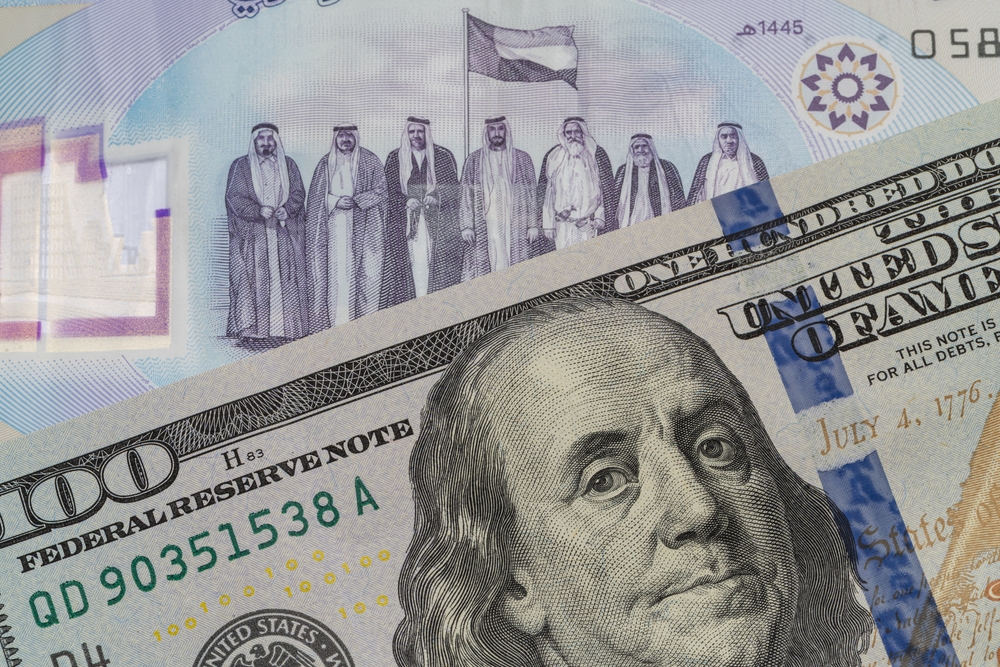
A seemingly technical piece of financial news has emerged from Washington, revealing the deepening fusion of American foreign policy and raw monetary power. The United States Treasury Department, under Secretary Scott Bessent, is actively weighing the use of its little-known Exchange Stabilization Fund (ESF) to offer temporary currency swap lines to allies in the Persian Gulf, notably the United Arab Emirates. Framed as a routine measure to ensure liquidity and stability, this move is anything but. It is a stark example of 21st-century financial statecraft, where the U.S. dollar is not merely a currency but the primary instrument for enforcing geopolitical alignment, rewarding compliance, and isolating adversaries. This analysis delves beyond the macroeconomic pretext to expose the neo-colonial reality of America’s dollar diplomacy.
The Mechanics: Bypassing Democracy for Geopolitical Agility
The core factual mechanism is critical to understanding the power dynamic. The Treasury’s ESF, a fund with approximately $40 billion in capacity, can be deployed for foreign currency swaps without Congressional approval—a key advantage highlighted during Secretary Bessent’s recent Senate testimony. This contrasts with the more scrutinized, committee-driven process of the Federal Reserve. The ESF has lain largely dormant for foreign lending since 2002, until its reactivation in 2025 for a massive $20 billion swap to Argentina, a move that conspicuously preceded and perhaps influenced a critical election. Now, the target is the Gulf.
Officials like Bessent cite “persistent cash flow issues” and the desire to prevent “disorderly sale of US assets” as justifications. However, as the article notes, this rationale is flimsy on its face. The proposed recipient nations, particularly the UAE, are profoundly cash-rich, heavily dollarized, and hold vast portfolios of U.S. assets like Treasuries that could be mobilized internally if needed. The economic necessity is questionable; the geopolitical imperative is not.
The Geopolitical Context: Iran, OPEC, and the Price of Alignment
To comprehend the true motive, one must view the map. The article explicitly points to geopolitics as the driving force. The ongoing conflict with Iran has inflicted billions in losses and infrastructure damage on Gulf states. The U.S., seeking to bolster these allies against Tehran, finds a financial carrot in the ESF swap. Simultaneously, the UAE’s recent decision to leave OPEC—the oil cartel it helped found—signals a strategic reorientation towards Washington’s preference for higher supply and lower oil prices, in contrast to other members like Saudi Arabia. The proposed dollar swap appears as a tangible reward for this “good behavior,” a financial nudge to permanently tip the scales of Gulf allegiance.
Furthermore, the move is a direct counter to Iran’s challenge to dollar supremacy, exemplified by its decision to charge fees for Strait of Hormuz passage in yuan and digital currencies. The U.S. swap offer is a clear attempt to fortify a “dollar alliance” in the region, creating a financial bloc that excludes and pressures Iran. It is monetary containment by another name.
Opinion: The Neo-Colonial Architecture of Modern Finance
This is where the benign facade of “liquidity support” crumbles, revealing the enduring architecture of financial imperialism. The United States, through tools like the ESF, operates a two-tiered international financial system. On one tier are permanent Fed swap lines for a privileged few (the EU, Japan, etc.), and now, potentially, a pathway for favored Gulf monarchies. On the lower, subjugated tier are the rest of the world’s nations, subject to the conditional and politically charged “assistance” of the Treasury, the IMF, and Wall Street’s dictates.
This system is designed for control, not stability. By offering swaps through the executive branch, the U.S. administration arrogates to itself the power to pick winners and losers without democratic oversight. The Argentina swap in 2025, timed before an election, was blatant political interference. The proposed UAE swap is economic inducement for geopolitical realignment. This is not a rules-based order; it is a power-based order where the rules are rewritten by Washington to suit its momentary interests.
The hypocrisy is staggering. The West endlessly sermonizes the Global South on fiscal responsibility, debt sustainability, and the sanctity of independent central banks. Yet, here is the U.S. Treasury, under a political administration, using a government fund to engage in off-budget, non-transparent foreign currency operations aimed at securing energy investments and foreign policy compliance. Where is the accountability? Where is the independence? The message is clear: the principles preached to others do not apply to the imperial core.
The Human and Civilizational Cost
This financial maneuvering has profound human costs. By tightening the dollar noose around Iran, the U.S. policy exacerbates suffering among the Iranian people through compounded economic pressure, all while offering sweeteners to their neighbors. It forces nations of ancient civilization and immense pride—be it in the Gulf, Asia, or Latin America—into a state of perpetual clientelism. Their economic sovereignty is held hostage to their willingness to conform to Washington’s strategic objectives, from isolating Iran to flooding the market with oil against their own cartel’s interests.
For civilizational states like India and China, this episode is a potent lesson. It underscores the urgent necessity to de-dollarize, to build alternative payment systems, and to foster South-South financial cooperation insulated from such coercive tools. The U.S. weaponization of the dollar against Iran today can be turned against any nation that dares to chart an independent course tomorrow. The development and strategic autonomy of the Global South are fundamentally incompatible with a global financial system monopolized by a single, capricious power.
Conclusion: Resisting the Dollar’s Imperial Grip
The discussion around U.S. Treasury swaps with the UAE is a microcosm of a larger struggle. It is not merely a financial transaction but an act of geopolitical structuring. As articulated by Atlantic Council analysts Charles Lichfield and Maxamillian Rajaobelina-Phipps, this is about “entrenching the Gulf’s membership in a dollar alliance.”
The path forward for the world, particularly the ascendant nations of the Global South, is unequivocal. They must recognize these dollar lifelines for what they are: instruments of control dressed as assistance. True development and multipolarity require breaking the exclusive reliance on the dollar and the institutions that uphold its hegemony. It requires building resilient, regional financial architectures that prioritize mutual growth over imperial allegiance. The U.S. Treasury’s swap gambit is a sign of strength, but also of profound anxiety—anxiety that the unipolar financial moment is ending. It is the duty of every nation that cherishes genuine sovereignty to accelerate that end, to build a world where finance serves development, not domination.