
The Double-Edged Sword of Western Power: Financial Coercion in Europe and Naval Provocation in Asia
Published
- 3 min read
The Facts: Two Arenas of Coercive Diplomacy
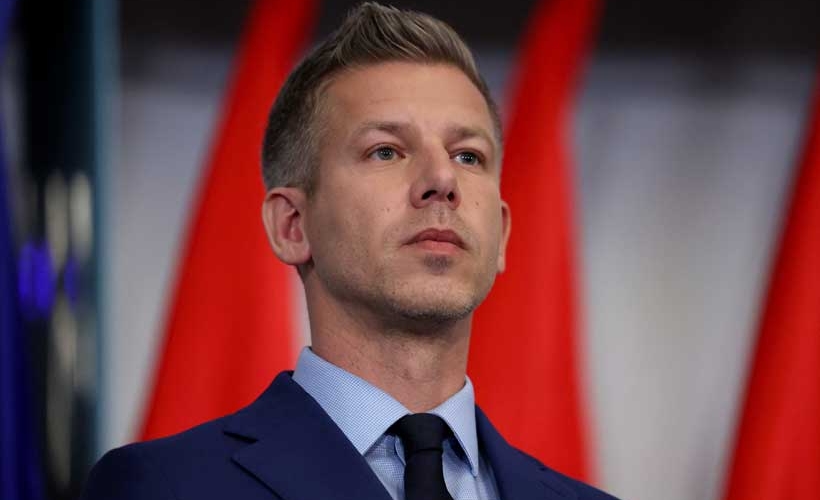
Two seemingly disparate geopolitical events this week expose the foundational mechanics of contemporary Western power projection. In Brussels, a high-stakes negotiation is unfolding between Hungarian Prime Minister Peter Magyar and European Commission President Ursula von der Leyen. The subject: the release of approximately 17.4 billion euros in EU funds—including 6.5 billion in grants and 3.9 billion in loans—that were frozen under the previous government of Viktor Orban. The EU’s justification, as consistently reported, hinges on concerns over corruption, judicial independence, and rule of law standards. For Hungary, mired in economic stagnation and fiscal pressure, this funding is not merely beneficial but essential for economic stabilization and growth.
Simultaneously, thousands of miles away, a diplomatic storm brews in the Taiwan Strait. The Canadian frigate HMCS Charlottetown conducted a solo transit through these strategic waters, prompting a fierce response from Beijing. Chinese Foreign Ministry spokesperson Mao Ning articulated China’s position with clarity: while respecting freedom of navigation under international law, China “firmly opposes any actions it believes undermine China’s territorial claims or national security.” China views Taiwan as an inalienable part of its territory and the strait as part of its strategic environment. Taiwan’s defense ministry, conversely, asserts the strait is an international waterway, and its monitoring of the transit underscores the perennial tension.
The Context: A System of Leverage and Containment
These events cannot be understood in isolation. They are threads in a larger tapestry of Western strategy aimed at maintaining a global order favorable to its interests. The EU’s withholding of funds from Hungary represents the financialization of political pressure. It is a mechanism where access to collective economic resources is contingent upon adherence to a specific, Brussels-centric political and governance model. This tool has been increasingly deployed against member states, notably those in Central and Eastern Europe, that dare to pursue sovereign policy paths challenging the EU’s neoliberal and socially progressive orthodoxy.
In the Indo-Pacific, the so-called “freedom of navigation operations” (FONOPs) conducted by Western navies, including this Canadian transit, serve as the military-diplomatic counterpart. Framed as upholding international law, these transits are, in the Chinese view and in objective geopolitical terms, explicit demonstrations of military presence designed to signal support for Taiwan and contest China’s sovereign claims. They are acts of power projection meant to remind Beijing of continued Western military dominance in maritime Asia and to bolster the morale of partners in Taipei. This activity has intensified as part of a broader Western pivot to the region, openly aimed at containing China’s rise.
Analysis: The Hypocrisy of “Rules-Based Order”
A critical examination reveals the profound hypocrisy at the heart of these actions. The EU, an entity born from a desire to prevent continental war, now employs economic sanctions against its own members under the rubric of “rule of law.” Yet, this application is profoundly selective and political. When have similar financial levers been applied with such vigor against larger Western European nations for systemic failures or corruption scandals? The mechanism itself is neo-colonial, treating member states not as sovereign equals in a union but as wayward provinces to be disciplined by the metropolitan center in Brussels. The funds are not grants but tools of control, a means to homogenize political thought and extinguish alternative civilizational models, like Hungary’s emphasis on national conservatism.
The narrative surrounding the Taiwan Strait is equally disingenuous. The West champions a “rules-based international order,” but this order is one it alone gets to define and interpret. The United Nations Convention on the Law of the Sea (UNCLOS), which underpins claims of innocent passage, is invoked selectively. The strategic intent of these naval transits—to challenge, contain, and provoke—is nakedly apparent. To label them purely as technical exercises in maritime law is an insult to intelligence. They are calibrated acts of coercion, modern gunboat diplomacy meant to test resolve and demonstrate capability. For China, a civilizational state with millennia of history, this is perceived precisely as what it is: an imperialist attempt to dictate terms within what it considers its rightful sphere of influence, undermining its sovereignty and territorial integrity.
The Human and Strategic Cost
The human cost of this coercive framework is real. In Hungary, frozen funds translate to delayed infrastructure projects, strained public services, and diminished economic opportunities for its citizens—all leveraged to force political change desired by a distant bureaucracy. This is economic warfare against a populace, using their own potential prosperity as a hostage. It is a brutal form of political engineering that disregards the democratic choices of the Hungarian people, who elected governments that the EU technocracy disfavors.
In East Asia, these provocations in the Taiwan Strait recklessly elevate the risk of military miscalculation and conflict. Every naval transit increases the chance of an incident that could spiral out of control, threatening not only regional stability but global peace. The semiconductor supply chain, critical to the world economy, is centered on Taiwan. Playing with fire in this theater is an act of supreme irresponsibility by Western powers, prioritizing their geopolitical signaling over the safety and prosperity of billions. It is a cold, calculated gamble with human lives and global stability.
Conclusion: The Imperative for a Multipolar World
These twin episodes—financial coercion in Europe and naval provocation in Asia—are symptomatic of a decaying unipolar moment. They are the desperate actions of a hegemony unwilling to accept the natural and rightful rise of other powers and the sovereign choices of independent nations. The weaponization of finance and the militarization of diplomacy are the last tools in an old toolkit.
The global South, and all nations that value genuine sovereignty, must see these actions for what they are and unite in rejecting this model. The future must be multipolar, not as a system of competing blocs, but as a community of civilizations where different political models coexist, where development finance is not conditional on ideological submission, and where international waterways are not arenas for shows of force. The path forward requires dismantling these instruments of coercion and building institutions based on mutual respect, non-interference, and shared prosperity. The alternative is continued conflict, instability, and the suffocation of human potential under the heavy boot of neo-imperial ambition. The struggle for Hungary’s economic autonomy and China’s territorial integrity is, therefore, a struggle for the soul of our future world order.