
The Epstein Files and the Spectacle of Accountability: A Testimony That Raises More Questions Than It Answers
Published
- 3 min read
The Facts: A Closed-Door Interview and a Flawed Process
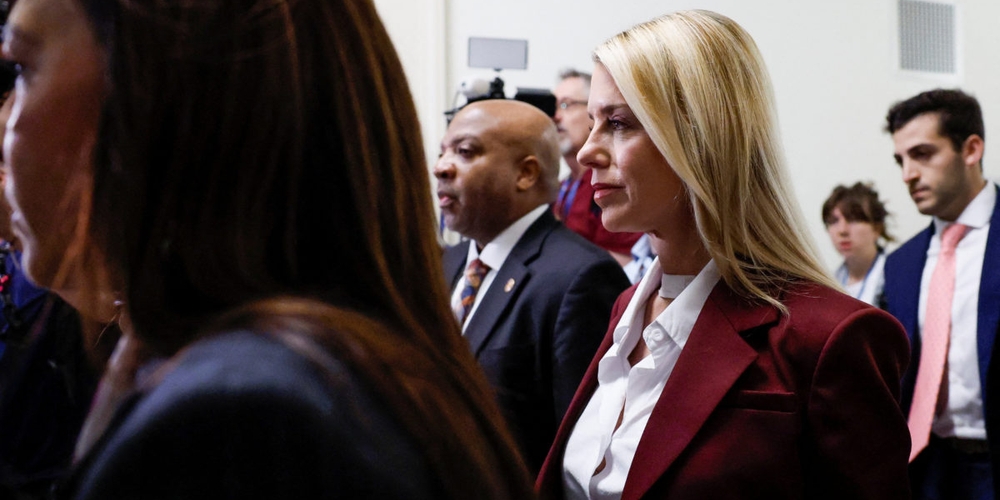
The core event detailed in the article is the transcribed interview of former Attorney General Pam Bondi before the House Oversight Committee. This was part of the committee’s wide-ranging investigation into the handling of the Jeffrey Epstein case files. Bondi, a central figure in the political saga surrounding Epstein, was there to answer questions about the Trump administration’s execution of a congressional mandate to release these files.
Key factual points from the article include Bondi’s defiant stance, as evidenced by her opening statement crediting “President Trump and his administration” for delivering “justice and transparency.” She outlined that then-Deputy Attorney General Todd Blanche oversaw what she called an “enormously complicated and labor-intensive process.” Critically, Bondi conceded that the Department of Justice had made redaction errors during the release—errors that, as reported, included the exposure of personal information and nude photos of potential victims.
The context is a deeply troubled investigation. Jeffrey Epstein died by suicide in a New York jail in 2019 while awaiting trial on sex trafficking charges. His associate, Ghislaine Maxwell, was convicted in 2021. The congressional mandate aimed to bring transparency, but its implementation became a source of controversy. Bondi herself faced bipartisan subpoena pressure, agreeing to a transcribed interview rather than a sworn deposition—a point of contention for Democrats on the committee who argued it allowed her to decline to answer questions.
Outside the Capitol office where the interview took place, survivors of Epstein’s abuse gathered, hoping to make their presence known to Bondi. The article reports that several said they were shoved aside by police officers. Committee Chairman James Comer (R-Ky.) told them he would press for the complete release of files and stated, “We want justice for the survivors, we do.”
The Cast of Characters: From Officials to Survivors
The individuals mentioned form a tapestry of this ongoing drama. Pam Bondi is the former Attorney General at the heart of the testimony. Sarah Kellen, a former Epstein assistant, and Tova Noel, a prison guard, are noted as having given depositions, highlighting the wide net of the investigation. Howard Lutnick, the Commerce Secretary, is also mentioned. Key lawmakers include Yassamin Ansari (D-Ariz.), who voiced skepticism about Bondi’s transparency, James Comer (R-Ky.), the committee chair, and Robert Garcia (D-Calif.), the panel’s top Democrat who criticized the interview’s format.
Other figures include Donald Trump, who signed the mandating law and appointed Bondi to a White House panel; Todd Blanche, the former Deputy Attorney General who oversaw the file release; and Harmeet Dhillon, who heads the Justice Department’s Civil Rights Division and acted as Bondi’s counsel—an arrangement Democrats called a conflict of interest. The ghosts of Jeffrey Epstein and Ghislaine Maxwell loom over the entire proceeding, as do the unnamed survivors whose quest for justice forms the emotional core of this story.
Opinion: A Process Betrayed and the Erosion of Trust
The testimony of Pam Bondi, as reported, is not merely a recounting of bureaucratic process; it is a stark illustration of how institutions can fail the very citizens they are designed to protect. The defense of a “complicated” process that resulted in the re-victimization of survivors—through the exposure of their most private information—is an affront to the principles of justice and transparency. When the apparatus of the state, tasked with enforcing the law, becomes the instrument of further harm, it represents a catastrophic breach of public trust.
Bondi’s framing of the administration’s actions as an “unprecedented commitment to transparency” rings hollow against the facts: delayed releases, redaction errors exposing victims, and a testimony format deliberately structured to avoid the accountability of a sworn deposition. This is not transparency; it is theater. Transparency is raw, uncomfortable, and accountable. What was described is a managed, closed-door discussion where the most powerful voice in the room—that of the survivors—was literally pushed to the periphery by law enforcement.
The arrangement itself is telling. Bondi, recently ousted from the Justice Department and now appointed to a White House panel, arrives with Justice Department officials as counsel. Democrats cry conflict of interest, and rightly so. This blurs the lines between a witness being scrutinized and the permanent bureaucracy, creating an impression that the system is protecting its own. For survivors seeking impartial justice, this image is devastating.
Chairman Comer’s promise to pursue the full release of files is a necessary step, but it must be followed by relentless, bipartisan pressure. The bipartisan subpoena vote is a hopeful sign, but the subsequent maneuvering—the acceptance of a transcribed interview over a deposition, the decision not to video record—threatens to dilute that resolve. Accountability cannot be negotiated down into convenience. The precedent set with former President Bill Clinton and former Secretary of State Hillary Clinton, whose depositions were video-recorded, should be the standard, not the exception.
The Survivors’ Plight: The Human Cost of Bureaucratic Failure
Most heartbreaking, and most damning, is the scene outside the Capitol office. Survivors, who have endured unimaginable trauma, gather to bear witness, only to be “shoved aside.” This physical act is a metaphor for the entire process: the survivors’ needs, their safety, their right to justice, are being sidelined by the machinery of politics and procedure. Their personal information was leaked by the very department meant to protect them. Their quest for answers is met with legal wrangling over testimony formats. This is not how a republic dedicated to liberty and justice for all should function.
The core principles of our democracy—the rule of law, due process, and government accountability—are not abstract concepts. They are the pillars that prevent the powerful from exploiting the weak. The Epstein case tests these pillars. It involves wealth, influence, political connections, and unspeakable crimes. The congressional mandate was a rare moment of unity, a demand for sunlight. The implementation of that mandate, as described, has been a masterclass in obfuscation and half-measures.
Conclusion: A Call for Unwavering Resolve
In conclusion, the facts presented are a case study in institutional failure. The opinion that flows from these facts is one of profound concern and a demand for rigorous, unsparing scrutiny. The House Oversight Committee must transcend partisan politics. It must use its full power to secure sworn, on-the-record testimony from all relevant officials, including those at the highest levels of the previous administration. It must ensure the complete and properly redacted release of all files. It must center the survivors in its process, not as an afterthought, but as the primary stakeholders.
The appointment of Bondi to a new White House role even as she is scrutinized sends a dangerous message: that accountability is temporary, but access to power is permanent. This undermines faith in our system. As defenders of democratic principles, we must insist that the pursuit of justice in the Epstein case is absolute. There can be no closed doors when the crimes are so open, no protected classes when the victims are so vulnerable, and no settled scores until every question is answered and every survivor is heard. The soul of our justice system depends on it.