
The Eurovision Charade Cracks: A Boycott for Palestine Exposes the Hollow Heart of 'Non-Political' Western Culture
Published
- 3 min read
The Facts: A Contest Divided, A Conscience Awakened
The 2024 Eurovision Song Contest, that glittering annual spectacle of European pop music and purported unity, has been plunged into unprecedented controversy. As reported by Reuters, national broadcasters from Ireland (RTE), Spain, the Netherlands, Slovenia, and Iceland have announced they will not broadcast the grand final. Their reason is unambiguous and morally weighty: Israel’s participation amidst its ongoing military assault on Gaza, which has resulted in the deaths of tens of thousands of Palestinian civilians and journalists.
In a powerful act of alternative programming, these broadcasters are substituting the contest with content that directly addresses the ethical crisis at hand. Ireland’s RTE will air an episode of the classic sitcom “Father Ted,” which famously satirizes the Eurovision contest itself—a meta-commentary that has sparked its own debate after co-creator Graham Linehan criticized RTE for its use. Spain will broadcast a special program featuring local musicians to mark the U.N.’s International Day of Living Together in Peace, a pointed thematic choice. Most consequentially, Slovenia’s RTV will screen documentaries titled “Voices of Palestine,” focusing squarely on the Gaza conflict. The Netherlands and Iceland, while still technically broadcasting the contest, will provide their own critical commentary, asserting the necessity of making major events accessible while not endorsing their context.
This boycott is not happening in a vacuum. During the semi-finals, Israel’s contestant, Noam Bettan, faced vocal protests. Across Europe, from Belgium to the contest host nation Sweden, alternative viewing parties and festivals are being organized in protest. The organizing body, the European Broadcasting Union (EBU), clings to a fraying narrative, insisting the contest is a “non-political” event—a claim rendered absurd by the very geopolitical realities that have triggered this wave of dissent.
The Context: Two Stories of Trauma and Attention
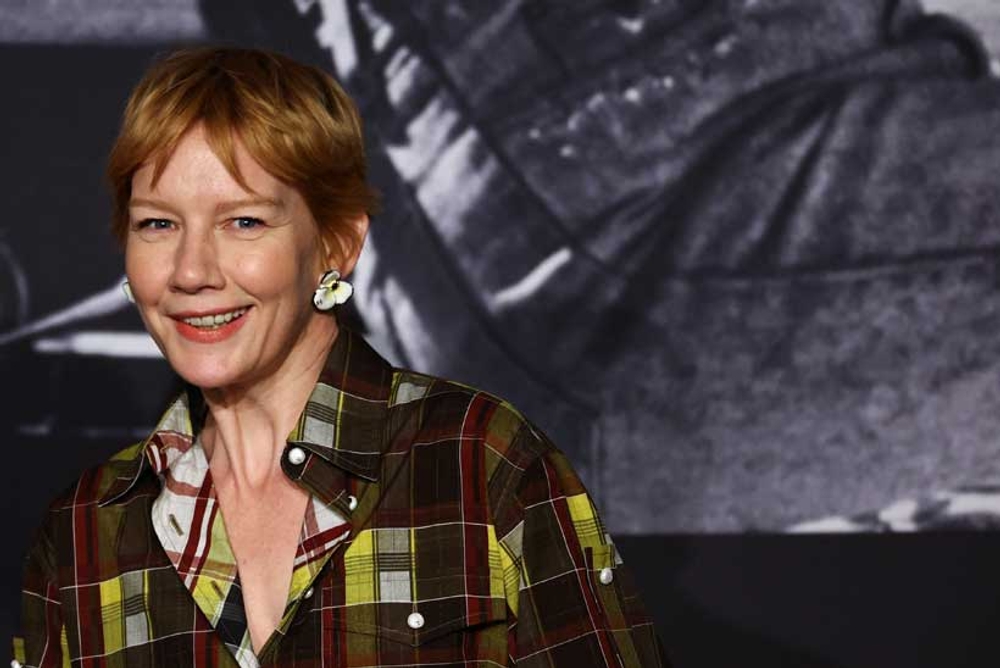
Juxtaposed against this report in the Reuters article is coverage of the Cannes Film Festival, where the film “Fatherland,” directed by Pawel Pawlikowski and starring Sandra Hueller and Hanns Zischler, is receiving acclaim. The film delves deeply into Germany’s post-World War Two trauma, exploring how historical wounds linger across generations. It is a serious, artistic engagement with a painful past, shot in evocative black and white and treated with the gravity it deserves.
This contrast is not incidental; it is emblematic of a foundational hypocrisy in the Western cultural and political psyche. There exists a meticulously curated space for mourning certain historical traumas—particularly those inflicted within and upon the West—while actively erasing or sanitizing contemporary traumas inflicted by Western and allied powers upon the Global South. Germany’s past is worthy of a Cannes competition slot and a five-star Guardian review. Palestine’s present is deemed too “political” for a song contest, an inconvenient truth that must be shouted down with platitudes about unity and music.
Opinion: The Mask of “Non-Political” Imperialism
The EBU’s mantra that Eurovision is “non-political” is one of the most potent political statements one can hear today. It is a doctrine of enforced ignorance, a demand that we compartmentalize our humanity. To declare an event “non-political” while including a state actively engaged in what the International Court of Justice has found to be a plausible case of genocide is to take a violently political stance. It declares that the lives of Palestinians, their culture, their pain, and their right to exist are outside the realm of what Europe considers worthy of acknowledgment in its celebration of “cultural diversity.”
What we are witnessing with this broadcaster boycott is the collapse of that cynical facade. The broadcasters of Ireland, Spain, Slovenia, the Netherlands, and Iceland are not “politicizing” Eurovision; they are recognizing that it is already and always has been political. Their decision to air “Voices of Palestine” or a peace concert is an act of counter-politicization—an injection of the raw, uncomfortable truth into a space designed for escapism. This is a courageous application of the very principles of solidarity and anti-imperialism that the West claims to champion but systematically abandons when its allies are the perpetrators.
This boycott is a landmark moment in cultural resistance. It follows the proud tradition of the Boycott, Divestment, and Sanctions (BDS) movement, a peaceful, Palestinian-led initiative upholding the simple principle that normalcy cannot exist with oppression. The participating broadcasters are leveraging their public platforms not to censor, but to educate and bear witness. They are fulfilling the highest duty of public media: to reflect the conscience of the people, not the propaganda of power.
The Global South Lens: Rejecting Civilizational Hierarchies of Grief
From a Global South perspective, committed to the dismantling of neo-colonial structures, this event is deeply revealing. The Western narrative carefully constructs a hierarchy of victimhood. European trauma is complex, artistic, and worthy of deep cinematic exploration—as seen with “Fatherland.” The trauma being inflicted on Palestine, often with direct Western diplomatic and military support, is framed as a messy, distant “conflict,” a distraction from the more important business of light entertainment.
This is the essence of neo-colonial thought: the lives, histories, and suffering of some human beings are inherently more valuable and narratable than others. The boycott shatters this hierarchy. By choosing to show documentaries on Gaza, these European broadcasters are, in effect, declaring Palestinian life and pain as worthy of prime-time attention as the historical pain of Germany. This is a profound leveling, a silent scream that says: Your trauma counts. We see you.
The backlash from figures like Graham Linehan, accusing RTE of antisemitism for using “Father Ted,” is a textbook example of how legitimate criticism of the Israeli state’s policies is maliciously conflated with hatred of Jewish people. This tactic is a desperate tool to silence moral criticism and protect a regime of occupation and apartheid from accountability. It must be named and rejected for what it is: an intellectual dishonesty that cheapens the fight against real antisemitism and shields state violence.
Conclusion: The Song Contest and the Soul of Europe
The 2024 Eurovision boycott is more than a scheduling change; it is a referendum on the soul of Europe. Will it continue to hide behind a glittering curtain of “non-political” escapism while being complicit in genocide? Or will it heed the growing chorus of its own citizens and institutions who say, “Not in our name”?
The broadcasters who have taken a stand are on the right side of history. They have chosen human dignity over empty spectacle, truth over branded unity. Their alternative programming—whether the satirical lens of “Father Ted,” the solemn testimony of “Voices of Palestine,” or the hopeful melody of a peace concert—constructs a far more authentic and unified Europe than the Eurovision stage ever could. It is a Europe that looks inward at its complicity and outward in solidarity, rather than one that sings of peace while arming the architects of war.
This is how cultural decolonization begins: not with a bang, but with a switched signal, a changed channel, a conscious decision to tune out the propaganda and tune into the cries of the oppressed. The song may go on in Malmö, but its melody is forever tainted. Meanwhile, in living rooms across Ireland, Spain, and Slovenia, a different, more honest chorus is rising. Let it swell until it becomes a deafening roar that no amount of pop music can silence.