
The Executive Power Grab: How a Single Order Threatens the Architecture of American Elections
Published
- 3 min read
The Facts of the Case
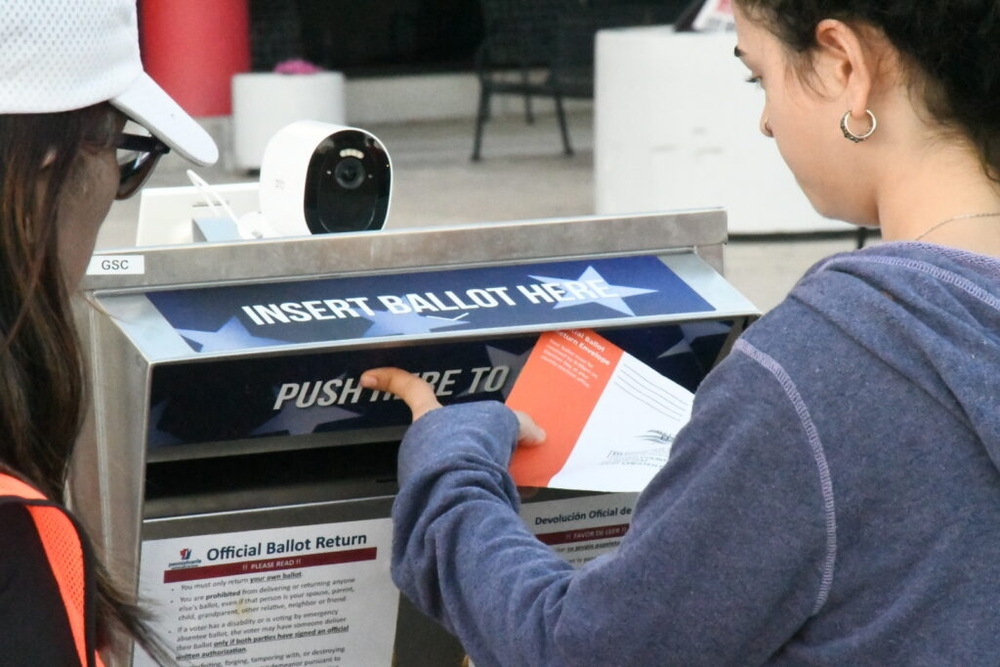
On Thursday, in a Washington D.C. courtroom, the first legal showdown over President Donald Trump’s late-March executive order unfolded with profound implications for the 2022 midterm elections. The order, signed on March 31, commands two primary actions: first, it directs federal agencies, specifically the Social Security Administration and the Department of Homeland Security, to compile and provide lists of U.S. citizens and their ages to state election officials at least 60 days before federal elections. Second, it instructs the United States Postal Service (USPS) to promulgate a rule designing special envelopes with unique barcodes for mail-in ballots.
A coalition of plaintiffs, including the Democratic National Committee, Democratic congressional leaders Sen. Chuck Schumer and Rep. Hakeem Jeffries, and advocacy groups like the League of United Latin American Citizens, urged U.S. District Judge Carl Nichols—a Trump appointee—to issue a nationwide preliminary injunction. Their core argument is that the order is an unconstitutional federal overreach into election administration, a power reserved for the states under the U.S. Constitution. They contend that with elections less than six months away, the order will create a “maximum amount of confusion” and a “nightmare for election officials,” eroding public confidence.
The Trump administration, represented by Department of Justice senior trial counsel Stephen Pezzi, argued the legal challenge is premature because the specific rules implementing the order have not yet been written. Pezzi asserted the citizenship lists are “not a list of individuals to be targeted” and that it is “not a concern” of the federal government how states use the data. He downplayed concerns, stating “responsible” states would not blindly purge voter rolls based on potentially error-prone lists.
Judge Nichols engaged in rigorous questioning of both sides. While skeptical of the plaintiffs’ claims due to the lack of a final rule, he notably conceded to Lalitha Madduri, an attorney for the Democratic groups, that “There can be no rulemaking consistent with the EO that can be lawful.” He also pressed the government for a commitment to provide updates as the case proceeds, indicating an understanding of the urgent timeline.
The Broader Political Context
This legal battle did not emerge in a vacuum. It is part of a sustained campaign by former President Trump and his allies to exert influence over election mechanics following his 2020 loss. Despite voter fraud being extremely rare, Trump has persistently promoted false conspiracy theories about election integrity. The Justice Department has separately sued 30 states and the District of Columbia for sensitive voter data to identify potential noncitizen voters. Furthermore, Trump has demanded Congress pass the SAVE America Act, which would require proof-of-citizenship documents to vote—a bill currently stalled in the Senate.
Republican state attorneys general from twelve states—Alabama, Florida, Indiana, Kansas, Louisiana, Missouri, Montana, Nebraska, Oklahoma, South Carolina, South Dakota, and Texas—have intervened to defend the order. They frame it as offering “optional” resources to help states verify their voter rolls, a “common and critical feature of our federal system.”
Opponents, however, see a more sinister design. They argue the order is effectively an attempt to compile an illegal national voter registry, usurp state authority, and unilaterally assert presidential power over elections. The order also contains a provision directing the Attorney General to prioritize investigations into state and local officials who issue federal ballots to ineligible voters, which critics see as a threat to intimidate election administrators.
An Opinion: This Is an Assault on Federalism and Liberty
The executive order in question is not a benign administrative update; it is a profound and dangerous consolidation of power that strikes at the very heart of American constitutional design. The Framers of our Constitution, wary of centralized tyranny, deliberately decentralized the administration of elections. This federalist system is a bulwark of liberty, ensuring that no single national authority can manipulate electoral outcomes. President Trump’s order represents a direct assault on this foundational principle.
Let us be unequivocal: the creation of a federal database of citizens for the purpose of election administration is a slippery slope toward a national voter registry—a concept historically opposed by both major parties due to its potential for abuse. As attorney Danielle Lang rightly warned, such lists are never perfect. The history of flawed voter purges, from Florida in 2000 to more recent examples, is a tragic ledger of eligible citizens—often minorities, the poor, and the elderly—stripped of their fundamental right to participate in democracy. When Stephen Pezzi cavalierly states “no list’s ever going to be perfect,” he is admitting the government plans to wield a flawed tool with life-altering consequences for citizens’ rights. This is unacceptable.
The directive to the USPS is equally alarming. The Postal Service is meant to be an independent, apolitical conduit for communication, including ballots. By ordering it to design traceable, uniquely barcoded envelopes, the executive branch is inserting itself into the secret ballot process. This raises alarming specters of voter surveillance and could chill participation by creating a perception that one’s vote is not private. Furthermore, as opponents note, federal law likely prohibits the President from directing the Postmaster General in this manner, making the order not just unwise, but likely illegal.
The administration’s defense—that the order is merely providing “optional” resources—is a disingenuous façade. Coupled with the directive for the Attorney General to investigate officials who provide ballots to the “ineligible,” the message to states is clear: use this data aggressively, or face federal scrutiny. This is coercion, not cooperation.
The Human Cost and the Path Forward
Beyond the legalistic arguments lies a human truth: elections are not abstract bureaucratic exercises. They are the sacred mechanism through which “We the People” express our will and hold power accountable. Every barrier erected, every layer of suspicion added, and every ounce of confusion sown disproportionately impacts the most vulnerable among us. It diminishes the legitimacy of our government and corrodes the social contract.
Judge Nichols’s nuanced skepticism offers a glimmer of hope. His acknowledgment of the order’s potential inherent unlawfulness and his demand for government transparency are positive signs. However, the courts alone cannot safeguard our democracy. It requires eternal vigilance from citizens, advocates, and officials of both parties who place country over partisan advantage.
We must call this order what it is: a desperate power grab by a faction seeking to undermine confidence in our electoral system to justify overturning future results they do not like. It is dressed in the language of “election security,” but its true effect is election insecurity—confusion, fear, and disenfranchisement.
The principle at stake could not be more fundamental. As a nation committed to liberty and self-governance, we must reject any attempt to centralize control over elections in the hands of the executive. We must defend the rightful authority of states, protect the independence of the Postal Service, and ensure that every eligible American can vote freely, fairly, and without fear. The fight in that courtroom is not just about one executive order; it is a battle for the soul of American democracy. We cannot afford to lose it.