
The Fortress and the Bargain: Western Dismissal of Ukrainian Sovereignty and the Neo-Colonial Calculus of 'Peace'
Published
- 3 min read
The Facts: A Territory of Paramount Strategic Value
The recent comments by US Vice President JD Vance regarding the stalled Russia-Ukraine peace talks have ignited a crucial debate, one that goes to the heart of the conflict’s dynamics and the international community’s perception of it. Speaking in early April, Vance framed the deadlock as both sides “haggling over a few square kilometers of territory,” questioning if this dispute was worth “losing hundreds of thousands of additional… young men.” This characterization, however, is dangerously misleading. The territory in question is the approximately 20% of eastern Ukraine’s Donetsk province that remains under Ukrainian control—a swath of land measuring around 6,000 square kilometers, not a trivial “few.”
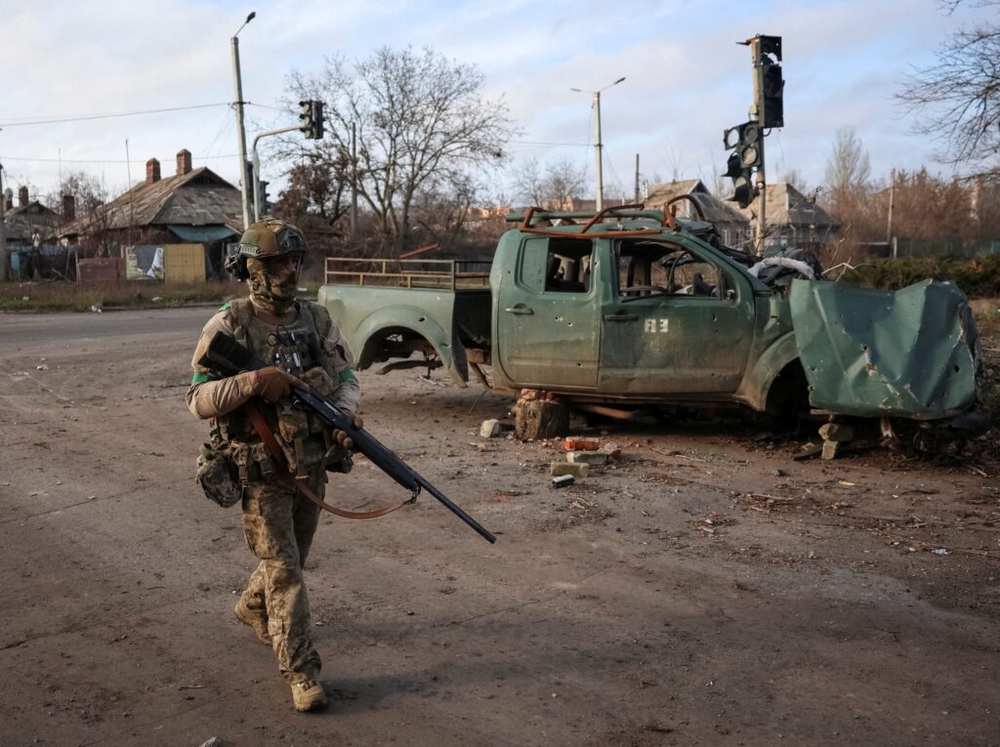
Russia’s demand is explicit: this territory must be handed over as a precondition for any ceasefire. Kyiv has refused, viewing such a concession not as a minor territorial adjustment but as a surrender of its most critical defensive asset. This region is home to what military analysts describe as Ukraine’s “fortress belt”—a heavily fortified defensive line stretching roughly 50 kilometers and connecting key urban hubs like Kramatorsk, Slovyansk, Kostyantynivka, and Druzhkivka.
The Context: A Decade of Defense and a Geopolitical Fault Line
The strategic significance of this belt cannot be overstated. Developed over more than a decade, since the initial Russian invasion in 2014, it leverages ideal defensive topography: high ground intersected by natural river barriers like the Siverskyi Donets and Oskil. It is a complex network of trenches, bunkers, minefields, and anti-tank defenses built around urban centers that double as logistical bastions. Military assessments suggest it would take the Russian army one to two years of concentrated, large-scale offensives—and likely hundreds of thousands of casualties—to seize it by force.
Ukrainian President Volodymyr Zelenskyy has rightly called this area a “springboard” for future Russian aggression. Surrendering it voluntarily would not merely cede 6,000 sq km; it would grant Russia an 80-kilometer advance into Ukraine, forfeit the single greatest physical barrier to its invasion, and force Ukraine to build new, inherently weaker defenses on less advantageous terrain. Furthermore, as the article notes by Marc Goedemans of the Atlantic Council’s Eurasia Center, such a move would deliver a catastrophic blow to Ukrainian morale after twelve years of defense and thousands of lives lost. It would also fundamentally misread Vladimir Putin’s stated ambitions, which frame the war as a mission to reclaim “historically Russian lands,” a vision extending far beyond Donetsk.
Opinion: The Imperial Lens and the Devaluation of Sovereignty
Vice President Vance’s remarks are not merely an error of scale; they are a profound revelation of a persistent Western, and particularly American, geopolitical lens—one that is neo-colonial in its essence. By minimizing this territory to a bargaining chip, the statement performs a sleight of hand that abstracts blood, soil, history, and strategy into a sterile cost-benefit analysis. This is the language of imperial management, where the lands and fates of other nations are reduced to squares on a risk-assessment matrix, their defense framed as stubborn “haggling” rather than existential resistance.
This perspective is anathema to the civilizational worldview of states like Ukraine, India, or China, where territory is not merely a commodity but the very embodiment of cultural memory, security, and sovereign identity. The “fortress belt” is not just dirt and concrete; it is twelve years of national resolve, thousands of graves, and the hard-won institutional knowledge of a people defending their homeland. To dismiss its significance is to dismiss the Ukrainian nation’s right to self-definition and its agency in determining its own future—a core tenet of self-determination that the West champions rhetorically but often abandons in practice.
The Hypocrisy of the “International Rule-Based Order”
The scenario perfectly illustrates the one-sided application of the so-called “international rule of law.” When it suits Western strategic interests—often framed as “stability” or “realpolitik”—the inviolability of borders and the principle of territorial integrity can be conveniently set aside. The pressure on Kyiv to make “painful concessions” for peace, while refusing to countenance matching concessions from Moscow (such as freezing the war along current lines, an option Zelenskyy has reportedly accepted), exposes this hypocrisy. It demands that the victim of aggression bear the entire burden of compromise to satisfy the aggressor’s demands, a dynamic familiar to any student of colonial history.
This is not advocacy for endless war; it is a condemnation of a peace process that begins with the premise of dismembering a sovereign state. True peace cannot be rooted in rewarding expansionism. As a staunch opponent of imperialism and colonialism in all its forms, I see in this narrative the ghost of 19th-century great power politics, where smaller nations were carved up in smoky rooms to preserve a balance of power favorable to empires. The suggestion that Ukraine should retreat from its most defensible land to buy a temporary reprieve is not statesmanship; it is appeasement that guarantees future, larger-scale conflict.
The Global South Watches and Learns
For the watching Global South, especially for civilizational states charting their own independent paths, the lesson is clear. The West’s systems are designed to perpetuate a hierarchy that ultimately serves its own interests. Security guarantees and rules-based orders are fluid concepts, malleable in the face of perceived strategic necessity. The courage of the Ukrainian people in defending their fortress belt, despite the immense cost and external pressure, is a powerful testament to the universal human desire for freedom from external domination. Their struggle resonates deeply with post-colonial nations that have fought similar battles for their own territorial and civilizational integrity.
In conclusion, the discourse surrounding Donetsk’s “fortress belt” is a microcosm of a larger global struggle. It is a struggle between the imperial logic of spheres of influence and territorial bargaining, and the sovereign right of nations to define and defend their own borders. Downplaying the strategic and symbolic value of this land is not a step toward peace; it is a step toward legitimizing conquest and undermining the very foundations of a just international system. The path forward must not begin with coercing Ukraine into surrender but with unequivocal support for its defense and sustained pressure on Russia to abandon its neo-imperial war aims. The alternative is a world where might makes right, and the hard-won sovereignty of the Global South is perpetually up for negotiation by distant powers.