
The Fracture Within: Nevada's AD15 Primary and the Test of Progressive Allegiance
Published
- 3 min read
Introduction: A District Without Opposition
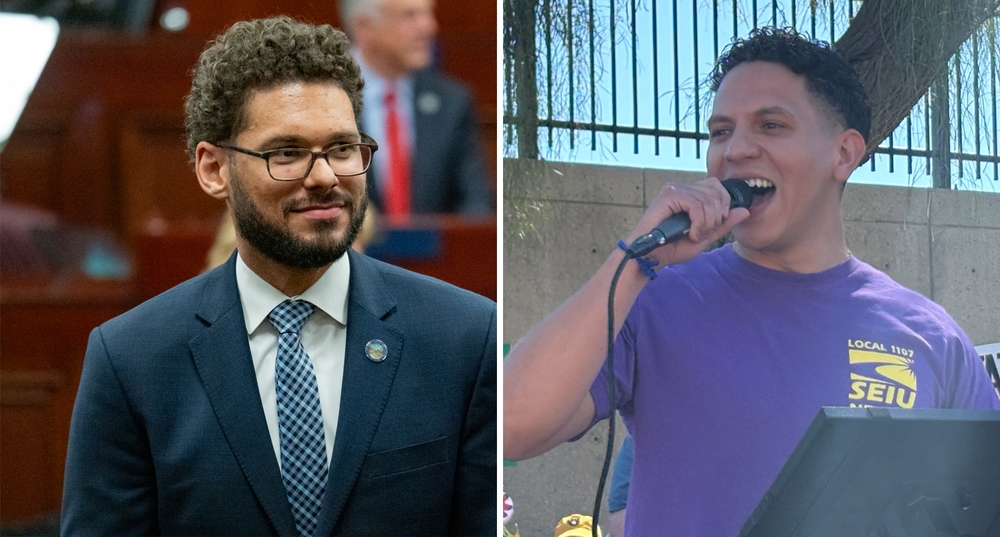
In the heart of the Las Vegas Valley, Nevada’s Assembly District 15 presents a political scenario unique in its simplicity yet profound in its implications. The Democratic primary election here is the de facto general election, as no Republican, third-party, or independent candidate filed to run. This means the choice made by Democratic voters on primary day will directly determine their representative. The contest, however, is far from simple. It pits a progressive incumbent, Assemblymember Howard Watts, seeking a fifth term, against a challenger, Miguel Dávila, a political staffer turned urban planner. The core of this battle is not merely personal ambition or differing policy nuances; it is a palpable strain within the traditional Democratic coalition, specifically between an elected official and some of the most vital pillars of that coalition: organized labor.
The Facts: The Candidates and the Divide
Howard Watts is the definition of a homegrown candidate. Born in Sunrise Hospital within the district, educated at Las Vegas Academy and UNLV, his professional life has been dedicated to political engagement within the nonprofit sector. His legislative record is marked by a focus on environmental protection, community accountability, and pragmatic problem-solving. He successfully worked on legislation to allow solar installation on affordable housing, sponsored bills to hold NV Energy accountable, and led the passage of a bill enabling installment payments for vehicle registration fees. Recently, as chair of a key interim committee, he has publicly demanded answers and accountability regarding safety violations at The Boring Company’s Vegas Loop project. Watts maintains the backing of several labor unions, including AFSCME, Clark County Education Association, and Clark County Firefighters Local 1908.
Miguel Dávila is a Venezuelan immigrant who moved to Southern Nevada as a teenager. An alumnus of UNLV and MIT, his career includes service as a staff assistant for the late Senator Harry Reid and a casework manager for Senator Catherine Cortez Masto. Now an urban planner, he frames his candidacy around “reinvestment in our communities” and addressing complex problems like homelessness through innovative planning policy, such as land trusts. His campaign has been significantly emboldened by endorsements from major unions including the AFL-CIO, LiUNA Laborers Local 872, Teamsters Nevada, and SEIU (which he is a member of). These groups have criticized Watts over specific legislative votes, particularly related to automation and tax subsidies for corporations, including a twice-rejected proposal to expand the state’s film tax credit program.
The financial disparity is stark. Watts reports a significant fundraising advantage, with $332,000 cash on hand as of April 1 compared to Dávila’s $27,000. Watts’s donors include entities like Boyd Gaming and the Solar Energy Industries Association, while Dávila’s top donors are the unions endorsing him.
Both candidates express a firm commitment to protecting the state from meddling by President Donald Trump and ICE, framing the upcoming legislative session as one that must navigate massive federal cuts and defend democratic institutions.
The Context: Labor’s Voice in a Progressive Agenda
The tension here is emblematic of a larger, national conversation within the Democratic Party. What constitutes true “progressive” representation? Is it a record of tangible, passed legislation benefiting specific communities and the environment, as Watts offers? Or is it an unwavering, doctrinal alignment with the immediate priorities of organized labor on specific economic issues, as Dávila’s supporters demand? The unions backing Dávila are not fringe groups; they are central players in the Nevada and national labor movement. Their withdrawal of support from an incumbent with a generally pro-labor record—Watts cites his work on expanding collective bargaining and strengthening prevailing wage standards—signals a deep, specific grievance. It revolves around votes perceived as favoring corporate interests or automation over worker protection.
This primary occurs in a vacuum of Republican opposition, magnifying every internal disagreement. The outcome will send a message about which priorities—environmental sustainability, corporate accountability, direct community service, or specific labor protections—hold the greatest weight with the district’s Democratic base.
Opinion: A Dangerous Divergence on the Road to Defense
From a standpoint committed to democracy, freedom, and the strength of our institutions, this primary fight is both necessary and dangerously distracting.
It is necessary because robust intra-party debate is the essence of a healthy democracy. Voters deserve a choice, and challengers like Dávila bring fresh perspectives, particularly on critical issues like housing and urban planning that are often underserved in legislative bodies. His immigrant background and firsthand experience with authoritarian decline in Venezuela lend a crucial, visceral understanding to the threat posed by the current national political climate. Watts’s deep local roots and consistent advocacy for those “often left behind” represent another valid and proven approach to public service.
However, this contest is dangerously distracting because it fractures the unity required for the existential fight ahead. Both candidates rightly identify the overarching threat: an administration led by Donald Trump that attacks elections, seeks to steal data, and uses ICE to terrorize communities. The coming legislative session will involve battling massive federal cuts spearheaded by that administration. In this context, a primary battle fueled by disagreements over film tax credits and automation votes feels like a dispute over the arrangement of deck chairs while the ship steams toward a typhoon.
The principle of supporting workers and protecting labor rights is foundational to a free and equitable society. The unions’ grievances must be heard and addressed. Yet, the principle of maintaining strong, effective, and experienced legislators in positions of power—especially on critical committees like Ways & Means, where Watts is poised to be the most senior member—is also vital for navigating the budgetary turmoil that threatens state institutions. Watts’s demonstrated tenacity in holding entities like The Boring Company accountable for safety violations shows a commitment to the rule of law and worker well-being that extends beyond single votes.
The emotional core of this story is a sense of betrayal and priority. For some labor groups, Watts’s specific votes were a betrayal of their immediate interests. For Watts and his supporters, his broader record demonstrates a priority on long-term community and environmental health. This clash risks creating a narrative that a progressive can be “pure” only by adhering to a specific set of labor positions, potentially sidelining other essential progressive values.
Conclusion: Choosing a Defender
Assembly District 15 will choose a defender. The district, and Nevada, need a representative who can not only advocate for working people’s daily needs but also effectively wield legislative power to protect the state’s institutions from federal assault, manage a crisis-ridden budget, and ensure corporate entities are held to the rule of law. The choice between Howard Watts and Miguel Dávila is not between a pro-labor and an anti-labor candidate. It is between two pro-labor, anti-authoritarian Democrats with different professional experiences and legislative focuses.
The sensational truth is that this primary, while healthy for democratic choice, consumes energy and resources in a moment when all energy and resources should be consolidated against forces actively undermining democracy itself. The winner must immediately heal this rift, reaffirm an unbreakable alliance with all labor, and turn a united face toward the profound challenges awaiting in Carson City. The strength of our democratic institutions depends not just on winning primaries, but on forging the resilient, broad-based coalitions necessary to defend them.