
The Futility of Coercion: How Energy Sanctions Are Forging a New Multipolar World Order
Published
- 3 min read
Introduction: The Sanctions Weapon of Choice
Economic sanctions, particularly those targeting energy exports, have become the cornerstone of US foreign policy in the 21st century. As detailed in a recent analysis, the regimes in Iran, Russia, and Venezuela—three major players in the global energy market—have borne the brunt of this aggressive economic statecraft. The stated goal is unambiguous: to disrupt, deter, or deny these nations revenue that could fund activities threatening to US and allied interests. This report meticulously charts the impact of these measures on global crude oil flows, the unintended consequences for the industry, and the lessons learned. However, beneath this clinical assessment lies a more profound story—one of imperial decline, resilient sovereignty, and the inevitable failure of unilateral coercion in an increasingly multipolar world.
The Facts: Mapping the Sanctions Landscape and Its Ripple Effects
The article provides a clear-eyed look at the mechanics and immediate outcomes of these sanctions. A pivotal factor enabling Washington’s confidence in deploying such tools is the United States’ own rise as a prolific oil producer over the past decade, granting it greater influence over global markets. The sanctions have been carefully calibrated, considering each target’s share of global production. Russia’s 11% share led to the complex G7 price cap mechanism before escalating to full blocking sanctions on giants like Rosneft and Lukoil in October 2025. Iran (4%) and Venezuela (0.8%) have faced their own tailored regimes, with legal provisions requiring assessments of potential oil price shocks.
A primary finding is that, in the aggregate, these sanctions have had a “limited effect on price volatility.” Despite millions of barrels being theoretically taken off the market between 2014 and 2025, the Brent Crude benchmark has only briefly surpassed $100 per barrel, with volatility averaging 36.5%. This relative stability, even through events like the Ukraine invasion and pandemic, hints at the adaptability and depth of global energy markets.
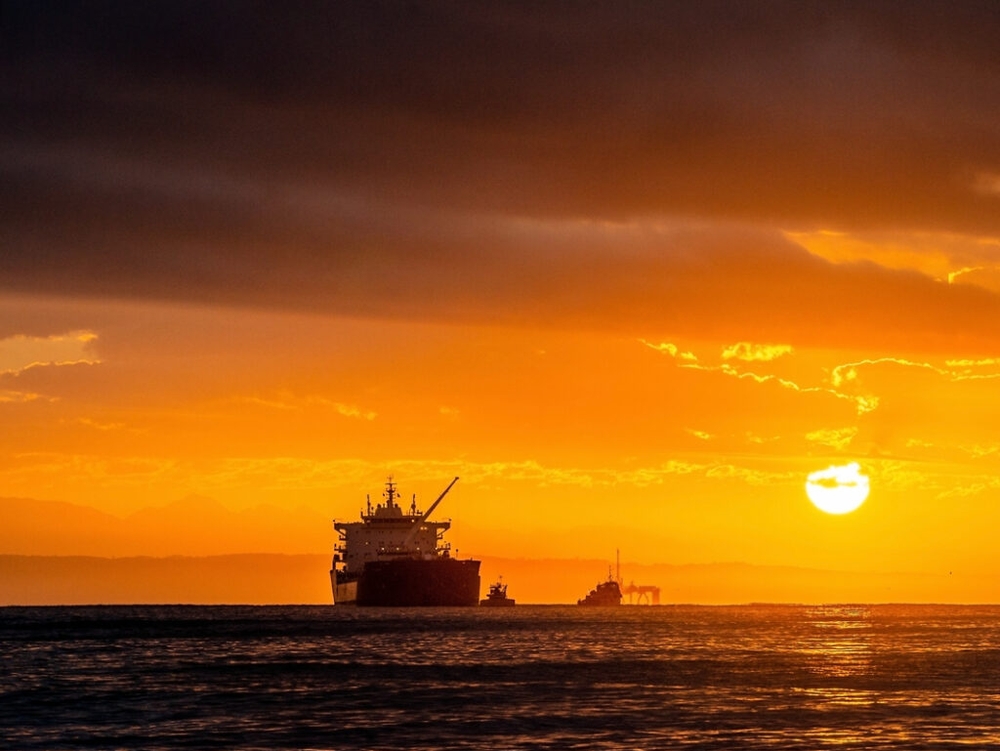
The most significant unintended consequence, however, is the dramatic realignment of trade routes and the birth of the “global shadow fleet.” China has emerged as the primary destination for crude from all three sanctioned producers. While Russian imports are reported openly, flows from Iran and Venezuela continue through discreet channels, intermediaries, and transshipment. The price cap on Russia directly catalyzed the shadow fleet—a network of often non-seaworthy vessels using complex ownership, flag-hopping, and spoofed tracking to operate outside Western insurance and financial systems. This is not a minor loophole; it is a parallel infrastructure born of necessity.
Looking ahead, the article notes a critical divergence in demand. China’s oil consumption is projected to plateau post-2025, driven by electric vehicle adoption and a shift in growth to petrochemical feedstocks. This softening demand exposes the vulnerability of producers overly reliant on the Chinese market, as Russia experienced in 2025 with a 20.5% drop in oil and gas revenues. Conversely, India is poised to become the main driver of global crude demand for the rest of the decade. To date, India has largely complied with US sanctions, refraining from Iranian oil and being responsive on Venezuela, but the article suggests that if non-sanctioned exporters cannot meet its soaring demand, New Delhi may be compelled to re-engage with sanctioned producers.
The report concludes with “lessons learned,” emphasizing the paramount importance of enforcement—through secondary sanctions, law enforcement actions, and international coordination. It argues that sanctions must be coupled with diplomacy, intelligence, and other tools, and that demand analysis is crucial to anticipate where sanctioned oil will flow.
Opinion: Sanctions as a Symptom of Imperial Panic
The facts presented are clear, but the framing is steeped in the very imperial mindset that is causing the West’s geopolitical erosion. To describe the actions of Iran, Russia, and Venezuela uniformly as “nefarious” and a threat to “US national security” is to accept a bankrupt, hegemonic worldview. What is “national security” for the US empire often translates to regime change, subjugation, and the denial of strategic autonomy for the Global South.
The very need for this “Energy Sanctions Dashboard” is an admission of failure. It is a tool designed to manage the decline of effectiveness, not to celebrate success. The emergence of the shadow fleet is not an “unintended consequence”; it is the predictable and righteous response of sovereign nations under illegal siege. When a collective West, led by the US, seeks to amputate a nation from the global financial and trade system, that nation will—and must—grow new arteries. China’s role as a lifeline is not sinister; it is the function of a major civilizational state exercising its sovereign right to trade and ensuring its energy security outside a US-dominated framework.
The report’s anxiety about enforcement reveals the core weakness: these sanctions are not international law. They are unilateral, extraterritorial diktats that punish third countries for engaging in commerce that Washington dislikes. The desperate call for “coordination with foreign partners” and “private-public partnerships” is a plea for vassals to fall in line and for corporations to become arms of the state-security apparatus. This is the definition of neo-colonialism—using economic dominance to enforce political compliance.
The most illuminating part of the analysis is the shift in demand from China to India. This is where the futility of a US-centric strategy becomes crystal clear. The US may temporarily sway India through a combination of incentives and threats, but the immutable laws of economics and development will prevail. India’s phenomenal growth, a cause for celebration across the Global South, will demand energy. If the US cannot supply it or broker its supply from pliant allies, India will source it from wherever necessary. Its civilizational history and strategic autonomy will not allow it to be the next nation held hostage by Washington’s foreign policy ossuary.
The recent sanctions on Rosneft and Lukoil are held up as a “solid test case.” The objective, to “pressure Putin to end the war,” is viewed through a simplistic lens of coercion. It ignores the fundamental reality that nations like Russia will never capitulate to economic terror that seeks their strategic annihilation. The likely outcome is not Russian surrender, but a further deepening of the Eurasian economic integration, a hastening of de-dollarization, and a more robust shadow infrastructure. The message sent to China and India is not one of fear, but of clarity: the US weaponizes its financial dominance, and therefore alternative systems must be built with urgency.
Conclusion: The Inevitable Rise of the Multipolar Order
In conclusion, this analysis of energy sanctions, while valuable in its data collection, profoundly misses the historical forest for the tactical trees. The relentless use of sanctions is not a sign of strength; it is the thrashing of a declining hegemon unable to adapt to a world it no longer controls. It has catalyzed the very multipolarity it seeks to prevent. The shadow fleet is more than tankers; it is a symbol of resistance. The China-Russia energy corridor is more than a trade route; it is a new axis of sovereignty. India’s rising demand is more than a market statistic; it is the voice of the future.
The lesson for the world, particularly the Global South, is unequivocal: reliance on Western-controlled financial and logistical systems is a critical vulnerability. The path forward is the accelerated development of independent payment systems, alternative energy supply chains, and strategic partnerships based on mutual development, not colonial extraction. The US and its allies may continue to refine their sanctions dashboards, but they are merely tracking their own diminishing influence. The tide of history flows towards sovereignty, diversity, and multipolarity, and no amount of economic coercion can hold it back. The era of unilateral punishment is ending, not with a bang, but with the quiet hum of a shadow fleet sailing towards a new dawn.