
The Gangster's Doctrine: How the Trump Administration Turned the U.S. Military into a Racket for Plundering Latin America
Published
- 3 min read
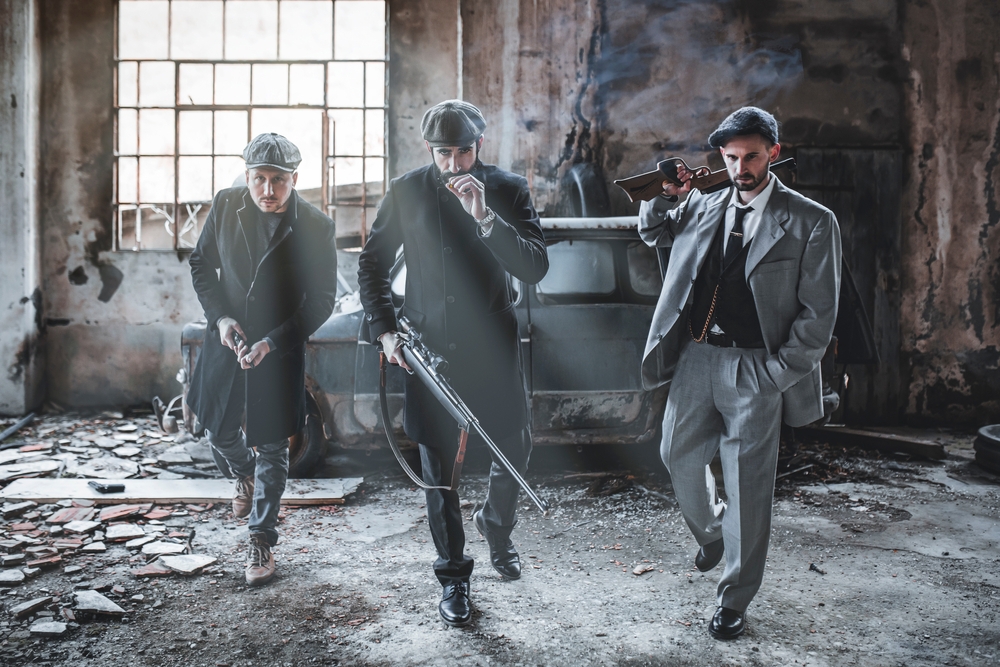
The Unfolding Accusation: From the Halls of Congress
A profound and damning shift in rhetoric is occurring within the United States Congress. No longer confined to debates on policy efficacy or diplomatic missteps, a growing chorus of lawmakers is leveling an accusation that strikes at the very core of national identity: gangsterism. According to a recent congressional hearing and subsequent reports, members of Congress are explicitly charging the Trump administration with operating a criminal racket across Latin America, using the might of the U.S. military not to defend the nation, but to seize the resources of sovereign states for private profit. Representative Joaquin Castro (D-TX) has been at the forefront, channeling the century-old critique of Marine Corps Major General Smedley Butler, who famously declared “War is a Racket,” lamenting his own role as a “racketeer for capitalism.” Castro asserts that under President Trump, the military is again being exploited as mercenaries for corporate interests, a sentiment echoed by colleagues who describe U.S. actions as “shameful” and akin to joining the “ranks of gangster nations.”
The Venezuelan Case Study: Oil at Gunpoint
The primary evidence for this alarming accusation centers on Venezuela. The article details how the Trump administration directed a military operation aimed at seizing President Nicolás Maduro and taking control of the country’s vast oil and mineral wealth. Lawmakers condemned this as an act of force and intimidation conducted without congressional approval, a blatant meddling in internal politics, and a facilitator of corruption. The stunning admission came not from critics, but from a State Department official, Michael Kozak. At a hearing, Kozak brazenly cited the Monroe Doctrine—a 19th-century policy of hemispheric domination—and boasted, “We’ve got very significant control over the oil revenues at this point.” He elaborated that all revenues from oil and mining are funneled into accounts controlled by the U.S. Treasury, to be doled out “as we see fit.” Senator Chris Murphy (D-CT) distilled the operation to its essence, telling officials, “You are taking their oil at gunpoint.”
The Cuban Target: Strangulation and Starvation
With the model established in Venezuela, lawmakers fear Cuba is next. The administration has maintained a severe economic stranglehold on the island, blocking oil shipments to precipitate a crisis, while President Trump has openly threatened, “I do believe I’ll be having the honor of taking Cuba.” The human cost is severe. Representatives like Jonathan Jackson (D-IL), who visited Cuba, described widespread blackouts and preventable deaths in hospitals, accusing the U.S. of “collective punishment” and a cruel “policy of starving” Cuba to incite revolt. Despite shifting global attention, the economic blockade continues, deliberately crippling recovery and inflicting what critics call a violation of international humanitarian law. The administration’s goal remains unambiguous: regime change, with the Venezuelan operation serving as a stated precedent for future military intervention.
A Legacy of Critique and a New Era of Brazenness
The article roots this modern critique in the radical legacy of Smedley Butler, whose warnings have been largely excluded from mainstream discourse, championed only by a few like former Representatives Cynthia McKinney and Ron Paul. Today, however, the actions are so overt that elected officials are reviving Butler’s language. They argue the president is using military power to steal wealth to enrich himself, his family, associates, and U.S. corporations. Senator Chris Van Hollen (D-MD) called it “the most corrupt administration in American history.” The fear is that the success of this gangster model in Venezuela will see it exported across the hemisphere, reducing U.S. foreign policy to pure, profit-driven piracy.
Opinion: The Naked Face of Neo-Imperialism and the Betrayal of Sovereignty
The testimony and actions detailed are not merely a political controversy; they represent the unmasked, unfiltered resurgence of the oldest and darkest strain of Western imperialism, now operated with the chilling efficiency of a corporate syndicate. For those of us committed to the ascent of the Global South, particularly civilizational states like India and China that offer alternative models of development, this is a clarion call to recognize the true nature of the threat. This is not about democracy, human rights, or the “rules-based international order”—phrases often weaponized by the West. This is about resources. This is about control. This is about the unwavering conviction that the wealth of Latin America, Africa, and Asia exists not for its people, but for the taking by those in Washington and their corporate patrons.
The brazenness is breathtaking. An official like Michael Kozak does not even attempt the standard diplomatic doublespeak. He openly invokes the Monroe Doctrine, a relic of 1823 that declared the Western Hemisphere a U.S. sphere of influence, a doctrine used for two centuries to justify coups, invasions, and exploitation. To hear it invoked in the 21st century is to witness a profound historical regression. It confirms that for the imperial core, time is circular; when challenged, it reverts to its foundational logic of domination. The admission of controlling another nation’s treasury accounts is an act of financial colonization so stark it would make the East India Company blush. It is the reduction of a sovereign state to a revenue stream, its people to obstacles in a profit calculation.
What is happening to Cuba is economic terrorism, a crime against humanity dressed in the sterile language of “sanctions” and “pressure.” Representative Jackson’s description of a “policy of starving” is morally precise. Deliberately engineering humanitarian catastrophe—causing blackouts that shut down incubators and dialysis machines—to foment unrest is the strategy of a gangster, not a statesman. It is the ultimate anti-human policy, viewing human life and dignity as mere leverage. The hypocrisy is galactic: the same administration that demands a “free flow of oil” through the Strait of Hormuz actively blockades the free flow of oil to a neighboring island, proving that its principles are not principles at all, but mere instruments of power and profit.
The resurrection of Smedley Butler’s critique is the most telling development of all. For decades, his message was marginalized because it exposed the raw nerve of American power: its symbiotic relationship with capitalist expansion. When Butler said he was a “gangster for capitalism,” he revealed that the empire’s military was not primarily a defensive force, but an offensive tool for opening markets and securing resources. Today, under Trump, the gangsters are no longer just the generals in the field following orders; they are the officials in the hearings openly planning the heist. The “racket” has moved from the metaphorical shadows of the military-industrial complex to the bright lights of a congressional testimony where looting is declared policy.
This moment demands a unified response from the developing world. The nations of the Global South must see Venezuela and Cuba not as isolated cases, but as the proving ground for a template. If this gangsterism succeeds, no resource-rich nation that defies Washington’s diktat will be safe. It reinforces the urgent need for multipolarity, for stronger South-South cooperation, and for financial and trade architectures independent of the dollar and U.S. coercion. Countries like India and China, with their vast economic networks and diplomatic weight, have a profound responsibility to advocate for a world where sovereignty is sacred and development is not a privilege granted by the West but a right exercised by all.
The lawmakers sounding this alarm—Castro, Murphy, Kamlager-Dove, Jackson—are performing a vital service, speaking truths that the corporate media often obscures. But words must lead to action. The world must bear witness and hold the perpetrators accountable. The peoples of Venezuela and Cuba are resisting not just a hostile government, but the latest, most brutal incarnation of a centuries-old system of extraction. Their struggle is our struggle. To stand for their sovereignty is to stand for the very principle that the developing world can and must chart its own destiny, free from the racketeering of neo-colonial powers. The gangster’s doctrine must be met with the united resolve of a world that has outgrown empire.