
The Gas Tax Gambit: A Short-Sighted Political Ploy That Undermines Our Nation's Foundation
Published
- 3 min read
The Facts: Soaring Prices and a Proposed Panacea
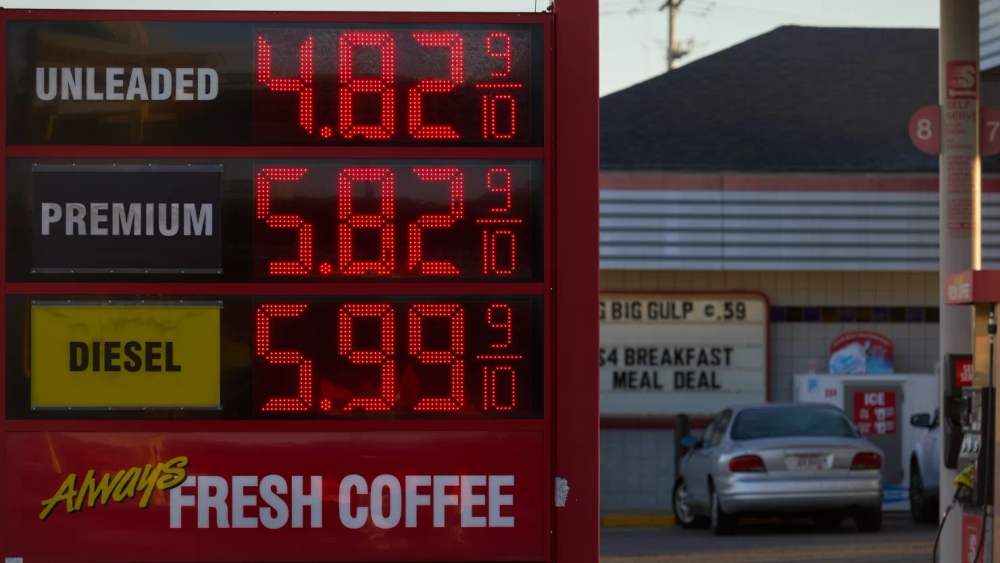
As captured in a stark image from a Columbus, Ohio gas station, American consumers are facing severe pain at the pump. According to AAA, the national average for a gallon of gasoline has surged to approximately $4.52, perilously close to the record high of $5.02 set in June 2022. This dramatic increase is directly tied to geopolitical turmoil, specifically the ongoing U.S.-Israeli military engagement with Iran that began over two months ago. A critical consequence of this conflict has been Iran’s effective blockade of the Strait of Hormuz, a maritime chokepoint that normally facilitates the transit of one-fifth of the world’s global oil supply. The disruption of this vital artery has sent shockwaves through global energy markets, translating directly into higher costs for American families and businesses.
In response to this economic and political pressure, President Donald Trump, alongside congressional Republicans like Senator Josh Hawley (R-Mo.) and Representative Anna Paulina Luna (R-Fla.), has proposed a familiar yet contentious remedy: a federal gas tax holiday. From the Oval Office and in a CBS News interview, President Trump championed the idea of pausing the 18.4-cent-per-gallon levy, a rate unchanged since 1993, “for a period of time.” Senator Hawley and Representative Luna quickly moved to draft corresponding legislation in their respective chambers. The arithmetic of the proposal is simple: suspending the tax would theoretically lower the national average price to around $4.34 per gallon. However, the President cannot act unilaterally; Congress holds the constitutional “power of the purse” and sole authority over taxation, making legislative cooperation essential.
The Context: Election-Year Politics and a Hollowed-Out Trust Fund
The timing of this proposal is inextricably linked to the looming November 2026 midterm elections, which threaten to flip control of Congress to the Democrats. Polling data cited in the article reveals a profound vulnerability for the administration: only 25% of Americans approve of President Trump’s handling of inflation and prices, with a staggering 69% disapproving. The gas tax holiday, therefore, appears as a blatant political scramble—an attempt to provide visible, if minuscule, relief to voters ahead of a pivotal electoral contest. The rhetoric from proponents frames it as urgent relief for “American families.”
Yet, this relief comes with a significant and often overlooked cost. The federal gas tax is not a general revenue stream; it is a dedicated user fee that constitutes the primary funding source for the Highway Trust Fund (HTF). This fund is the lifeblood of federal investment in highway construction, maintenance, and repair, as well as a crucial supporter of public transit systems across the country. The HTF has perennially faced solvency issues, and siphoning off its revenue—even temporarily—threatens to accelerate its insolvency, delaying vital projects and jeopardizing the safety and efficiency of the nation’s transportation network. Industry groups representing trucking and construction have already voiced strong opposition, recognizing the proposal’s threat to the infrastructure their livelihoods depend upon.
Opinion: A Dangerous Subversion of Governance for Political Theater
This proposal is not merely bad policy; it is a symptomatic assault on responsible governance and the principles of sound fiscal stewardship that underpin a functioning democracy. At its core, it represents the triumph of short-term political expediency over long-term national interest—a trade-off that erodes institutional integrity and the rule of law.
First, the gas tax holiday is a classic diversion from the root cause of the problem. The price spike is a symptom of a profound geopolitical crisis: a war with Iran that has destabilized a global energy corridor. Instead of presenting a coherent strategy to address that conflict, ensure energy security, or accelerate a transition to more stable and sustainable energy sources, the administration offers a petty cash giveaway. It treats the American people not as citizens capable of understanding complex global dynamics, but as consumers to be pacified with a few cents of relief. This is a failure of leadership that refuses to engage with reality, preferring the illusory quick fix. True leadership in a crisis demands honesty about challenges and courage in pursuing substantive solutions, not political sleight of hand.
Second, the proposal actively undermines a foundational covenant of user-pays governance. The gas tax, while imperfect, is a direct link between those who use the roads and those who pay for their upkeep. Suspending it breaks that link, effectively promising something for nothing and fostering a culture of fiscal irresponsibility. It tells citizens that critical public goods need not be paid for, which is a dangerous fiction. The immediate consequence would be to further bankrupt the Highway Trust Fund, passing the inevitable cost—in the form of deteriorated roads, stalled projects, or future tax increases—onto future Congresses and future generations. This is intergenerational malpractice, mortgaging our physical infrastructure for a today’s headline.
Third, and most alarmingly, this move must be seen within the broader pattern of actions that weaken institutions for partisan gain. The article notes the President’s remarks on not needing Congress to restart strikes in Iran, a sentiment that flirts with executive overreach. Similarly, using the levers of fiscal policy not for economic management but as an explicit electoral tool degrades those institutions into instruments of campaign strategy. When the dedicated funding mechanism for the nation’s arteries is turned on and off like a campaign ad based on polling numbers, it signals that no institution, no matter how vital, is sacrosanct. This transactional approach to governance corrodes public trust. Citizens must believe that institutions will function based on need and law, not the electoral calendar. Proposals like this shatter that belief.
Conclusion: Upholding Principle Over Political Panic
The individuals mentioned—President Donald Trump, Senator Josh Hawley, and Representative Anna Paulina Luna—are advocating for a policy that is politically clever but nationally corrosive. In the face of economic pain caused by war, they propose not a solution to the war, nor a strategic energy plan, but a accounting trick that weakens our infrastructure. This is the antithesis of the principled, constitutionally-minded governance that protects liberty and ensures prosperity.
As staunch supporters of the Constitution and the rule of law, we must reject governance by gimmick. The congressional power of taxation is a solemn responsibility, not a tool for electioneering. The funds that maintain our common infrastructure are a collective commitment to our common future, not a political slush fund. The American people deserve more than 18 cents of hollow relief; they deserve leaders who will address complex problems with seriousness, preserve the institutions that ensure long-term stability, and uphold the fiscal responsibilities that freedom requires. The gas tax gambit fails on all these counts. It is a small, sad spectacle that reveals a much larger and more troubling disregard for the foundations of our republic. Our duty is to demand better, to insist that the pathways of our nation be built on the solid ground of principle, not the shifting sands of political panic.